|
Recession
Incites Racist Attacks on the Indian Students in Australia |
There have been a growing number of recent attacks on the Indian students in Australia . For the last year, there were more than 70 such attacks. In the last two weeks there have been more than 5 attacks. Most of these attacks have been in the Melbourne area. One cannot help noticing that recession has something to do with these attacks.
There are about 400,000 foreign students out of these about 100,000 are Indian students. Most of the Indian students work to support themselves. Most of them want to settle in Australia after they finish their studies. Since last year, when the recession hit Australia , the Australians started perceiving them as people who may threaten their jobs. The economic crisis is known to sharpen contradictions between the different groups of people.
The Australian government is denying that the attacks are racially motivated. It is saying that the Indian students are soft targets and they also carry expensive lap tops and cell phones. This attracts the attackers who just want to rob them. Because most of the Indian students work, many times they have to travel alone in the trains at late night. However, the victims are so severely beaten that they are critically injured and some of them need extensive hospitalizations. These facts suggest that these attacks are not just motivated to rob them.
Australia was a penal colony for the British and the criminals were exiled here from England . Australia has a very strong history of racist immigration policy. Till seventies, only the white people were allowed to be the immigrants.
Australia has been economically, politically and culturally closely integrated with the West, particularly England . However, with the decline of the West and the rise of Asia , attitudes started to change. Australia wanted to economically integrate with the rising Asia . People started learning Chinese and Japanese languages. Prime Minister Kevin Rudd speaks fluent Chinese.
Australia was moving towards a multicultural society. Australia saw Singapore as a very good example of multiculturalism. During the 2004 Olympics games Australia projected a multicultural image and the Australian aborigines were given a prominent role in the Olympic celebrations. However, the recession and the economic crisis may be pushing Australia again towards racism and intolerance. This will be a sad example of regression.
Historically, many Western capitalist countries have seen racist attacks, particularly during the hard economic times. We were told that the World is moving towards a global community in this era of globalization. Globalization is an old wine in a new bottle. We are seeing same types of racist attacks which we have seen in the past.
One thing different from the past is the movement in India in support of the students. We have never seen such movement before. The Indian government has also put pressure on the Australian government. The World media has also put the Australian government on the defensive. Super star Amitab Bachan has refused to accept an honorary degree from the Queensland University of Technology. We certainly hope that Prime Minister Kevin Rudd will live up to his assurances that the Australian government will control the situation and protect all people in Australia .
Sawraj Singh, M.D. F.I.C.S.
Chairman Washington State Network for Human Rights
Chairman Central Washington Coalition for Social Justice |
|
North Korea and Iran Pose Serious Challenge to America |
The rising tensions in Korea and an increasingly defiant Iran pose a very serious challenge to America . These two countries not only threaten the regional American interests but can also upset the American global strategy. South Korea and Japan are very important countries for America to contain the growing influence of China . These two countries are the only two Asian countries with important military bases and a large number of American troops.
Two recent events have tremendously raised tensions in the Korean peninsula. Former President Roh’s suicide and the North Korean nuclear tests and missile tests. President Roh was the first leftist president Korea ever had and he is also the first Korean leader to commit suicide. Roh wanted to fundamentally change the conservative and pro American policies of the Korean elite. His election campaign slogan was “Not to kow tow to the USA ”. He echoed the sentiments of the youth, the ordinary people and the underprivileged people in Korea . It was under Roh’s leadership that China became the number one trading partner of South Korea .
The rightist pro American military business complex did not like his policies. The new president reversed Roh’s policies and revived the pro American, anti China , anti Third World and anti people traditional policies. Roh was moving forward towards the Korean reunification. His policy toward North Korea was called the policy of Sunshine. South Korea was helping the North financially and the contacts between the two were rapidly growing. However, the current administration has reversed that policy and the tensions between the two Koreas are rising to a point that an armed confrontation has become a distinct possibility.
Many people in Korea blame the new president for persecuting Roh and his family under the pretext of investigating them for corruption. Because they believe the charges are politically motivated and are responsible for Roh’s suicide. There is great anger among the people and thousands of people are showing support for Roh.
North Korea has conducted nuclear tests and continues to test its new missiles. This really puts a lot of pressure on South Korea and Japan , the closest American allies in the region. North Korea remains defiant to the U.N. and there is very little chance of revival of the six party talks to reduce tensions in the Korean peninsula. The tensions may escalate and a missile or a nuclear attack by North Korea is not to be completely ruled out. South Korea and Japan will be too much preoccupied with North Korea and will be unable to do much for containing China .
Iran is also becoming increasingly defiant and is posing a formidable challenge to Israel , the main American ally in the Middle East . Over the last two decades, Israel has been constantly losing influence in the Middle East . The Hezbollah defeated Israel in Lebanon and Israel was unable to score a clear victory against the Hamas. Iran has emerged as the leading power in the Middle East and has become the main supporter of the Hezbollah and the Hamas. Iran has tested missiles which are capable of reaching Israel . Iran continues to develop its nuclear capability. Russia and China view Iran as a potential ally against the alliance of America , India and Israel . The growing influence of the Islamic fundamentalists in Afghanistan and Pakistan will not only endanger Pakistan but will seriously affect India’s capability of helping with the efforts to contain China.
Meanwhile China continues to increase its influence. It just replaced America to become the largest trading partner of Brazil , the most powerful country in South America . As America will be kept busy by North Korea , Iran and the Islamic fundamentalists, China continues to advance in Asia , Afghanistan and South America .
Sawraj Singh, M.D. F.I.C.S. Chairman Washington State Network for Human Rights & Chairman Central Washington Coalition for Social Justice
|
|
The Victory of Congress,
a big Setback for the Third Front |
Sawraj Singh, M.D. F.I.C.S.
Chairman Washington State Network for Human Rights &
Chairman Central Washington Coalition for Social Justice
The recent election results in India showed that the emerging trend of an alternative to the two party systems got a major jolt. The congress party regained the ground lost over the last two decades. Results were equally shocking for the BJP, the Hindu Nationalists party. The congress party was also able to attract the minorities who were increasingly disillusioned with it. Not only the Muslims, the Sikh and the Dalits but even the Maoists helped congress to score an impressive victory which proved all the predictions of a hung parliament wrong.
The Muslims deserted the Samajwadi party of Mulayam Singh Yadav to come back to the congress’s fold. After the demolition of the Babri Masjid, the Muslims were not only angry at the BJP who led the movement to demolish the Masjid but were also angry with the congress for not preventing this to happen. They then started supporting the Samajwadi party. However, they were frustrated with the party also and came back to their traditional stand of supporting the congress.
It seems that Mayawati was going to challenge the two party systems with the emergence of Dalits as an independent force. However, Dalits also decided to return to the traditional fold of congress party thereby weakening the movement toward becoming a nucleus for the third front. Mayawati has to wait a little longer to emerge as the national leader. Advani, the leader of the BJP lost all chances of become India’s Prime Minister. The Sikhs even though a small minority, can make a big difference in the outcome of the North Indian states. Besides Punjab, their traditional stronghold, they can also make a difference in Haryana, Delhi, and some parts of Rajasthan and Uttar Pardesh.
The congress promoted Dr Manmohan Singh as the next Prime minister in a big way. Not only it attracted many Sikh voters but also many other minorities were also attracted towards the congress because Dr. Manmohan Singh was also perceived by many people as a person capable of leading India out of the present recession. He also showed restraint in dealing with Pakistan after the Mumbai terror attacks. Now it has become clear that he did the right thing and India is seeing a stable Pakistan as more of an asset rather than a liability.
The Maoists also helped the congress to defeat the CPIM in West Bengal. They attacked the CPIM particularly on the issue of Tata’s plant in Cingaur. They joined Mamta Banerjee and weakened the CPIM in West Bengal thereby paving the way for the victory of the Trinmool Congress and a major setback for the leftist parties.
The leftist parties have been always concerned about preventing the BJP from coming into power rather than focusing on developing the “Third Front” as alternative to the two party systems. The third front is the most compatible with the Indian situation.
Posted on May 20, 2009 |
|
AMERICA AND EUROPE DEALING DIFFERENTLY WITH RECESSION
Sawraj Singh, M.D. F.I.C.S.
Chairman Washington State Network for Human Rights & Chairman Central Washington Coalition for Social Justice
|
The way America and Europe are dealing with the recession is very different. Europe has not been affected as badly as America has been. It is becoming quite clear that in the long run the concepts of a utilitarian capitalist system, a social well fare state and capitalism with human face are superior to the American cut and dry consumerist capitalism. The Europeans were able to develop much better social protective nets which have helped them to bear the pain of the recession much better than the Americans.
America has always been dominated by the rightist ideas that the market forces have an inherent strength to handle the ups and downs in the economy and if left alone the market will always correct it self. Therefore they are always opposed to the government interfering with the markets and people’s lives. The fall of the Soviet Union and the Eastern block only made such thinkers even stronger in their belief. President Regan was a champion of this point of view. President Bush tried to carry this message forward but miserably failed. The modern state is too complex and moreover globalization has made the present economies so complicated and interdependent and the Regan and Bush approach cannot work.
Americans have suffered much more than the Europeans during the current recession. More people lost their jobs, more people have lost their homes and more people have committed suicide or killed their families in America compared to Europe . Not only have some workers committed suicide but some executives have also done the same. Many psychiatrists feel that the recession has increased the incidence of suicide. Far more people have attempted or thought of suicide than who actually committed suicide.
In Europe things are not as bad. Most of the European states guarantee the basic necessities of their people such as healthcare and education. The chances of losing one’s job are less than in America and the unemployment benefits are far more generous.
I predicted many years ago that in the long run Europe will do better than America and Russia will reemerge as a very powerful country. At that time, there were many who disagreed with these predictions but now even the mainstream American media seems to be in agreement with my concepts. For example, I saw on MSNBC a comparison between the American and the European workers during the current recession. The workers in Heidelberg Germany which can be compared to Detroit in America have suffered much less than their equivalents in America . Both the cities are the automobile hubs for their countries. The automobile workers in Heidelberg feel that their lives are not too much different than before the recession. Things are very different in Detroit . Two out of the three big automobile companies, General Motors and Chrysler are on the verge of bankruptcy with devastating effects on the workers. Mercedes Benz and Volkswagen are going to survive during the current economic crisis.
While the Western Europe is doing better economically than America , Russia is making a very big come back militarily. The May 9th Victory parade in Moscow , celebrating the Russian victory over the Nazis, was very impressive. It appeared as if Russia has decided to challenge the American military superiority in Europe . This parade was the biggest show of force after the cold war. There were more that 9,000 soldiers, more that 100 combat vehicles, Topol intercontinental ballistic missiles and the most modern S-400 defense missiles. There were also fleets of fighter planes, bombers and the World’s largest cargo planes.
Russia , together with China might have decided to challenge the West for a Third World war. They must feel that this is the right time to end the domination of the economically weakened West. Russia is challenging the American military in Europe and China may start doing the same in Asia . China has already started challenging America navy near its borders. After the cold war this is the first time that anybody has challenged the American navy.
It is becoming quite clear that the American individualism is proving no match for the other countries collective perspective. Europe is more socialized than America and seems to be doing better than America . Russia is still more socialized than rest of Europe and continues to regain its lost status. China has a much bigger collective perspective and appears destined to be the leading country in the twenty first century.
Posted on May 13, 2009 |
|
Unstable Nepal Heading to a Civil War
Sawraj Singh, M.D. F.I.C.S.
Chairman Washington State Network for Human Rights &
Chairman Central Washington Coalition for Social Justice |
The Prime Minister Parchanda of Nepal has just resigned and has decided to sit in the opposition. The Nepali congress party and the United Communist Marxist Leninist party have welcomed the resignation and are in the process of forming a new government. Without naming India and America , Parchanda left little doubt that this situation was precipitated by their intervention “Foreign intervention”.
The Nepali congress party and the U.C.M.L are leaning toward India . Similarly the elite in Nepal are thoroughly pro-India and pro-America. India and America were never happy with the Maoists coming to power in Nepal because; the Nepali congress party has always been leaning toward India and the West. It’s concept of Nepal has been more of an India ’s protectorate rather than a truly independent country. The Maoists on the other hand, wanted Nepal to really become an independent country.
The Maoists wanted to revise the India – Nepal Friendship Treaty because they felt that this did not treat both countries at equal level. They even objected to the manner in which the Indian ambassador asked the Prime Minister of Nepal to come to the embassy and sign the treaty. They considered this act as a historical example of the unequal treatment of Nepal by India . The Maoists also felt that India was aligned with America in trying to contain China . The Maoists wanted Nepal to form an independent foreign policy and treat India and China equally.
The immediate cause for the resignation was related to General Katral, the chief of the Nepalese army. General Katral was opposed to the integration of the 19,000 Maoist fighters into the Nepalese army. Parchanda ordered dismissal of General Katral but the President Ram Baran Yadav asked Katral to stay on. Parchanda felt that this was anti democratic and went against the constitution of Nepal which does not give the right to the President to override decisions taken by the Prime minister because the President is just a ceremonial head and the Prime minister is considered the real representative of the people of Nepal . Parchanda said that his struggle is against the foreign intervention, for democracy and patriotism.
It looks like that Nepal will not be able to resolve the present crisis by peaceful means and by the parliamentary politics. The Maoist army and the regular army have very fundamental differences which cannot be resolved within the present system therefore a civil war appears very likely.
The army only agreed to enter into a compromise with the Maoists because it was being miserably beaten. The army had lost control over most of Nepal and its influence was only limited to the area around Kathmandu , the capital of Nepal . The Maoists agreed to the present compromise because they felt that when the army will collapse then the Indian army supported by America will invade Nepal and the Maoists did not feel that they had the strength to fight such a war.
This is not the first time that the communists had to leave when they were in power. First, it happened in Telengana and then in Kerala where a democratically elected government was dismissed. The Maoists in Nepal made history when they came to power in the democratically elected government. However, the present situation in Nepal will convince many Maoists that the concept of a peaceful revolution is not workable. Mao emphasized that revolutions cannot be brought by peaceful means. Not only in Nepal but in the entire Indian subcontinent the Maoists will be reading Mao’s thoughts on people’s war again. Posted on May 07, 2009 |
 |
Obama Wants the US to Accept The New Global Realities
Sawraj Singh, M.D. F.I.C.S.
Chairman Washington State Network for Human Rights &
Chairman Central Washington Coalition for Social Justice |
After 100 days in the office, President Obama came out very well as far as approval of his policies is concerned. President Bush left the office with one of the lowest approval ratings, less then 30%. President Obama has about 70% approval ratings.
Bush and Obama represent two opposite extremes of philosophy. President Bush represented views of the extreme right: America is the greatest country in the World. America is the only superpower in the World. America is the policeman of the World. All the countries of the World have to agree with America . America ’s rich have all the rights to make as much money as they can without worrying for what happens to the poor. The minorities should have no grievances. Human rights are only for the other countries and not for America . America has the right to lecture other countries about democracy and human rights but no country has the right to question America on these issues.
Obama does not agree with Bush on all this. He feels that time has come for America to change the policies which do not work and create more problems for us. Both the foreign and domestic policies should change. He knows that America is no longer the only superpower of the World and has to work with the other countries on more or less equal level. He is willing to listen to the other countries he showed that attitude in Europe and in Latin America . He got a very different kind of response then Bush there.
Obama wants to fix the economy which Bush left in shambles. He is aware that we can be asked to practice what we preach to others such as human rights, democracy and treat fairly all the people regardless of their race, color or national origin. Most of the Americans agree with Obama that there is need to change. Still change is not easy and will meet a lot of resistance. The extreme right segment of the society is opposed to the change. They only know one principle, America first, right or wrong. This sounds very patriotic but when we do not accept that the question of right or wrong is the fundamental question then our patriotism cannot be genuine.
Do we need to fundamentally change our policies or not? This depends upon whether the global situation has really changed. The present economic crisis has clearly shown that the engine of the World economy has shifted from America and Europe to China . Whereas, the American and the European economies are expected to shrink further in the year 2009, the Chinese economy is expected to grow more than 8% this year. The biggest sign of the shift is that Taiwan , the most trusted American ally in Asia has decided to shift its alliance. Taiwan is now looking at China to help it come out of the present recession.
For the first time mainland China will be investing in Taiwan . There will be direct flights from the main land to Taiwan and restrictions on traveling between the two will be released.
Last year China became the largest trading partner for Latin America . China has out maneuvered the West from most of the third World, Asia , Africa and Latin America . China has now more access to their natural resources than the Western countries. China continues to gain influence in the World Bank and the I.M.F. China has defeated the encirclement policy of the West. It has been able to neutralize the Western allies in Asia . India has been effectively neutralized by a nuclear Pakistan . Japan and South Korea will be neutralized by a nuclear North Korea and Israel will be neutralized by Iran .
Obama represents the last hope of accepting changes peacefully. If America does not want to accept the changing global realities then the only alternative is a Third World war and internal chaos. Most of the Americans are willing to give Obama a chance to avoid that.
Posted on May 07, 2009 |
|
Obama to Change American Policy toward Latin America
Sawraj Singh, M.D. F.I.C.S.
Chairman Washington State Network for Human Rights &
Chairman Central Washington Coalition for Social Justice |
After Europe , Obama seems poised to change American policy toward Latin America . He emerged as the most popular leader and center of attraction at the summit of the Americas in the island nation of Trinidad and Tobago . This was quite a contrast to President Bush’s performance at the previous Americas ’ summit. Hugo Chavez called Bush “Devil”.
This time, the Venezuelan President noticed a difference between Bush and Obama calling Obama an intelligent man compared to Bush.
Even though a joint declaration could not be signed because of the differences over the inclusion of Cuba in the organization, yet every body agreed that the atmosphere at the summit was upbeat. Even the most vocal critics of the American policies had only praise for President Obama. President Bush managed to alienate most of the Latin American countries except for Columbia . However, President Obama’s approach of a dialogue and willingness to understand other’s perspective was very much appreciated.
President Obama has expressed willingness to hold discussions with the Cuban leaders. The Cuban leaders have responded very well and they are willing to discuss any matter, including human rights issues. Fidel Castro also appreciated Obama calling him an intelligent man. Obama has lifted some restrictions on the Americans visiting Cuba . However, all these leaders liked the approach of President Obama.
Most of the World is noticing a big difference between President Bush and President Obama. Bush was probably the most disliked President America ever had. Bush wanted to maintain America ’s status as the only super power of the World and the policeman of the World. Most of the World perceived him as blunt, arrogant and ill-informed. Obama seems to understand that the days of America being the only super power of the World are over and the World has changed from a uni polar World to a multi power World. America has to change its policies according to the new global conditions.
It is also becoming clear that a little change in the policies is not going to do it for America . A fundamental change from the consumerist capitalism to a utilitarian capitalism and adopting the concept of a welfare state is required. Without such radical change, America will not be able to come out of the present crisis.
Posted on May 07, 2009
|
|
Dr. Sawraj Singh Receives “Humanitarian Physician” Award!!
CONGRATULATIONS TO DR. SAWRAJ SINGH
www.ambedkartimes.com congratulates Dr. Sawraj Singh who was recently awarded with “Humanitarian Physician” award at South East Community Center in Yakima on April 20 th, 2009 . He is a well known international personality who also writes for Ambedkartimes. Once again many many congratulations to Dr. Singh and best of luck for his future. Editor
|
|
The NAACP awarded “Humanitarian Physician” award to Dr. Sawraj Singh in Yakima at the South East Community Center on April 20, 2009 . This award was given to Dr Sawraj Singh because of his services in the medical field as well as promoting the causes of equality and social justice in the central Washington area. Dr Sawraj Singh has also promoted the cause of equal access to health care in the central Washington area.
As a laser surgeon, he has helped to raise the awareness of people about skin cancer, particularly melanoma. Skin cancer is very prevalent in the central Washington area. Whereas, lasers are being used in many places for mostly cosmetic purposes, Dr Singh has used laser for mostly medical conditions. He has made his services available to the most deprived segments of population such as people on welfare, Medicare and who do not have medical insurance.
As the chairman of the Washington State Network for Human Rights and the chairman of the Central Washington Coalition for Social Justice, Dr Sawraj Singh has promoted the causes of Social Justice, equality, acceptance and tolerance of diversity and multiculturalism. He has also helped with the efforts to fight racial discrimination in medicine and advanced the cause of equal access to healthcare.
Posted on April 22, 2009 |
|
TIME HAS COME TO CHANGE
THE GLOBAL INSTITUTIONS |
With the rapid decline of the West and visible rise of the East, time has come to change the global institutions. All these institutions were developed in an era when there was unquestionable and unchallenged domination of the West. Therefore, all the global institutions such as the IMF, the World Bank and the United Nations reflect domination of the West. With the change in the World situation, these institutions are losing their relevance and becoming ineffective. These institutions should be changed to reflect the new global realities.
I have been calling for such a change for the last several years. However, I was surprised that the British Prime Minister Gordon Brown gave such a call. While visiting Brazil and after listening to a bitter complaint from the Brazilian President Lula De Silva that the present global crisis was caused by white people with blue eyes, Brown said that he would support ending a six decade old Western domination of the IMF and the World Bank. Brown said that voices of the emerging and developing countries have not been heard for a long time. He said that the next head of the World Bank need not be an American or European. He said that the International Monetary Fund and the World Bank and all the international institutions must change now to meet the new realities. Brown recognized that emergence of BRIC ( Brazil , Russia , India and China ) as a new power in the recent decades has increased pressure on these institutions to change. Brown also recognized the growing influence of the Chinese as well as the Gulf States ’ wealth, which have pumped billions into global markets.
Kevin Rudd, the Australian Prime Minister, said during a recent visit to Washington that time was right to reform the IMF and the World will call on surplus nations such as China , to bolster the IMF’s resources. Rudd said that voting rights also need to be reformed. He said that it is unsustainable that Europe has eight times (IMF voting) quota but only 1.7 times the G.D.P.
Just like the financial institutions, the United Nations should also be changed to reflect the new realities. The developing countries should have more say in the UN. So far, the Western countries mostly had their way. Now the West is losing influence economically as well as militarily. Therefore, the UN has to be restructured to make it more effective. Many countries have complained in the past that America has not shown much regard for the World opinion and pretty much did whatever it wanted to do. Similarly, Israel has not shown much respect for United Nations’ resolutions. This state of affairs will quickly change because of the change in the balance of power in the World.
Russia and China have joined their forces to end the Western hegemony. With Russia joining the East, the balance of power has also tilted to the East. Recently, both Russia and China have challenged the American dominance in the Seas. First, China challenged American Naval ship which came close to its coast. Now, Russia has asserted its claim over the Arctic Ocean in a very big way. Russia has announced plans to setup a military force to protect its interests in the Arctic .
Warmer temperatures are making access to the Arctic easier. This region has huge resources of oil and gas. It is estimated that it has about 90 billion barrels of oil. The warmer temperatures have also increased the chances of drilling for this oil. Russia has put the other countries who claim a stake in the Arctic , such as Canada , Denmark , Norway and the US , on the defensive. In 2007, a Russian expedition planted a Russian flag on the sea bed beneath the North Pole.
The Arctic oil will further enhance Russia ’s control over Europe ’s energy supply. Already Europe is heavily dependent on the Russian gas. Together, Russia and China seem determined to end the Western domination and America ’s status as the only Super power of the World. The global institutions are bound to be effected by these developments.
Sawraj Singh, M.D. F.I.C.S. Chairman Washington State Network for Human Rights Chairman Central Washington Coalition for Social Justice
Posted on April 3, 2009
|
|
Dr.
Saund &
California s History- Social Science Framework & Textbooks |
Dalip Singh Saund was born in village Chhajulwadi, Punjab , India , to a Sikh family. He earned his bachelor's degree in mathematics from the University of Punjab before coming to Berkeley in 1919, for higher education. While at U.C., Berkeley , he earned a master's degree (1922) and a Ph.D. (1924), in mathematics, but could not get a job commensurate with his education. So, initially he worked as a foreman for cotton pickers, and later became a farmer and fertilizer distributor. He was an avid reader of books in the library and was in demand as a public speaker.
Dr Saund helped form the India Association of America and became its first president. During 1940s, Dalip Singh Saund, a Sikh immigrant from India , worked hard to change the law that prevented Asians from becoming U. S. citizens. After a long struggle, the bill introduced by Congresswoman Clare Booth and Congressman Emanuel Celler was passed by the U.S. Congress and was signed by President Harry Truman on July 3, 1946 .
Dr Saund was elected judge ( Justice of the Peace for Westmoreland Township) in Imperial County , but was denied the office because he had not been a citizen for a full year. He was again elected judge the following year and did serve as judge this time. In 1956, he became the first Asia-born American citizen to be elected to the United States Congress. He was Member of the U.S. House of Representatives from California 's 29th congressional district until 1963. Congressman from India, 1960, reprinted in 2002, is an extraordinary life story. For additional information, please refer to www.saund.org/dalipsaund
Congressman Saund’s Lasting Contributionshave been recognized as follows.
- On Tuesday, July 12, 2005 , President Bush signed into law H.R. 120, designating the facility of the United States Postal Service at 30777 Rancho California Road in Temecula , California , as the " Dalip Singh Saund Post Office Building.”
2. On November 7, 2007 , Dr. Saund's portrait was unveiled in the Cannon Building of the House of Representatives in Washington , D.C. , as part of a series dedicated to historically important members of the Congress. Major comments made on this occasion follow.
Congressman Jim McDemott, Washington Democrat, and co-chair of the Congressional Caucus on India and Indian-Americans: "We stand before the portrait of a man who stood the test of time and his portrait will inspire people to achieve their dreams. Hon. Saund, a man of humble beginning, rose to fame. He nurtured equality and justice. He was a trail blazer and his sense of purpose flowered when he became the Congressman. His power to make the difference regardless of whether you have turban or brown skin was amazing." Congressman Hon. Robert Brady concluded, " the portrait of Hon: Saund would be a beacon of hope and inspiration for the generations to come."
Speaker of the House of Representatives, Hon. Pelosi: "It is truly a historic day. It is my pleasure to welcome to the Capitol of the United States, the People's House, the portrait of the first Asian-American member of Congress, the Honorable Dalip Singh Saund." She described Congressman Saund's life as "the American dream", adding "here was an immigrant from India, who came to this country to further his education and worked hard to build his life and care for his family, despite the discrimination that many Asians faced during the 1920s."
He helped pave the way for Indian immigration to the United States, which brought in a large number of highly educated and trained technical and professional personnel (See www.america.gov/st/washfile english/2007/November/20071108171728xlrennef0.1429865.html)
He is a source of inspiration and a worthy role model for over 10 million Americans of Asian origin. Today, Asian Americans seeking political office often invoke his name in their election campaigns.
Dr Saund fully deserves to be included in the History-Social Science Framework and textbooks for California Public Schools
Pictures from http://www.saund.org/dalipsaund/pictures/index.html) Try: Nanak Singh Nishtar < nanaknishter@gmail.com> I could not find his telephone number. He often writes for WSN.
(Onkar S. Bindra, March 27, 2009; osbindra@yahoo.com)
Posted on March 27, 2009 |
|
Press Note:
Book Released
SACH KI BANI: UNIVERSAL MESSAGE
FOR
PEACE
Edited By:
Swaranjeet Singh,
Harvind Kaur Singh
and Kulwant Singh Hundal
Published By:
Institute for Conflict and Peace Studies | |
CHICAGO: Sach ki Bani: Universal Message for Peace dedicated to the 300th commemorative centenary of enthroning of Sri Guru Granth Sahib, edited by Dr. Swaranjeet Singh, Harvind Kaur Singh and Prof. Kulwant Singh Hundal and published by Institute for Conflict and Peace Studies (IFCAPS) was formally released on March 14 th, 2009. The book releasing ceremony was held in the Business Conference Center of Oakton Community College, Des Plaines . Sach KI Bani: Universal Message for Peace was specially presented to the entire women who had come to the Oakton Community College for the occasion. Guru Granth Sahib accorded unique and honorable status to women and emancipated her from life of slavery and servitude which was the social order of the times when Guru Nanak Dev ji started his mission of universal peace, equality and freedom for all without any distinctions. To highlight and revive the remembrance of that equality SachKi Bani: Universal Message for Peace was presented to all the women present at the event.
Sach Ki Bani: Universal Message for Peace is a collection of 22 in-depth and enlightening papers presenting various perspectives on teachings of Sri Guru Granth Sahib. Thirteen papers are in the English and nine papers are in the Panjabi language. Included in the collection are papers from now departed soul of Sirdar Kapur Singh I.C.S., Sardar Gurtej Singh Formar I.A.S, Prof. Nikky-Guninder Kaur Singh, Prof. I.J. Singh, Dr. G.S. Bachan, Dr. Ranbir Singh Sandhu, Dr. Raghbir Singh Bains, Dr. Sawraj Singh, Prof. Jaginder Singh Ramdev, Bibi Manjyot Kaur and Bibi SS Ek Ong Kaur Khalsa. Papers written by Dr. Swaranjeet Singh and Prof Kulwant Singh Hundal are both in the English and the Panjabi Language. In the Panjabi section are the papers of Dr. Jaswant Singh Neki, Dr. Gurnam Singh, Prof. Niranjan Singh Dhesi, Dr. Darshan Singh, Prof Bhupinder Singh Khaira, Prof. Tejinder Kaur and Prof. Davinder Singh.
Sach Ki Bani: Universal Message for Peace book releasing ceremony was really unique. There was no special guest or dignitary with high social status to release this book. It was formally presented to all the women by IFCAPS President Sardar Sadhu Singh Rikhiraj and jointly released by all the women. It was a successful effort to highlight the honorable status accorded to the Sikh Women in Sri Guru Granth Sahib.
Prof. Jagindar Singh Ramdev is a known personality in Chicago for his keen intellect and command of language. In his speech he said, “Papers collected in Sach Ki Bani: Universal Message for Peace add to the beauty of the book and make it very informative and interesting. I have thoroughly studied this book and I recommend that we all read this book; so that, we can give positive and constructive direction to our day to day life. I am really unhappy with our religious organizations that waste huge sums of money on books that distort historical facts and misinterpret essence of our Scripture.”
Dr. Baldev Singh is a well known Sikh intellectual from Chicago land. He urged all to keep on making efforts to remember, imbibe and practise core values of our unique heritage. He said, “ I have been closely associated with the IFCAPS from the very beginning and I had been privy to the information that this wonderful project was underway and I am happy with this effort.” Sardar Gur Singh who has interest in writing and singing Panjabi poetry and is an avid reader of Sikh History and Scriputes said, “I had come across this wonderful collection a few days ago. I have read it with keen interest and have learnt a lot. Vast store of precious knowledge has been encapsulated in this collection. I firmly believe that in future IFCAPS will continue to pursue such valuable ventures.”
Bibi Amarjit Kaur Atwal who is a member of Sikh Religious Society, Palatine and former President of Panjabi Cultural Society (PCS) praised this effort and promised to do what ever she could do to help future IFCAPS projects. Sardar Rajinderbir Singh Mago who is very warm, friendly and social and is always eager and active in community and interfaith activities has been closely associated with IFCAPS projects said, “I have close ties with IFCAPS. I have participated in all the previous activities. Only a while ago we arranged for the screening of Final Solution a documentary by Rakesh Sharma. In my estimation that project was a huge success because such projects create goodwill and understanding amongst various groups. Together we can solve the problems; hence, I urge IFCAPS to keep on making efforts in that direction.”
Dr. Gurdial Singh Basran a person of great compassion who is always keen in promoting community projects said, “I praise this effort and urge IFCAPS to continue such projects in the days to come. I will be there to help in whatever manner I can.” Sardar Kuldeep Singh Makker who is always keen and active in promoting understanding of Sikhism amongst people of other faiths said, “I am really pleased with this effort. It will go a long way to make our unique identity and heritage known to the people of the other faiths. It is a befitting and an enduring tribute to the tercentenary celebration of Sri Guru Granth Sahib. It will surely full fill the need of both the English and the Panjabi readers.”
From amongst the youth participants, Sardar Irwinpreet Singh, Sardar Harmeet Singh and Sardar Surinder Singh Grewal all lauded this project and commented that this book will really help the young people in the western hemisphere. Sardar Irwinpreet Singh emotionally emphasised the need to stay connected and help other young people to get connected to the precious heritage of Sri Guru Granth Sahib.
Sardar Hardial Singh Deol, Bibi Rajinder Kaur Thethi, Sardar Tejinder Singh Thethi, Bibi Navdeep Kaur Sandhu, Dr. Pawitar Singh, Bibi Jasvir Kaur Rani, Bibi Sukhbir Kaur, Sardar Raghvinder Singh Mahal, Bibi Kanwaljeet Kaur Mahal, Sardar Jagtar Singh Bajwa, Bibi Ramnik Kaur Makkar, Bibi Surinder Kaur Sangha, Board Member, Sikh Religious Society, Palatine, Sardar Bhagwan Singh Battu, Bibi Ravinder Kaur Battu, Sardar Davindar Singh, Bibi Inder Kaur, Sardar Matt Singh Dhillon, Sardar Tahil Singh, Sardar Bhupinder Singh Hundal, Bibi Harinder Kaur Hundal, Bibi Amarjit Kaur Hundal, Bibi Mohinder Kaur Hundal, Sardar Sukhmel Singh Atwal, Sardar Sewa Singh Virdi, Sardar Balkar Singh Dhillon, Sardar Mahanbir Singh Brar and many other Chicago residents participated in this event.
The entire ceremony was flawlessly conducted by IFCAPS Executive Secretary Prof. Kulwant Singh Hundal. IFCAPS’s Executive Director Dr. Swaranjeet Singh provided information about the projects undertaken by the organization in the past and highlighted the future projects to be undertaken. Director of Communications Harvind Kaur Singh informed the audience about the functioning of IFCAPS and said this programme of solving problems through dialogue was initiated four years ago. This step was the very first undertaken by any organization till then. In the end Sardar Sadhu Singh Rikhiraj, President IFCAPS, thanked all those who came to participate and grace the occasion.
Posted on March 25, 2009 |
|
History Social-Science Framework for California & Sikhs
(For questions and to support the project, contact osbindra@yahoo.com) | |
Sacramento . March 6, 2009 . History Social Science Framework for California Public Schools provides the guidelines to authors & publishers on what goes into the textbooks, and to school districts, schools and teachers what is to be taught to students. The present (2005) edition of this 249 page document, adopted in 2000, may be seen on the Internet at http://www.cde.ca.gov/ci/hs/cf/ . It makes no mention of “SIKHS” or “ SIKHISM.
Currently the Framework is being updated. Retired Professor, Dr Onkar Singh Bindra has been submitting oral and written suggestions to the California Department of Education (C.D.E.) since January 2008 regarding improvement of the Framework. The Curriculum Framework Evaluation Criteria Committee (C.F.C.C.) of the C.D.E. is now considering suggestions and comments for updating the Framework. Yesterday he submitted a compendium of his suggestion to the C.F.C.C., laying emphasis on inclusion of Sikh Identity & Sikh History in America at the Primary level, Sikhs in world history in the Medieval Period in the 7 th grade and Sikh Religion in the ninth grade elective Survey of World Religions. He also organized the participation of a number of Sikh and non-Sikh intelligentsia in making public comments at the March 4-5 meeting of the C.FC.C.
Besides Dr Bindra, Dr Amrik Singh, who teaches Punjabi and an ethnic studies course, “Sikh Americans and Globalization”, at the California State University Sacramento (C.S.U.S.), and S. Prabhjot Singh Sethi made public comments on March 4.
They pointed out that the nearly 250,000 Sikhs living in California have 57 Gurdwaras and contribute immensely to the socio-economic fabric of the State. However, owing to their turban, the Sikhs are mistaken to be linked to Osama bin Laden and Taliban, and have been easy targets and victims of hate crimes and discrimination. This is because of lack of awareness about the Sikhs.
There is need to refer to the following CDE-adopted Supplemental Instructional Materials PBS/KVIE videos, Meet the Sikhs and Sikhs in America, and the coloring book, Boy with Long Hair on pages 39 &44 of the Framework. Sikh pioneers, like Bhagat Singh Thind, a veteran of WWI and Dr. Dalip Singh Saund, first Asia-born American to be elected as a Congressman, deserve to be mentioned on page 50 under “Our Nation’s History. Further, on page87-88, relating to 7 th grade there is need to include the following historical events that are important to 25 million Sikhs worldwide: founding of the Sikh religion by Guru Nanak (1469-1539), creation of the Khalsa in 1699 by Guru Gobind Singh (1766-1708), Sikh opposition to forced conversion of Hindus to Islam, and rise of Sikh power under Maharaja Ranjit Singh. history of the medieval period in the seventh grade. The need for inclusion of Sikhism in Survey of World Religions elective on page 121 was also stressed.
On March 5, Dr Jeffrey Brodd, Professor in Humanities and Religious Studies Department of C.S.U.S., who has written a World Religions: a Voyage of Discovery for high school students and edited books by Giani Wadhawa Singh Gill, made the following public comments:
- Teaching of Sikhism is advisable, especially in California for demographic reasons.
- Inclusion of Sikhism in Survey of World Religions is highly efficacious, due to its uniqueness in embracing both monotheism and mystical approach.
- Pedagogically, Sikh symbols make it easy to teach; and only a little instruction on symbolism of beard and turban can bring about a healthy reversal of people’s misconceptions about Sikhs.
Mrs. Yvonne Taylor, a teacher with 37 years’ experience, described the 8-years experience of the Modesto City School District of teaching World Religions and World Geography to 9 th grade students as a required course. It covers geographical location, cultural characteristics, historical development, major beliefs and impact of six religions on world historic events. It includes Sikhism; she recommended inclusion of Sikhism in the ninth grade elective, Survey of World Religions.
Kashmir Singh Shahi mentioned that his son was much disturbed when his classmates pointed to his joorha under the patka on his head and asked why he was carrying a tennis ball on his head. He requested for inclusion of materials and activities relating to the uncut hair, patka and turban under the section Developing Awareness of Cultural Diversity on page 39 of the Framework.
Nirvair Singh related the remarkable story of Bhagat Singh Thind, a Sikh pioneer, who enrolled in U.S. Army in 1917 during WWI & was honorably discharged in 1918 when the war ended, but was denied citizenship by the Supreme Court in 1923. He suggested its inclusion in Our Local History (pages 48-51) section of the Framework. Bhai Ram Singh of Fremont Gurdwara made an impassioned appeal for inclusion of history and culture of all groups in California ’s multi-ethnic society, including the Sikhs.
S. Gurprit Singh Hansra mentioned that a high school Sikh student was so perturbed by the prevalent misinformation and misconceptions about the Sikhs that he ended up writing a book about it. He also mentioned the need for covering Sikh history in the 7 th grade history.
Ravneet Kaur represented the Sikh Coalition, a national organization focusing on civil rights work. Giving reasons for including Sikhi in the “Survey of World Religions” course, she said that they had received over 70 reports of bias-based discrimination suffered by Sikhs in California alone. She distributed to the CFCC 30 testimonials by Sikhs across California on why they think Sikhi should be part of the California History/Social Science Curriculum.She added,“We at the Sikh Coalition believe that the Modesto model should be duplicated throughout California schools, because it’s a much needed resource for decreasing school-bullying of Sikh students and other forms of bias-based discrimination.”
Posted on March 25, 2009 |
|
The just released report from the Business Roundtable, which represents CEOs of the major companies, showed that in spite of spending two and a half times more per person on healthcare compared to the other advanced countries, Americans are unhealthy compared to the population in those countries. In 2006 America spent 1928 dollar per capita on health care. America spends 2.4 trillion dollars a year on health care.
The United States was 23 points behind the advanced developed countries such as Canada , Japan , Germany , UK and France . The points were based on life expectancy, death rates, cholesterol level and blood pressure. The health measures were factored together with costs onto a 100 points scale. The cost benefit disparity was even higher, 46, when the US was compared with the developing countries such as China , Brazil and India . It clearly shows that the US is not getting the worth of what it spends on healthcare.
What are the possible causes for this state of affairs? I feel that the two major causes are the American consumerist capitalism compared to the utilitarian capitalism of the other countries and racism in the American healthcare system. In all the other advanced countries the government controls the healthcare where as in America ; the healthcare is controlled by the private monopolies which include hospitals, drug companies, doctors, insurance companies and the attorneys. Each group is trying to take a bigger piece of the pie. There is no one who is concerned about the overall state of the healthcare.
Racism is rampant in the healthcare system. Many studies have shown that the minorities do not get the same care as the white population does. Even among the white population delivery of healthcare depends upon one’s socio-economic status and the ability to pay. There are no uniform standards. Not only the minority patients suffer from discrimination but even the minority healthcare providers are subjected to discrimination and are not judged by the same standards as their white colleagues. These double standards are sometimes even seen in the medical schools where minority medical students experience different treatment than their white fellow students.
Many doctors identify themselves with the extreme right republicans. No wonder, many doctors were ardent supporters of President Bush whose policies spelled disaster for not only America but for the whole World.
The drug companies are working overtime to keep increasing number of people on their drugs. The factors such as proper diet, exercise and healthy life styles are rarely emphasized. The price of drugs is much higher than in the other countries. Many Americans can buy the same drugs much cheaper in Mexico than the US . The insurance companies make their decisions primarily based on their own economic interests rather than the interests of the patients. Promoting good concepts in healthcare is not their priority.
No where else in the World, the attorneys have so much influence over the medical profession. Some attorneys have nurses and doctors working for them to go after the other doctors. The main motivation for them is to squeeze as much money as they can rather than protect the legitimate rights of the patients. Many American doctors are raised to be arrogant with the feeling that my way is the best way. There is no tolerance for any alternative approach. Millions of patients in Europe are sent to the alternate healthcare providers by the physicians but many American doctors feel that alternate healthcare is voodoo medicine. All these factors make the American health care more expensive and less efficient.
Sawraj Singh, M.D. F.I.C.S. Chairman Washington State Network for Human Rights, Chairman Central Washington Coalition for Social Justice
Posted on March 25, 2009 |
|
Russia ’s Growing Influence in Latin America
America will no longer remain the only super power of the world.
Sawraj Singh M.D. F.I.C.S. |
Russia ’s influence continues to grow in America ’s backyard. Russia is going to base its long range bombers in Cuba . Venezuela has offered an island where Russia can base its long range bombers. Last year, two Russian bombers landed in Venezuela . This was the first time a Russian plane landed in the Western hemisphere after the end of the Cold War. This is the first time that Cuba may have a permanent base for the Russian bomber planes.
It is becoming increasingly clear that as America is getting bogged down with the economic crisis, it is unable to maintain its position as the only superpower of the world; Russia is asserting its power in Europe and Latin America . In 2007, Russia resumed the bomber flights, first time after the end of the Cold War.
Why does Russia want to project and assert its power in Latin America ? There can be different reasons for this. Russia may think that if America can assert its power on Russia ’s borders, then Russia can also project its power in the American backyard. There is a leftist trend in Latin America . El Salvador has become the latest country to have a leftist president. The leftists and Christians have joined their forces in many Latin American countries. This phenomenon is called Liberation Theology. The net effect of the changes in Latin America is the rise of anti-American feeling. Russia may be seeing a window of opportunity in this situation.
Russia and China have formed a strategic alliance. Together they are challenging the American influence in the world. It is possible that Russia and China have divided the world into different areas where they want to challenge the American influence. Russia can be challenging the American influence in Europe and Latin America while China can be focusing in Asia and Africa . This is also a possibility that Russia has decided to challenge the military superiority of America and China will challenging the American domination in the economic field.
Whatever the reasons may be but one thing seems certain: America will no longer remain the only super power of the world. Russia ’s military might and China ’s economic strength together can more than balance the American domination. Today China is helping the American economy by buying the T bills. China is now the largest buyer of the American T bills. If America wants to come out of the present crisis, then it has to recognize that it has to work with the other countries and become a team player. Russia ’s growing influence in Latin America shows that the world is becoming multipolar instead of the unipolar world, which was led by America .
- Sawraj Singh M.D. F.I.C.S. Chairman, Washington State Network for Human Rights Chairman, Central Washington Coalition for Social Justice
Posted on March 20, 2009 |
|
LIBERATION
PHILOSOPHY OF
GURU GRANTH SAHIB AND DALITS
OF PUNJAB |
Prof. Raj Kumar Hans, professor of the department of history at Maharaja Sayajirao University of Baroda, Vadodara, ( Gujrat , India ) was recently awarded 2 year fellowship at the Indian Intitute of Advanced Study. He has been with the Maharaja Sayajirao University for 26 years and he has also been working with the Punjabi Dalit for the past 4 years. Ambedkartimes is honored to publish some of his articles on the website and one of them happens to be"Liberation Philosophy of Guru Granth Sahib and Dalits of Punjab".
Editor,
Ambedkartimes Group |
The generality of brahmanical subordination of Dalits and the severity of untouchability historically depended on the variation of historical experiences of the regions in the Indian subcontinent as determined by their specific geographical makeup. There is a broad understanding, if not complete consensus, among scholars that the Punjab had witnessed a substantial weakening of brahmanical ideology with the emergence and growing strength of religious egalitarian ideological currents and movements such as Islam and Sikh religion. Hence, the pain of untouchability on Dalits was far les severe than compared to other regions of the subcontinent. 1 The Nath Yogis, Sufi saints and the Sikh gurus, all, worked towards mitigating untouchability in the Punjabi society. Guru Granth Sahib 2 is an inclusive expression of equality and social justice which could be seen as a liberation philosophy 3 that gave a definite stamp of defiance to the oppressive structures and orders of the day. But despite such magnificent efforts, it is to be kept in mind that untouchability was never completely eradicated from the lands of the five rivers; the degree of humiliation and oppression kept changing according to the change in the balance of social forces, which was neither linear nor constant. The resources came to be cornered and controlled by the high castes; lower castes in general and Dalits in particular were excluded from all acquisitions, benefits and surpluses. While the first part of the paper highlights the liberation agenda of Guru Granth Sahib, the second part deals with the historical process where economic and social mechanisms pitched against the religion of liberation to bring back the divisive caste ideas of Brahamanical Hinduism to keep the low castes, especially the dalits in perpetual enthralment.
I
GURU GRANTH SAHIB is the world’s unique text of spiritual wisdom. It comprises the compositions of the six of the ten Sikh Gurus and contributions of 31 saints and sufis of various social-ethnic-religious backgrounds. This makes the Guru Granth the most inclusive and non-sectarian expression of spirituality in history. Spread over 1,450 pages (its 5,894 verses have been minutely set to 31 classical musical ragas (tones), Guru Granth Sahib seeks to sever the bondage of 'man-made ideologies and systems of thought' and, instead, activate the dormant connection between each of us and the surrounding phenomena of life - as one "thread of life". Instead of giving a dogmatic or absolutist message it seeks to build up spiritual awareness and searching through a life-long process of living and learning for the most liberating, empowered condition of human life. 4 Nikky-Guninder Kaur Singh puts it aptly:
The Guru Granth provided an excellent example of going beyond particular affiliations and loyalties into the universal basis of religion. "There is One Being, Truth Is Its Name" forms the fundamental principle of Sikh scripture. The Sikh vision of the Ultimate encompasses and transcends all space, time, and gender, and cannot be imaged in any specific form. Such a perception shatters narrow and rigid barriers between peoples and enables an inclusive attitude towards followers from different religious and racial backgrounds. 5
Sikh religion with Guru Granth Sahib has been seen as ‘emancipatory’ by Gurnam Singh. 6 He is aware of ‘particular complications’ in applying the concept of ‘human emancipation’ to critique Sikh scriptures due to its roots in European culture, language and thought (p. 137). He is also aware of the use of alternative concept of ‘liberation philosophy’ via Valerie Kaur’s formulation about Sikhism’s core as ‘materialised liberation ideology’ (p. 140). His dilemma becomes clear in his concluding remarks:
…my journey has made me realise the danger of an uncritical acceptance of the view that Sikhism is indeed a religion whose primary mission, as is often asserted, is to emancipate. This is not to deny the centrality of emancipation to Sikhism, or the integrity of the Gurus’ mission, but to realise that the idea of emancipation itself is contested and multilayered. 7
And Gurnam Singh stresses the need to find new tools to understand the message of GGS. One possible way to reach out to the essence, the core of Gurus’ message is to see it as part of ‘philosophy of liberation’ as propounded by Latin American philosopher Enrique Dussel. Dussel asserts:
Philosophy of liberation is pedagogical activity stemming from a praxis that roots itself in proximity of teacher-pupil, thinker-people. Although pedagogical, it is a praxis conditioned by political (and erotic) praxis. Nevertheless, as pedagogical, its essence is theoretical and speculative. Theoretical action the poietic intellectual illuminative activity of the philosopher, sets out to discover and expose (in the exposition and risk of the life of the philosopher), in the presence of an entrenched system, all moments of negation and all exteriority lacking justice. For this reason it is an analectical pedagogy of liberation. That is, it is the magisterium that functions in the name of the poor, the oppressed, the other, the one who like a hostage within the system testifies to the fetishism of its totalization and predicts its death in the liberating action of the dominated. 8
The very word ‘Sikh’ denotes relationship between the Guru (teacher) and Sikh (pupil). And the whole Sikh movement was proximity of thinker-people, an organic relationship between Gurus and people, and at the height of thought, the mergence of the two (aape gur chela). The GGS is magisterial 9 that resists all systems of oppression and injustice especially perpetrated on the poor. As it speaks in the name of the low, the poor, the oppressed, GGS envelops the philosophy of liberation. So much so, that Guru Nanak coming from the upper- caste of Khatris identifies completely with the lowest (dalit) of the Indian social order as he says:
Neechan andar neech jati, Neechi hun ati neech
Nanak tin ke sang sath, Vadian siyon kya rees
Jithe neech sanmalian, Tithe nadr teri bakhshish
(I am the lowest of the low castes; low, absolutely low;
I am with the lowest in companionship, not with the so-called high.
Blessing of god is where the lowly are cared for.) 10
He challenges the Brahmanical dismissal of the low, the untouchable by becoming one with the latter. He destroys the hierarchical systems—social as well as political. To Dussel the “praxis of liberation has been the cause of its unwelcome, its nonacceptance by the system.” 11 The Nanakian philosophy, the liberation philosophy, was unacceptable by the religious and political systems right from the beginning. Hence persecutions: first of Nanak, then Arjun, Teg Bahadur and finally of Gobind Singh. These persecutions were symbolic of subversion of the ‘order’ and ‘law’ that reached its climax in the system’s war against Guru Gobind Singh as Dussel puts it:
Thus when the oppressed who struggles against the death that the system assigns to him begins through the praxis of liberation the struggle for life, novelty erupts in history "beyond" the being of the system. A new philosophy, a positive one, necessarily makes its appearance. The novelty is not original nor primarily philosophical; it is original and primarily historical and real; it is the liberation of the oppressed. It is secondarily a philosophical theory as a strategic "instrument" or weapon of liberation itself. 12
The outcome of such attempts to silence the liberation thought was the eruption of novelty, the ‘weapon of liberation’, the Khalsa. The ‘real’ historical force emerged out of the long gestation of the liberation ‘praxis’ and ‘philosophy’ that not only fully integrated the ‘untouchables’ into the struggle for liberation but succeeded in abolishing the racist practice of untouchability in the Sikh practice. It is another thing that caste and untouchability was to re-enter the body politic of Sikh religion in the changed circumstances of colonial subjugation.
II
No discourse, no story...
No story, none so ever...
To them, who were not on the pages of Time [Past]...
To them, who are not on the pages of Time [Present]...
To them,
Who would be there in Future, must be
These are the opening lines of a powerful recent Punjabi story by Maninder Singh Kang. 13 The non-dalit writer uses the technique of dream-sequence where he is tormented by Adi Mata (coming in the form of Kali) who claims to be the creator of this world. She thrusts him to write the story of dalits (chuhras), the children of her ‘Innocent Shiva’, whose story has not been written. He seeks Goddess’ permission to confine his looking back at their story only with the foundation of Amritsar , the city he belongs to and knows better. 14 The fourth Sikh Guru, Ram Das, the founder of the city, is then seen not only accepting the dalits as Sikhs who approached him but also allocating a patch of land to them that came to be known as Kutti Vehra (Bitchy Habitation) or Kasai Vehra (Butchers’ Colony). The story moves backward and forward in fact and fiction through four centuries emphasising how even after Gurus’ embrace of dalits, the latter continued to be on the margins of Sikhism forcing them to lead a life of wants, squalor, neglect and petty crimes. The story is unusual as it also ends with ‘saar-tatt’ (Essence) as follows:
- These chuhras (Drawads) had lost both of their gods at the time of Adi Mata’s tormenting the writer. The proud people of Harappa carrying the name ‘chuhras’ had been enslaved by the Aryans, their god Shiva was converted into the god of death and Adi Mata into a blood-drinking Kali.
- They had been living three thousand years of hellish life when Guru Ram Das sheltered them. The Guru was pained when most of the people had left the ‘langar’ when chuhras were entertained in the community kitchen.
- When they were accepted in Islam they were handed over butcher’s knives. The Hindu reformers did not go beyond giving them apparently designations of ‘mahashas’ and ‘harijan’.
- They were not given audience by the Maharaja [Ranjit Singh] during Sikh rule for which reason Mansa Singh, the then dalit priest of Golden Temple , had shut the doors for his residence within the Harimandir complex.
- The English gave them bible in one hand and dagger in another. 15
The purpose of bringing the above story is to highlight a discomfort felt by several conscientious Sikhs belonging to upper-castes. This guilt-feeling is reflected in fictional and non-fictional writings that in their religion which had had a glorious past of Gurus’ struggle to abolish ‘caste’ and ‘untouchability’ among the Sikhs, something somewhere had gone wrong with the Sikh praxis. That needs to be reworked if a true face of the Sikh liberation philosophy and practice is to be seen. Only reconstruction of historical reality can take us little closer to the untold story of Sikh religion.
Contrary to assumptions in the prevalent Sikh history texts, dalits’ embrace of Sikhism had been quite early that became quantitatively significant by the close of the 17 th century. Guru Nanak’s life-long spiritual companion was Mardana, a dalit belonging to Mirasi (minstrel) caste. The very fact that chamars who became Sikhs adopted the nomenclature of Ramdasias speaks how they trace their conversion to Guru Ram Das (1534-1581). Gautam, whose son Bhai Paira has been recognised by Bhai Gurdas as ‘Paira jaat Chandalia’, had become Sikh and was very close to Guru Ramdas while Paira and his brother Paraga left Gazni army and became Sikhs with Guru Arjun Dev. Paira’s son Chaupat Rai (Chaupa Singh) had served four gurus since Guru Har Rai and came to write ‘rahitnama’ at Guru Gobind Singh’s instructions. There were several other dalits who also became very close to guru-ghar (the House of Gurus) very early. 16 The family of legendry Bhai Jaita (rechristened as Jeevan Singh by Guru Gobind Singh) also formed close ties with guru-ghar. His father, Sada Nand, a great musician, had moved closely with Guru Teg Bahadur while Bhai Jaita’s elder brother, Sangta was a bosom friend of child Gobind and they used to live and play together. It was the same Jaita who had overwhelmed young Gobind Rai with emotions when he had presented him the severed head of his father, Guru Tegh Bahadar, brought from Delhi to Kiratpur in 1675. While embracing Jaita, Gobind Singh pronounced ‘Ranghrete Guru ke Bete’ (Ranghrete, the untouchables, are guru’s own sons). Jaita had turned out to be a fearless and daring Sikh warrior who had endeared himself so much to the Tenth Guru that he was declared as the ‘Panjwan Sahibjada’ (Fifth Son) in addition to his own four sahibjadas. 17 He was killed in a fierce battle with Mughal armies in 1705. Even though he is now given some space in the Sikh iconography, it is hardly known or acknowledged that he was also a scholar poet. 18 He had composed a long poem ‘Sri Gur Katha’ which furnishes an eyewitness account of important events surrounding Guru Gobind Singh. 19
The Ranghretas/Mazhabis had offered numerically critical support in the Guru Gobind Singh’s battles. So much so that by the mid-eighteenth century when amidst sustained persecutions by the Mughals, the Sikhs organised themselves into five dals (warrior bands) one of these was of Mazhbi/Ranghreta dal under the command of Bir Singh Ranghreta who had 1300-horsemen force. Throughout the 18 th century the dalit military force played very important role in consolidating the Sikh power. Most of Akali Nihangs 20 were constituted by dalit manpower and they had assumed deadening military power. Even Ranjit Singh used to be careful with them. Though initially he used their power in reducing several places including Srinagar ( Kashmir ), where many dalits stayed put since then, but eventually he reduced their influence, possibly because of the caste factor as the rising Jatts, and he was one of them, could not see dalits wielding that kind of influence. During his rule only, they got constructed ‘Mazhbi Singhan da Bunga’ quite close to ‘Ramgarhia Bunga’, near ‘Dukh Bhanjan Beri’ in Harimandir Sahib Complex in 1826 by raising Rs 21000/. Later on it was demolished and incorporated in the ‘Guru Ramdas Langar’ building. Mazhbis had their bunga at Taran Taran Darbar Sahib as well. 21 The kind of status and prestige the dalits came to raise for them in the tumultuous times of the eighteenth century was quite enviable for any upper-caste Sikhs. Hence, concerted efforts were made to reduce them after the establishment of Ranjit Singh’s rule. Thereafter one sees a gradual hold of brahmanical Sanatan Sikhs over religious institutions of Sikhs that they had come to purge the egalitarian traditions of gurus from religion by the last quarter of the nineteenth century in such a way that what started emerging as record then, thanks to the just emerged press, was taken for the entire history of Sikhs though it had clearly been an ‘invented tradition’.
There is no work on Sikh history and tradition in English which has been produced from the dalit history approach 22 . Major historical works by W. H. McLeod, J. S. Grewal, Ganda Singh, Khushwant Singh, Pashaura Singh, Harjot Oberoi, Jagjit Singh, Indu Banga, Gurinder Singh Mann, Jeevan Deol, Arvidpal Singh Mandair and Louis Fenech reflect what Webster call the ‘Sikh history approach’ 23 . Only a few books available, not necessarily by the ‘professional historians’, written in Punjabi could be seen as written from the ‘Dalit Sikh approach’. 24
While Shamsher Singh Ashok, belonging to non-dalit caste, wrote his history of Mazhbis as commissioned by a dalit Sikh K. S. Neiyyer, settled in London, Naranjan Arifi who was a dalit officer in a central government department wrote his 576 pages first volume of the history of Ranghretas after a great deal of research. He gives us a comprehensive account of early joining of Ranghretas/Mazhbis in the Sikh gurus’ ranks at least very clearly from the period of the 6 th Guru Hargobind. Arifi very diligently filters the dalit information from the Sikh writings since late-17 th century. In this volume he brings very fascinating details about Ranghretas till mid-19 th century by giving them names and voices by highlighting their individual and collective participation in the growth of Khalsa.
As long as Sikhs were struggling and sacrificing their lives for the distinct Sikh/Singh identity, the caste distinctions, except of endogamous nature, and untouchability had almost ceased to exist and the eighteenth century period of great upheavals in Punjab could be said to be the best for the consolidation of Gurus’ revolutionary social message when Punjabi dalits played very important role in fighting the Sikh battles not only of survival but of establishment of an independent rule. 25 The dalit reinterpretation of the eighteenth century argues in detail how the rising power of Bir Singh Ranghreta who had become very influential commander was put a stop to by the treachery of the Jatt commanders. According to Naranjan Arfi the Sikhs had succeeded in establishing their independence by early 1760s and some of the commanders aspired for their individual supremacies in different parts which Bir Singh was opposed to in keeping with the Guru’s injunction that the power shall lie in the Panth (the Khalsa collectivity). Charat Singh, father of Ranjit Singh and Baba Aala Singh, founder of Patiala state, hatched a conspiracy to invite Bir Singh from Peshawar to Amritsar , treacherously disarmed Bir Singh’s soldiers that they should not pay obeisance at Darbar Sahib with arms and then slaughtering them inside the sacred place in batches of five in which they were advised to move. They also wounded Bir Singh in such a way that he taken as dead and his body was put in a wooden box and thrown into river Beas . 26 Thereafter Mazbhis were not allowed any commanding position but their military prowess was used under different Misls as subordinates. And after the consolidation of Ranjit Singh’s rule the dalits came to be treated as badly as they were among Hindus.
The caste and untouchability had come to afflict the Sikhs, and afflict them badly in the 19 th-20 th centuries. There was a slow rise of Sanatan Sikhism, a fine admixture of Brahmanism and Sikhism, in the early nineteenth century which by the close of the century had assumed a vicious form. This is best reflected in an authoritative manual “Khalsa Dharam Sastar’ (1914) of Sanatan Sikhism as quoted below:
From Braman to Nai, including Chhippe and Jhivara, all those belong to the fourfold caste system are not allowed to partake food cooked or touched by outcastes. This implies that just as the four Hindu castes can be polluted by the untouchables, similarly in the Sikh Khalsa religion all persons belonging to the four castes can be polluted too. Those Sikhs who belong to the untouchable groups (like the Mazhbi, Rahita and Ramdasia Sikhs) constitute a separate caste. These untouchable castes do not have the right to proceed beyond the fourth step in Sri Amritsar [at the Golden Temple ]. Members of the high castes should take care not to mix with persons belonging to the lower castes. If someone seeks to do so he forfeits his claim of belonging to the high castes. 27
But such attitudes had already started showing reverse returns. The Sikh Dalits started moving either to Arya Samaj or to Christianity forcing the Sikh reformers to step up efforts to stem the tide. Singh Sabhas had initiated the process and yet the castist attitudes were so deep-seated to make any difference. Press started pushing the cause forcefully. In the editorial entitled “Isaai hon de Karan” (Reasons for becoming Christian) of Punjab Darpan of 10 th October 1917 , the Sikhs were warned to mend their ways:
In the last 8 months 1600 hundred Hindus have become Christians… For this mission, the pastors have relinquished professorships in the Mission colleges as they have also abandoned the comforts of Churches. Compare this with the Sikh community; there are thousands of those baptized Sikhs rendering Gurbani with musical instruments that are called Mazhbis, Ramdasias or Bishth. But high caste Sikhs always oppress these who simply labour for their sustenance…Because these illiterate Sikhs hate them more than they hate Muslims, it is necessary to inspire the Sikh Sardars, Numberdars and Zaildars in the villages to embrace their brethren-in-faith rather than making them the enemies of their religion by rebuking them all the times. 28
The growing anxiety about the virus of untouchability among the educated Sikhs is reflected in most of the community oriented newspapers and magazines. One Sewa Singh BA wrote a letter to Khalsa in 1923 under the title ‘One most necessary Duty: for the attention of Chief Khalsa Diwan’ in which he drew attention towards the problem of ‘untouchability’. 29 While referring to Arya Samaj he urged the Diwan to shoulder ‘the improvement of untouchable castes’. We get a graphic picture of the concern in Jagat Singh Pardesi’s news filed from Khashab in Shahpur district. He writes:
Rehatiyas, Mazhbis and Ramdasias in northern Sargodha have become pray to our practicing untouchability. The rest are also not allowed to drink water from wells…it is strange that the Sikhs allow Muslims to draw water from the wells but these amritdhari Sikhs with 5 Ks are thrown out. Moving from village to village the writer on asking the Sikh brothers the reason of their hatred answered that (i) their ancestors smoke hukkas and ate carrion. (ii) These people carry our garbage on their heads as also they carry away the dead animals. That’s why we hate them…. 30
The Khalsa of 24 th June 1923 published a report on a divan (assembly) about shudhi (purification) at Jallianwala bagh held on 21 st June which was devoted only to discuss the agenda of removal of untouchability. Teja Singh Samundari presided over the session. The report says:
Sardar Dalip Singh, the Secretary of Divan, while introducing the purpose of the divan said that even now Guru Gobind Singh’s baptised Sikhs who are called Ramdasia, Mazhbis and Chuhras, are thrown out of langars (community kitchen) and their Prasad is not accepted in the gurdwaras. That’s why today’s divan is organised to find out remedy of this malaise.
Later on Bhai Mehtab Singh ‘Bir” lamented how due to our indifference hundreds of our so-called untouchable brothers are being swallowed by other religions. He told that 25 Rehatiyas became Aryas in 1903 and after that 10,000 Rehatiyas joined the Arya Samaj. 31
It was not only the Arya Samaj which was targeting the untouchables but also the Christian missionaries. The Khalsa of 2 nd July 1923 reported ‘A Divan in Gurdaspur’ on 27 th June when thousands of Mazhbis had marched as led by Pastor Gordon Sahib to a big ground to listen to the Christian discourses. Shiromani Gurdwara Prabandhak Committee (SGPC) had despatched its own band of missionaries to the site to counter the Christians. Interestingly one high caste Sikh, Sardar Khazan Singh was facilitating the Mazhbi Sikhs towards conversion. On observing the Christian enthusiasm, the SGPC monitors sent an SOS telegram to the headquarters. Accordingly Mehtab Singh, Teja Singh, Bhag Singh, Secreatry SGPC, and Bhai Labh Singh, Granthi Darbar Sahib swooped on the Christian conference. They forced time to speak from the organisers and promised the assembled Mazhbis to remove their objections. The next day Gurmukh Singh Musafir extracted time to address the gathering but the audience soon started leaving the venue. The report concludes with a lament:
Dear Khalsaji, this is the reason of Mazhbis’ moving to Christianity. The untouchability that has drowned Hinduism for such a result and you also don’t allow your brothers to touch your wells. Let us learn a lesson and not allow them to be devoured by these vultures…If you want freedom for yourself, free the others. 32
The Sikhs by that time got so lost in the struggle to liberate gurdwaras that the agenda to liberating the minds from brahminical attitudes was set aside. Moreover, the minds were not ready to accept social equality as reality, otherwise who would work for them for free. No wonder, the helpless situation on this count made Bhai Pratap Singh, Head Granthi of Drabar Sahib to write a treatise on the issue. 33 Besides looking into the theological and practical high points against untouchability in the Sikh tradition, Giani summarises the efforts of SGPC for the removal of untouchability between 1921 and 1933. He highlights that (i) now the membership of the Committee is open to all Sikhs without discrimination of high and low and of caste; (ii) all allowed in the community kitchens of SGPC controlled gurdwaras; and (iii) the so-called untouchable Sikhs are now employed in different services inside the gurdwaras.
What becomes clear is that the efforts to remove untouchability by the Sikh reformers were not just the result of inner calls. A number of factors resulting from objective conditions were making them think if they had to survive as respectable option for the much harangued Dalits. One of these factors was Dr Ambedkar’s powerful moves to see a dignified life for Dalits. In 1936, when Dr Ambedkar was trying to see the religious alternative for Dalits in Sikhism, the Akali papers became more sensitive to the issue. Sardar Amar Singh, Secretary, Shri Guru Singh Sabha Shillong (Assam) wrote two articles on ‘The Need of Sikhi Preaching among the Untouchables and Some Suggestions for That’ in ‘Khalsa Sewak’ 17 th and 22 nd March 1936. 34 Master Mota Singh wrote a scathing article ‘Khalsa Brotherhood and Gurdwara Elections: Existence of Caste as the bigger cause of Community’s Death’. On the scenes of elections he wrote rather with anger: “There was vanity, jealousy and ego clashes all around. Vote-seeking agents did not have anything to sell except the commodity of caste. Caste names as Saini, Jutt, Rore(for Aroras), Tarkhan (carpenter), Chamar etc were being used quite derogatorily. How can you expect a social and community reform from Shrimoni Gurdwara Prabandhak Committee whose recruitment is on the caste lines.” 35 In the editorial of ‘Khalsa Sewak’ of 7 th March 1936, it is mentioned that it is known that Dr Ambedkar has been writing letters to SGPC but the Committee is not replying with any satisfaction. It wrote with sarcasm that “With all this the Sikhs are so indifferent that they would not lag behind boasting of their reforms on paper, it is just a show, but in practice not a single step forward has been made.” 36 The charge was not without substance. All the big talks were just being used for the vested interests of the powerful power brokers. ‘Khalsa Sewak’ reported in its 26 March 1936 edition that a conference was organised at village Bham in Gurdaspur district under the aegis of Baba Jeon Singh Dal where SGPC members had reached and 70 people were baptised. Among several lectures against untouchability, Bhai Teja Singh Akarpuri also spoke forcefully. After the conference, a dalit boy was asked to serve a glass of milk to Teja Singh. He got very angry and said that “I have been insulted for being served milk in Chuhra’s glass.” The fellow retorted: “You say something and do something else.” Teja singh immediately fled the scene. 37 The title of an article ‘Solve the caste Question: Only then the Community can Thrive – No one should commit a mistake of raising the caste issue” by Man Singh Khalsa BA in ‘Khalsa Sewak’ of 12 th March 1936 speaks for itself.*
The discussion in this section fairly highlights the gravity of situation among Sikhs as for as the question of untouchability is concerned and even in the moderating twentieth century. It has been a structural malaise whether determined by economy or society; the power relations defined the relations of domination and subjugation. The command over resources had been so dear to the high castes and upper classes that they did not want to give any relaxation to the people at their mercy. Demoralising the Dalits by constant insults, humiliations and deprivation ensured almost free labour supply. The Sikh mind was not ready for the egalitarianism to act as an agent of change to thwart its own class interests. So, in the face of mounting pressures in the first half of the 20 th century, half-hearted measures at the level of rhetoric were shown to be taken but in reality the situation remained as grim for Dalits as it was in the 19 th century.
As ‘caste’ and its resultant inhuman practice ‘untouchability’ have been the cardinal principle of Brahmanical ideology and the central pillar of social order any individual, organisation or ideology questioning was always seen as enemy and all efforts were made to finish the challenge. Barstow put it pithily:
Hinduism, to its wonderfully assimilative character, had thus reabsorbed a good part of Sikhism, as it had absorbed Buddhism before it, notwithstanding that much of these religions is opposed to caste and the supremacy of the Brahmans.
21 Shamsher Singh Ashok, Mazhbi Sikhan da Itihas (History of Mazhbi Sikhs), Amritsar, 2 nd revised ed. 2001, passim but for Bunga’s information page 171; for detailed accounts see Naranjan Arifi, Ranghrehtian da Itihas (Adi kal ton 1850 tak), Part I, Amritsar: Literature House 1993, pages 429-65. Bunga was a lodging place.
22 To John C B Webster “The Dalit history approach is based on two assumptions. The first is that of Dalit agency. In this case, Dalit Sikhs move to centre-stage to become the chief actors in and shapers of their own history; the historian will therefore focus upon them, their views, their struggles, their actions. The second is that a conflict model of society, with caste as not the only but the most important contradiction in Indian society, provides the most appropriate paradigm for understanding their history.” See his “The Dalit Sikhs: A History?” in Tony Ballantyne, ed., Textures of the Sikh Past: New Historical Perspectives, New Delhi : Oxford University Press, 2007, p. 138
Bhagat Lakshman Singh (1863-1944), a Sikh scholar and intellectual, who was the newly convert to Sikhism believed that the Sikh creed was ‘Hinduised’ after the establishment of Sikh rule. The high caste Hindus had made advances for reconciliation with the new power and a compromise was effected by which the Sikhs abandoned their ‘revolutionary programme’. Sikhism began to lose its distinct identity. 39 He especially talks of Brahmans’ ‘peculiar aptitude for adapting themselves to changed conditions.’ In the days of Buddhism they had become its Bhikshus only to leave when Buddhism declined. “In more recent times in our own province, when political power passed into the hands of the Sikhs, they did not find it difficult to discard their temples and idols, their yagyopavit and other paraphernalia, wore Keshas [uncut hair] and dastars (turbans) and became custodians of Sikh places of worship and interpreters of Sikh scriptures.” 40
Khushwant Singh is also objective on this central question:
Sikhism did not succeed in breaking the caste system.... The untouchable converted to Sikhism remained an outcaste for purposes of matrimonial alliances... and Sikhs of higher castes refused to eat with untouchable Sikhs and in villages separate wells were provided for them.
Within a hundred years of Guru Gobind Singh’s death, ritual in Sikh gurdwaras was almost like that in Hindu temples, and more often than not was presided over by priests who were usually Hindu rather than Sikh. Sikhs began to wear caste marks; Sikh weddings and funerals followed Hindu patterns; ashes of the dead were carried to the Ganges and offerings were made to ancestors. 41
The dalit voices are more clear and vociferous about ‘caste’ and ‘untouchability’ in Sikhism. Pandit Bakshi Ram who was born in a Balmiki family towards the close of the 19 th century recalls in his autobiography how untouchability was rampant and how because of this the dalits could neither seek education nor were acceptable for a public service. It was only on his father’s approaching the Lahore court that schools were opened for dalits in 1905. He narrates two incidents from his village how the dalit Sikhs were treated by the dominant Jatt Sikhs. Once, a Rahitia (dalit Sikh) boy on drawing water from the school well was beaten up by the Jatt boys. Another time, when the Rahitia marriage party used the village pond for cleaning their backs in the morning they were thoroughly beaten up by the Jatts. 42 “Untouchability has become deep-rooted in the Jatt-dominated villages. Isn’t practicing caste and untouchability against gurmat (Gurus’ message)? In fact the Guru says “Khalsa is my image as I reside in the Khalsa”. 43 Saying that how after Independence the Jatts have come to completely control the politics and economy in Punjab and oppose the dalits’ demands he argues: “If Jatt Sikhs demand higher prices for their produce don’t the labourers have right to demand higher wages? And if the latter struggle for their right the former boycott them. Isn’t it a height of injustice? If Akalis have their morchas (pickets) for their demands why can’t dalits exercise their right to raise their demands? 44
Prem Gorkhi, an eminent Punjabi short-story writer, who graduated from a day-labourer to peon to a ‘respectable journalist’, has bitter experiences. He says: “I have seen that if Punjabi writers are intimate friends they also carry deep casteist ideas within... I have close relations from high to the low...they respect as well...I go to everyone’s house, eat and sleep there...but over taking sides on any vital issue, the cobra within would spread its fangs.... There is no drastic change in the caste situation from what it was a hundred year ago...only the ways of untouchability have changed. Today if you eat in the same plate, you also kill the same person—and whom you call dalit today is not a century-old thoughtless, egoless, without identity. He has reached a stage to decide for himself what is of good to him.” 45
Conclusion :
It is not sufficient to view Guru Granth Sahib just as a ‘unique’, ‘inclusive’ and ‘emancipatory’ sacred text. Going beyond these expressions and seeing it as a ‘liberation philosophy’ has potential to see in it the recordings of Indian renaissance as it also incorporates writings of great liberationist saints, viz. Nāmdev (1270-1350), Ravidas (1399-1527), Kabir (1498-1518), and others, independent of the much valorised the western/European renaissance. The Sikh gurus consolidated the liberation philosophy by socially institutionalising the liberation thoughts, born out of social and political praxis. The caste and varna differences came to be done away with in the institutions of sangat (mixed congregation) and pangat (eating food, langar, sitting in a row without any discrimination) and Guru Granth Sahib was given as a permanent reminder to those liberation thoughts. This provides the scholars an opportunity to delinking the Indian past from the Brahmanised and Eurocentric history. Historically the evolution of Sikh panth into an organised religion had paradoxical results. If in its formative stage, it had practical liberating results of integrating dalits into its fold by abolishing untouchability, as an organised ‘religion’ it also slipped into sham ritualism against which gurus had vociferously spoken and fought. The dominant Sikh upper-castes brought back ‘caste’ and untouchability for their own class interests. Even when the Sikh religion came to be salvaged from the danger of being engulfed by the brahmanical leviathan called Hinduism in the last century it still awaits its real renaissance by adhering to the true liberation philosophy of Guru Granth Sahib as the sacred text offers immense possibilities of re-imagining the Indian past and re-visioning its future.
1 See Harish K Puri, ‘Introduction’ in his Dalits in Regional Context, Jaipur & New Delhi 2004
2 For a scholarly treatment of making of Adi Granth and its journey to Guru Granth Sahib see Gurinder Singh Mann, The Making of Sikh Scripture, New Delhi , Oxford University Press, 2001
3 This valuable suggestion came from Valerie Kaur in her thoughtful essay “A Liberation Philosophy and Border Thinking” that appeared in Issue No.6, November of SikhSpectrum.com Monthly. She introduces the Latin American thought as she opens up her essay: “Latin American philosopher Enrique Dussel provides a philosophy of liberation that aims to empower and decolonize marginalized communities. His contemporary, Walter Mignolo, conceptualizes the role of border thinkers, intellectuals who move between dominant and marginalized communities in order to generate a process of intellectual, economic, and social liberation.” She argues that “Latin American and South Asian scholars can understand the development of Sikhism, a Northern Indian religion born in the late 1400s, as a valuable kind of liberation philosophy and an instance of border thinking.” See SikhSpectrum.com Monthly Issue No. 6, November 2002 available at http://www.sikhspectrum.com/112002/valerie_k.htm.
4 Jagdeesh Singh, Panthic Weekly, http://www.panthic.org/news/124/ARTICLE/4395/2008-09-26.html
5 “Gurbani in English Translating Celestial Poetry” in Sikh Review, June 2000. Available online at http://www.sikhreview.org/june2000/heritage.htm (emphasis in original)
6 “Sikhism’s Emancipatory Discourses: Some Critical Perspectives”, Sikh formations: Religion, Culture, Theory, Vol. 2, No. 2, December 2006, pp. 135-151
7 Ibid. p. 149
8 Enrique Dussel, Philosophy of Liberation (translated by Aquilina Martinez and Christine Morkovsky), Orbis Books: Maryknell , New York , 1985, p. 178
9 Mann says it “is treated in such a way as to manifest its royal status within the community. It is always robed in silk or expensive brocade and is displayed on a canopied throne, in a well-lit setting.” Op. cit. p. 133
10 As cited in Harish K Puri, ‘Scheduled Castes in Sikh Community: A Historical Perspective’, Economic and Political Weekly, Vol. 38, No. 26, June 28-July 4, (2003): p. 2694
11 Dussel, Philosophy of Liberation, p. 180
12 Enrique Dussel, “Philosophy and Praxis (Provisional Thesis for a Philosophy of Liberation)”, John B Brough et. al. ed., Philosophical Knowledge, Catholic University of America , Washington , 1980, 113
13 “Kutti Vehra” in HUN: Punjabi Sahit te Sabhiachar da Pratinidh, May-August, 2008, pp. 41-68 (translation mine)
14 Ibid. pp. 46-47
15 Ibid, p. 68
16 See Naranjan Arifi’s Ranghrehtian da Itihas (Adi kal ton 1850 tak), Part I, Amritsar : Literature House 1993, pp. 203-220
17 Recently a renowned Punjabi writer Baldev Singh wrote a long novel Panjwan Sahibjada (Chetna Prakashan: Ludhiana , 2005) on Bhai Jaita alias Jeevan Singh.
18 This space became possible because of the dalit assertion in Punjab . One such dalit Sikh, K. S. Neiyyar who had settled in UK, commissioned the writing of history of Mazhbis (erstwhile untouchable Sikhs) to an eminent Punjabi writer and ‘historian’ Samsher Singh Ashok in 1970s and the result was Mazhbi Sikhan da Itihas, Bhai Chatar Singh Jeevan Singh: Amritsar, 2001, 2 nd edition (The first edition was perhaps published in 1980 as per ‘introduction’ by ‘Ashok’ dated 2 November 1979). Chapters 5 and 6 (pp.76-89) were devoted to Bhai Jaita/Jeevan Singh where the author also looks into the process of how Ranghretas became Mazhbis. The dalit assertion made the mainstream authors of Sikh tradition have a fresh look at the past and acknowledge the contribution of dalits to the Sikh tradition.
19 This composition “Sri Gur Katha krit Kavi Baba Jeevan Singh (Bhai Jayata)” is published in Naranjan Arifi’s Ranghrehtian da Itihas (Adi kal ton 1850 tak), Part I, Amritsar : Literature House 1993, pages 396-424. Baldev Singh also gives this poem at the end of his novel Panjwan Sahibjada from 465 to 501pages.
20 Nihang is defined as “‘free from care’, a title of the Akali Sikhs” in A Glossary of the Tribes and Castes of the Punjab and North-West frontier Province, Vol III, 1883, Reprinted by language Department, Punjab, Patiala in 1970, p. 169. According to the Glossary “The sect of the Akalis differs essentially from all the other Sikh orders in being a militant organization, corresponding to the Naga or Gosains among the Hindus.” It continues “In their military capacity the Akalis were called Nihang, || or reckless, and played a considerable part in the Sikh history, forming the Shahids or the first of the four dehras.” It further says “Ranjit Singh, after 1823, did much to reduce their power, and the order lost its importance.” Vol III, pp. 9-10
21 Shamsher Singh Ashok, Mazhbi Sikhan da Itihas (History of Mazhbi Sikhs), Amritsar, 2 nd revised ed. 2001, passim but for Bunga’s information page 171; for detailed accounts see Naranjan Arifi, Ranghrehtian da Itihas (Adi kal ton 1850 tak), Part I, Amritsar: Literature House 1993, pages 429-65. Bunga was a lodging place.
22 To John C B Webster “The Dalit history approach is based on two assumptions. The first is that of Dalit agency. In this case, Dalit Sikhs move to centre-stage to become the chief actors in and shapers of their own history; the historian will therefore focus upon them, their views, their struggles, their actions. The second is that a conflict model of society, with caste as not the only but the most important contradiction in Indian society, provides the most appropriate paradigm for understanding their history.” See his “The Dalit Sikhs: A History?” in Tony Ballantyne, ed., Textures of the Sikh Past: New Historical Perspectives, New Delhi : Oxford University Press, 2007, p. 138
23 Ibid., p. 133
24 Some of these are: Giani Udham Singh, Guru ka Beta: Itihas Shahid Baba Jeevan Singh, Amritsar: Jeevan Lehar, 1968; Hari Singh Nirbhay, Mazhbi Sikhan di Jaddo-jahad, Amritsar: Baba Jeevan Singh Mazhbi Dal, 1975; Shamsher Singh Ashok, Mazhbi Sikhan da Itihas (History of Mazhbi Sikhs), Amritsar, 2 nd revised ed. 2001; Naranjan Arifi’s Ranghrehtian da Itihas (Adi kal ton 1850 tak), Part I, Amritsar: Literature House 1993. For general history of dalits of Punjab in the twentieth century see Dr S. L. Virdi, Punjab da Dalit Itihas (Dalit History of Punjab ) (1901 ton 2000), Phagwara: Dalit Sahit Academy , Punjab , 2000
25 Jagjit Singh agrees that the Ranghreta/Mazbhis had achieved an eminent place during the ‘Khalsa period’ that lasted 75 years after Guru Gobind Singh’s death. That when warring Sikhs were divided into 5 bands, one was under the command of Bir Singh Ranghreta who was also bestowed standard flag from the Akal Takhat as four others had been. “And, when the revolutionary zeal subsided, the Sikhs from castes, who had previously no hesitation in fraternizing with the Rangretas in the Khalsa Dal, again started discriminating against them in the post-Khalsa period.” See his The Sikh Revolution: A Perspective View, Delhi : Bahri Publications, 1981, p. 205
26 Ranghrehtian da Itihas (Adi kal ton 1850 tak) , Part I, Amritsar : Literature House, 1993, pp. 432-458
27 Harjot Oberoi, The Construction of Religious Boundaries, Oxford , OUP, 1994, p. 106
28 Punjab Darpan , 10 October 1917
29 Khalsa, 21 Feb 1923
30 Khalsa # 96, 2 May 1923
31 Khalsa # 96, 24 June 1923
32 Khalsa # 96, 2 July 1923
33 Bhai Pratap Singh, Jaat Paat te Chhut-Chhaat sambandhi Gurmat Sidhant [Gurus’ Principles about Caste System and Untouchability], Amritsar : SGPC, 1933
34 Khalsa Sewak ,
17 and 22 March 1936
35 Khalsa Sewak’, 3 March 1936
36 Khalsa Sewak’, 7 March 1936
37 Khalsa Sewak’, 26 March 1936
38 Barstow , The Sikhs, 1928, p. 19
39 J. S. Grewal, Contesting Interpretations of the Sikh Tradition, Delhi : Manohar, 1998, p.71
40 Autobiography, p. 192
41 The Sikhs , pp. 45-46
42 Mera Jeevan Sangarsh, p. 4
43 Ibid. p. 96
44 Ibid. p. 99 45 Prem Gorkhi, “Dhukhdi Dhooni Pharolani Payee” (Searching from Smoldering Ambers) written as a letter to editor Prem Prakash published in the ‘Caste-Community special Issue’ of Lakeer (a literary quarterly), # 52, Jan-March 1995, pp. 23-29 |
|
SLUMDOG SHOWS
IT'S WORTH”
Dr. Shura Darapuri
Reader cum Deputy Director, CSSEIP,
Baba Saheb Bhim Rao Ambedkar University, Lucknow (India)
Email: shuradarapuri@gmail.com |
“Slumdog Millionaire” has done it!! It has brought the long awaited eight Oscars to India’s credit. India known to be a “ Third World”, “Developing” nation has proved it, that given an opportunity it is no way less than any other Developed nation.
Success of the film has proved that potential of the country to develop knows no bounds and that the gems of talent lie littered even in the garbage of India, waiting to be picked up. India has proved in many fields be it in archery, shooting, wrestling, hockey, cricket and beauty contest etc. that it never leaves without making its presence felt. This time it has done it in films.
From time immemorial there has been an earnest effort on the part of Indian Directors to win an Oscar. It is now that their prayers have been answered with “Slumdog Millionaire” bagging the best film award and getting eight Oscars.
The award could not be denied even by the worst of judges for many reasons. One: the actors were picked up from the slums; they were given the opportunity to prove themselves in acting. They were actually brought into the mainstream by the Director Danny Boyle and Loveleen Tandan and they did not fail them at any stage. On the contrary they came up with flying colours which prove that talent is not the preserve of the high born and the privileged. Given the opportunity an underdog can rise to become a millionaire.
The film is also a reflection on the fact that for long, poverty has been theorized, debated in air conditioned Seminar rooms; the time has now arrived to “Act”.
The poor of the country are tired and bored of “distanced” sympathy from the rich and the need of the hour is to extend genuine hand of support so that the poor, excluded sections too get the feel of the “Red Carpet”.
In the history of films and also in the history of India “Slumdog Millionaire” has come as a “Revolution” as the film has successfully carried out its Social Responsibility. It has actually brought the marginalized sections into the mainstream translating their dreams into reality.
Media especially the films can play an important role as far as India is concerned. It has the mass appeal as even an illiterate person knows about Aishwarya Rai getting the Miss World Award. In down South the actors are worshipped like gods. That is how most well known actors confidently join politics. It is important that filmdom should carry its social responsibility by being sensitive to various issues and as in the case of “Slumdog Millionaire” make an effort to translate fiction into reality.
Some of the Bollywood Directors who just confine themselves to depicting of poverty only in terms of showing meagre clothes on the body of female actresses and concentrate on remaking of western films or a films from South, sincerely ought to take lessons from the film “Slumdog Millionaire” which shows sensitivity to the problem and gives solutions also. There should be an ongoing search for talent and depiction of originality. .
Celluloid World has to come on the streets and act for “real.” Similarly, other sectors of the nation should take lessons from the film “Slumdog Millionaire.” So that marginalized groups are given opportunity to join the mainstream to prove their worth and do India proud.
Posted on March 02, 2009 |
GURU
RAVIDASS JAYANTI CELEBRATIONS
IN THE BC’S PARLIAMENT (CANADA) |
|
By Jai Birdi |
Victoria: Members of Shri Guru Ravidass Sabha (Vancouver), Chetna Association of Canada, and Indian Buddhist Society visited BC’s parliament house to witness the celebrations of the 632 nd birth anniversary of Guru Ravidass, a saint and revolutionary of his times who propagated principles of equality, respect, and Begampura- a concept where everyone lives in harmony and have their basic needs met. |
The anniversary in the legislature was arranged by Burnaby-Edmond MLA Raj Chouhan and Bill Basra, president of Shri Guru Ravidass Sabha. The delegation was first received by leader of the opposition, Carole James, MLA Raj Chouhan, MLA Sue Hamell, MLA Harry Bains, MLA Jagrup Brar, MLA Harry Lalli, and MLA Adrienne Dix who also spoke and reflected on the teachings of Guru Ravidass. The delegation also met members of the government including MLA Dave Hayer, MLA John Nuraney, Minister Wally Oppal, Minister Ida Chong, and others.
“We must celebrate Guru Ravidass birthday everyday so we can reflect on and practice what Guru Ravidass believed in”, said Chouhan. Guru Ravidass had a “vision of Begumpura, a city without any sorrows or grief where everyone had their basic needs met. He inspired and touched the lives of rich and poor, religious and secular individuals”, continued Chouhan.
Along the same theme, Carole James, leader of the opposition said, “Guru Ravidass Ji’s teachings for equality, public safety, and removing poverty, are relevant even today and we need to work on improving these for all citizens of this province”.
MLA Chouhan, MLA Dave Hayer, and MLA Raj Chouhan also spoke about the Shri Guru Ravidass Sabha (Vancouver) and teachings of Guru Ravidass.
“The Sabha propagates the teaching of a guru, Sat Guru Ravidass, who was a visionary in 15th-century India . He openly fought against man-made inequalities such as caste, creed and discrimination against all individuals, while promoting universal love, peace and tolerance”, said Hayer.
MLA John Nuraney also spoke in the legislature and welcomed the delegation.
“I, too, would like to add my welcome to the group from the Guru Ravidass Sabha who is here with us today. It is a group who are loyal and dedicated people who are serving not only their community but a community at large in Burnaby , and I am very proud that they are all here today to be with us in this House”, said Nuraney.
Adding to the celebrations, MLA Raj Chouhan explained to the legislature assembly that under the leadership of the president, Mr. Bill Basra, and trustee Mr. Hukam Chand, the 36-member delegation is here from all over the Lower Mainland, Vancouver Island and India to celebrate the 632nd birthday of Shri Guru Ravidass.”.
“Guru Ravidass taught spirituality in the 14th century in India , based on emancipation from the oppression of the Indian caste system. He was born in an oppressed community considered untouchable. From childhood itself, Shri Guru Ravidass had spiritual traits and soon came to be known as a highly enlightened saint. He started preaching these spiritual ideas to the rich and poor alike”, continued Chouhan.
“This is indeed a very special day for us to remember and pay respects to Guru Ravidass in the house of legislature- temple of the democracy and I am thankful to Raj Chouhan for organizing the celebrations”, said Basra, “I am also thankful to MLA Dave Hayer and MLA John Nuraney for welcoming the delegates and speaking on Guru Ravidass in the legislature”, continued Basra.
The delegation also included Surinder Ranga, president of Chetna Association of Canada; Sutey Parkash Ahir, general secretary of Indian Buddhist Society of Canada; Nagar Kirtan Cooridnators Lamber Rao and Jai Birdi; Vice president of Shri Guru Ravidass Sabha Santokh Jassal; Treasurers Ram Saroop and Paramjit Singh Kainth; Shinda Ahir of Ahir Trucking; Giani Pooran Singh; and, Nachattar Benji, Michael Ghirra, Kamal Jassi, Surinder Sandhu, Surjit Bains, Raj Kumar Mehmi, Chaman Banga, Mohinder Sidhu, Paramjit Mehmi, Kishan Lal Sidhu, Rashpal Bhardwaj, Chandra Bodalia, Harmesh Chumber, Hardev Saroa, Gurbax Dhanda, Davinder Dhami, Malkiat Sohpal, Paramjit Lakha, Amrik Puar, Dilbagh Rai, Amrik Kalsi, Prem Sund, Gurmukh Sidhu and GD Guddu .
Posted on February 20, 2009 (09:45am) |
STATEMENT ON SAHIB SHRI GURU RAVIDASS JI
IN THE LEGISLATIVE ASSEMBLY OF BRITISH COLUMBIA ( CANADA ) |
Statement by MLA Raj Chouhan; February 18 , 2009
The Legislative Assembly of British Columbia
Thank you Mr. Speaker
Earlier today along with many other members and the Leader of the Official Opposition I had the privilege and honour to receive and host a reception for the delegation from Guru Ravidass Sabha, also known as the Gilley Temple in Burnaby .
Under the leadership of President Mr. Bill Basra and trustee Mr. Hukam Chand the 36 member delegation is here from all over the lower mainland, Vancouver Island and India to celebrate the 632 nd birthday of Shri Guru Ravidass.
Guru Ravidass taught spirituality (in the fourteenth century in India ) based on emancipation from the oppression of the Indian caste system. He was born in an oppressed community considered "untouchable".
From childhood itself, Guru Ravidass Ji had spiritual traits and soon came to be known as a highly enlightened saint. He started preaching these spiritual ideas to the rich and poor alike. His popularity increased day by day and soon Kings and Queens of different princely states became his disciples.
He stood for equality for everyone. He raised his voice against racism. He taught the Oneness and omnipresence of God and the only way to MOKSHA is to free the mind from duality.
To pay a true homage to Guru Ravidass we need to celebrate his birthday everyday so that his message of love and equality reaches out to everyone.
Once again please join with me to welcome the members of the Guru Ravidass Sabha and the Gilley Temple to this temple of democracy.
Statement by MLA Dave Hayer :
D. Hayer: We have in the House some very special delegates and guests from a variety of organizations, including Indian Buddhist Society, the Chetna Association of Canada and Shri Guru Ravidass Sabha in Burnaby.
The Sabha propagates the teaching of a guru, Sat Guru Ravidass, who was a visionary in 15th-century India . He openly fought against man-made inequalities such as caste, creed and discrimination against all individuals, while promoting universal love, peace and tolerance.
Next month the Sabha will be celebrating the 632nd birthday anniversary of Sat Guru Ravidass, by hosting Nagar Kirtan in the community.
The society is represented here today by its president, Bill Basra, along with more than 30 other delegates and volunteers, including Santokh Jassal, Lamber Rao, Jai Birdi, Ram Saroop Chandharh and Chandra Bodalia, one of the top photographers from our communities. They have been volunteering their time to help the community.
They met with the opposition and the government side today. Would the House please make them very welcome and thank them for all the hard work they're doing.
Posted on February 20, 2009 (00:33) |
| Book Review |
WHITHER
OUR WRITERS IN THE POST – AMBEDKAR ERA?
Book Review By: K.C. Sulekh #503, Sector 15-A Chandigarh -160015
|
DALIT
EMPOWERMENT AFTER DR. B.R. AMBEDKAR
By Dr. Karam Singh Raju (Former IAS) |
Hundreds of books on the life and mission of Baba Sahib Ambedkar have been published and are being brought out endlessly, each writer projecting his or her own particular style, penchant and purpose. Being associated with the Ambedkar movement since my boyhood, I am instinctively interested in the Ambedkar literature yearning for an India of Baba Sahib’s dreams in all its philosophical and existential manifestations. I have myself penned forewords and reviews for so many books besides contributing hundreds of articles published in books, magazines, papers souvenirs et al in the service of Ambedkar Mission. I have just come across a book titled ‘Dalit Empowerment after Dr. B.R. Ambedkar’ authored by Dr. Karam Singh Raju (former IAS), who also has to his credit books on Sikh religion, Sikh Gurus, Sikh Philosophy, Guru Ravidas, and Maharishi Valmiki (Ramayana). After reading some of its pages somewhat more closely, I felt compelled to put some of the author’s views and contentions under review.
The book, as the title suggests, was supposed to throw light on the conditions of Dalits then and now and the various projects and measures completed or in progress, undertaken by the government aimed at the upliftment and empowerment of these sections of people. But surprisingly enough, the author instead of critically examining the pace of progress and suggesting some useful tips has, it seems, gone off the track and has chosen to sing paeans in praise of Hindu ‘holy’ scriptures, Hindu gods and Hindu civilization and M. Gandhi too. There are a few articles in the book, no doubt, that really make sense as far as the subject matter is concerned.
The book has one article ‘Gandhi and Ambedkar’ depicting Gandhi as a magnanimous patriarch and Ambedkar just as a small-time politician playing politics at his pleasure. The views of Baba Sahib on `What Congress and Gandhi have done to the untouchables’ are well known the world over. These views are not in the genre of ‘Sharutis’ – heard and passed on, but stand indelibly embodied in numerous of his books and articles which he pursued so selflessly for all his life to infuse a new life into the dead bodies of his people. Baba Saheb had long ago lost all hopes in the sincerity and fair deal of Congress and Gandhi for their treacherous role in his fight for the emancipation of the untouchables. Baba Sahib was blunt therefore, to say that Gandhi was neither earnest nor honest or sincere in dealing with the problems of the untouchables and above all that he was enemy number one of the untouchables. He even called him a bogus Mahatma. What then the author wants to show by inserting such a pejorative passage in the book. To prove that what Baba Saheb wrote and spoke was all trash? The worst part of the story is that exactly in the manner and style of Arun Shourie, the writer has spared no effort to highlight what Gandhi had said on certain occasions and suppress what Baba Saheb did say and act in reaction to Gandhi’s arrogant behaviour.
Now look at the views of the author himself who in his anxiety to prove more loyal than the king, seems to have over-stepped his brief as said earlier also. Referring to Pt. Nehru’s statement on Baba Saheb’s death, the author records, ‘in Nehru’s words, he (Dr. Ambedkar) was a symbol of revolt against the oppressive features of Indian society’ (P.11). By substituting ‘Hindu Society’ (in the original statement) with ‘Indian Society’, the author has not only attempted to water down the intensity of Pt. Nehru’s feelings but has left much to be read into his own credentials as an honest writer. At one place (p.49), he writes ‘Dr. Ambedkar proposed abolition of untouchability. Before him Buddha, Lord Rama, Lord Krishna and scores of other religious heads had attacked the very basis of untouchability and `chaturvarnya’. The question that the author must have to answer is: Did Ambedkar merely propose and did nothing more for the abolition of untouchability? Did `Lords’ Rama and Krishna really attacked the institution of Chaturvarnya and untouchability?
Both the above said Hindu gods are credited with super human powers being omnipotent, omnipresent, omniscient and what not. That being the case, the question is: why they remained content with only attacking it and not finishing it altogether if at all they were so serious and so omnipotent? On the contrary, the fact is, far from attacking it, these gods were themselves responsible for creating and perpetuating the cursed chaturvarna dharma to make it as an unalienable part of their faith for ever. Rama as a conscientious protector of the dharma beheaded Shambuka, a `Shudra tapasavi’ in cold blood. His only sin was that he was found guilty of performing penance (tapasya) to gain entry into heaven. This story is not a manufactured one but is authentically recorded in Valmiki Ramayana and retold in Kalidas’s Raghuvansham (5 th century) and also in Bhavbhuti’s Uttar Ram Chritriam. As regards Krishna, leave aside everything else, he himself was, as he claimed, the creator of chaturvarna. Not only that, he went further to permanently fix occupations to each varna to be strictly followed in practice. Blind folded `the hindu society’ has been meticulously observing the caste-rules since centuries past to spell doom to the `low born’.
Next, the author comes out as a committed devotee (see the Caption: Holy Scriptures Command – Devotees’ Commit – a totally unintelligible term - p. 48) in support of Rig Veda, Shankra’s Vedant philosophy and sanctity of the Puranas. He says that chaturvarna is anti-Veda, the hymn entitled Purush Sukta is later – day interpolation whereas Rig Veda does not contain any mention of the chaturvarna, that even the greatest and most authentic Brahmin commentator of Vedas, Shankar had conceded in his book `Manusa Panchaka’ that even a Chandala could become his guru by true realization of God. With a similar quirk of logic, the author goes to equate the teachings of Guru Ravidas a pious saint with those of the Puranas universally admitted as mythological books containing stories entirely supernatural and unbelievable. According to the author both preach that there is no difference between man and God.
Read in its entirety, the book leaves you totally clueless whether to believe Baba Saheb the saviour or the man himself trapped in a mire of confusion and mythological mumbo-jumbo. Must it be repeated again and again to remind this friend as to what Baba Saheb thought and said of the Hindu Shastras, Hindu gods and Hindu Social Order It is really an unpleasant job to recall such edicts from Hindu Shastras as remind us of a dark age and a horrible past for the unfortunate human beings branded untouchables, chandalas or papyoni. With such a painful realization and bitter experience, it was but natural for Baba Saheb to say that (1) Vedas are a worthless set of books, there is no reason either to call them sacred or infallible and this dogma must be destroyed root and branch (Vol. 4, p.8), (2) that the teachings of great Shankracharaya are simply ridiculous. The Shankaracharya says that there is Brahma and this Brahma is real that pervades all and at the same time it upholds all the inequalities of Brahminic society. Only a lunatic could be happy with being the propounder of two such contradictions (Vol.4, p.287), (3) The Puranas as distinguished from itihas (history) occupy an important place in the literature of Brahminism that is devoted to the Hindu deities, their `gathas’ (tales) and their worship (ibid – Chapter 10) telling tales that simply baffle the mind. With the teachings contained in such books in mind, how a man in his senses would believe the canard that these books really preach equality between man and God and through God between man and man. (4) As regards `Lords’ Rama and Krishna, the reader would do well to read the chapter ‘Riddle of Rama and Krishna’ (Vol.4, p. 323) to know how these gods protected, promoted, preserved and pushed forward the institution of chaturvarna or caste system. Bhagwat Gita said to be the sacred gospel of Hindu religion because of Krishna was a book bought out to provide moral support and philosophical justification to the central doctrine of counter revolution namely chaturvarna – the counter revolution that was ushered in after the assassination of Brahdrath the last Buddhist King in 185 B.C. by his Brahmin Commander-in-Chief Pushyamittar when the Buddhist monasteries, the Buddhist monks and the Buddhist missionaries were destroyed most ruthlessly to re-establish Brahmical Social Order. Manu Smriti, Gita, Shankarcharya’s vedant, Mahabharat, Ramanyana and the Puranas are among the most important books that were brought out during this period with the sole aim to destroy the people’s faith in Buddhism and to impose upon them a religion of hate, obscurantism and irrational beliefs called Brahmanism.
In the face of such a voluminous literature on the life and mission of Baba Sahib and so much light having already been shed on the subject, will our friend still continue to live in a make-believe world like the proverbial pigeon shutting his eyes on seeing the cat to think that the danger has been averted ? The persecution of the Scheduled Castes in one form or the other all over the country still continues unabated. But our friend does not like to see it. Why? His assertion in one breath that the chaturnvarna is neither harmful to the SCs nor beneficial to the twice born dwijas and saying in the same breath that tremendous damage has been done by the chaturvarna (p. 51) certainly speaks of either a diseased or a confused mind. Similarly, his extolling the greatness of Baba Saheb and calling him a `messiah’ or god of the poor in the book and at the same time glorifying the teachings of Hindu gods and Brahmanic `holy scriptures is nothing short of making the confusion worse confounded. In other words, it is only an attempt to befool the people or himself.
One thing must be clearly understood that the book released amidst great fanfare, as in this case, by a minister or governor does not automatically raise its status to become a holy book. What is needed to make the book worth while for the readers to benefit is the intellectual honesty and complete dedication to the ideal. The ideals of Baba Sahib cannot be allowed to be fiddled with so lightly and so brazenly. The people are more than awakened and vigilant.
The author has given a clean chit to the Hindu Shastras and hindu gods for their role in creating and perpetuating the chaturvarna or caste system off-shooting therefrom and has put the blame for interpolating the hymn Purush Sukta in the Rig Veda on some later-day Brahmin scholar. But interestingly enough, no Brahmin sage or scholar is known to have raised protest against this mischief much less to weed it out from the `sacred’ scripture. The author appears to have been heavily briefed to dare tread the path where even the angels fear to go.
Posted on January 13, 2009 |
 |
ASHOK BHARTI
CHAIRMAN OF NACDOR
ADDRESSES UN GENERAL ASSEMBLY ON HUNGER AND POVERTY
Mr. Ashok Bharti, Chairman of National Confederation of Dalit Organisations (NACDOR), addressed heads of the States ( Prime Ministers and Presidents) on 25th September 2008 in the United Nations General Assembly. He was invited by the Secretary General of United Nations Mr. Ban Ki Moon and the President of the UN General Assembly Miguel d'Escoto Brockmann to address the General Assembly of UN on 'Hunger and Poverty', where Mr. Bharti clearly spoke about the poverty of the Dalits. His official address is presented for Ambedkartimes’s readers.
|
Honourable Chairperson, Excellencies, Ladies and Gentlemen,
World is again troubled with run away bankers. They need a bail out package; a package of about a trillion dollars. Governments and their banks have opened their coffers. Probably they will succeed.
But, what about bailing out more than a billion extremely poor and hungry people? What about the promise of point seven percent Overseas Development Assistance? Be fair and just. Give resources to needy and extremely poor, not to the greedy bankers and companies. We demand financial system, aid mechanisms and trade treaties helping the poorest. Rich can take care of themselves. UN and the Governments need to take care of the poor.
Asia is the home to over two-thirds of the world’s poor. It faces uphill task of overcoming extreme hunger and poverty. Whilst parts of East and South East Asia appear on track to achieve MDGs, most of the South Asia is trailing in achieving MDGs. The World is euphemism about high growth rate economy of India and China , conveniently ignores the fact that they together account for 50% of the world’s population living on less than one dollar a day. If Asia does not achieve MDGs, world will not achieve them. Therefore, we shall be clear that Asia is the key to the success of MDGs. It can make or break Millennium Promise.
As an Indian and a Dalit, I am really privileged to have overcome my poverty. But more than 265 million of India’s Dalits – the Scheduled Castes and Scheduled Tribes are not. They live on less than half-dollar a day. Same is the conditions of more than 116 million Muslims and other poor in India. Majority of them are women.
We live in world where one person dies every three-and-a-half seconds due to hunger-related causes and most of them happen to be children. We also read in news-papers about families committing suicides due to extreme poverty. One-year old girl Amba and two year old boy Satyendra are among those infants, who since May 2008 died due to starvation. It is really shocking that more than 27% of the total Dalit children are severely stunted, 54% chronically malnourished, and three fourth of them are anaemic. Why? Because they are extremely poor and they are socially excluded.
Poverty results in loss of dignity and self-respect. It breeds hopelessness and frustration causing despair, anger and violence. Poverty is a positive threat to democracy and peace. For poor, policies are meaningless, full citizenship a mirage and governance nothing but a big failure.
Our world, which is moving towards space tourism, is it not ironical that people cannot reach a hospital in time? Is it not really a shame that in an era of corporate hospitals and wellness centres, our woman has to deliver babies in forest, pavement or road? We have weapons to blast the earth, but not adequate policies to destroy poverty and hunger? How long would we take to ensure that every child go to school?
Our hope lies in the political will of our leaders and governments. You can make difference to the lives of the poor, hungry and the malnourished. It is the governments who can stand up, take action and deliver the rights to their citizens.
We, therefore, need to remind ourselves that we are the first generation who could eradicate extreme hunger, poverty and deprivation by rejecting racism, casteism and inequity and exclusion.
As a representative of the Dalits and socially excluded, and as the Convenor of Wada Na Todo Abhiyaan, I request you to take action.
We need action! And we need it now!!
A DALIT LEADER IN UN GENERAL ASSEMBLY |
|
Ashok Bharti B.E. (Elect.), M.E. (Manufacturing Mgmt.) Australia ,
Ashoka Fellow: Chairman, National Confederation of Dalit Organisations (NACDOR)
CONTACT ADDRESS: M-3/22, Model Town-III, Delhi 110009 INDIA
Phone/Fax: 91-11-27442744 Mobile : 09810918008 E-mail: nacdor@gmail.com
|
ASHOK BHARTI , born in an extremely poor Dalit (Jatav) family in Delhi on 26th May 1960 . Father was a tailor and mother used to make paper bags to supplement the family income. There were nine members in the family, three sisters and four brothers.
EDUCATION
A first generation learner completed his primary and pre-secondary education in a Municipal Corporation Primary school in Seelampur village of East Delhi . He passed secondary school examination (10 th class) from Kalkaji Government Senior Secondary School , passed his Senior Secondary School Examination from Government Schools in Gandhi Nagar in East Delhi . After passing first year of B.A. (Honours) in Political Science from Hindu College in 1981, he shifted to Delhi College of Engineering of Delhi University and Graduated in Electrical Engineering in 1986. He received Government of India’s National Overseas Scholarship for Scheduled Castes, Scheduled Tribes and De-Notified Tribes in 1994 and went to Australia in 1996 and specialised in various Advanced Technologies, including Robotics, Artificial Intelligence, Computer Aided Manufacturing. He specialised in Strategic Management and Manufacturing Strategies, and obtained degree of Master of Engineering (Manufacturing Management) from the University of South Australia in 1999. Returned to India in December 1999 and began mobilising Dalits for a New Dalit Movement.
LEADERSHIP
- Invited as Dalit Leader in the First Global Forum on Leadership for Shared Societies organised by the Club Madrid in collaboration with the City of Rotterdam as an expert on India ’s social situation. Met many former Presidents and Prime Ministers of different countries including Mr. Bill Clinton,
- Invited by the UN Secretary General and the President of UN General Assembly to address High-level Event on Millennium Development Goals in the UN General Assembly on 25 September 2008 at UN Headquarters in New York . His address to the Heads of the Government in the UN General Assembly was widely appreciated.
- Convenor, Wada Na Todo Abhiyaan , GCAP – India , comprising more than 3000 civil society organisations.
- Convenor, Global Task Force on Social Exclusion by GCAP and Member of Global Council of GCAP.
- Founder of World Dignity Forum. Conceptualised World Dignity Forum in April 2003 and organised the first ever World Dignity Forum on 19 th January 2004 in World Social Forum 2004 in Mumbai. World Dignity Forum was attended by more than 8000 participants from more than 100 countries and speakers from 10 countries addressed the gathering.
- Organised World Dignity March in association with the MST and other organisations on 26 th January 2005 in the street of Porto Alegre , where more than 5000 people participated. Later on this march merged with the World Social Forum March.
- Conceptualised National Confederation of Dalit Organisations (NACDOR) in 2001 and organised first ever National Conference of Dalit Organisations (NACDOR-I) in 2001. Second National Conference of Dalit Organisations (NACDOR-II) held in December 2007 was inaugurated by the Vice President of the Country and more than 1200 organisations of Dalits from all over India participated. Elected as the Chairman of NACDOR on 8 th December 2007 for the next five years.
- Member of India Organising Committee of World Social Forum and has also represented the same in the International Council of World Social Forum
- Board Member, Tehreek-E-Pasmanda Muslim Samaj Trust
- He also held many important positions:
- President (International Students) , University of South Australia Students Association (USASA), Australia (January 1998 to December 1998)
- Member , Academic Board, University of South Australia , Australia ;
- Chairman, International Students Standing Committee , University of South Australia Students Association (USASA), Australia (January 1998 to December 1998).
- Vice-President Council of International Students of South Australia (CISSA), Australia (May 1998 to May 1999).
- In India , he held positions of:
- General Secretary , Students Association of Delhi College of Engineering, Delhi University , Delhi ,
- Founder President, MUKTI, a Youth Organisation which was active in Delhi from 1986 to 1992.
- Founder President, Centre for Alternative Dalit Media (CADAM), a well-known Dalit NGO in Delhi . Chosen by United Nations Volunteer for making an eight-minute documentary on one of its female volunteer in the International year of Volunteer.
AWARDS AND SCHOLARSHIPS
- Engineers India Limited Fellowship for SC and ST students, 1982
- Dalit Ratna Award on 28 thApril 2002 by the Dalits of Haryana for his efforts for the empowerment of the Dalits
- National Overseas Fellowship for Higher Education of Government of India, 1994, which provided him an opportunity to undertake Master of Engineering (Manufacturing Management) in University of South Australia.
- Ashoka Fellow ( Ashoka Foundation , USA )
COUNTRIES VISITED
India, Pakistan, Nepal, Sri Lanka, Singapore, Malaysia, Thailand, Britain, Australia, Germany, Italy, Indonesia, Brazil, United States of America, the Netherlands Posted on 29 January 2009 |
|
WE NEED A NEW WORLD ORDER
Sawraj Singh, M.D. F.I.C.S.
|
No country or region can now dominate the entire world.
Relations between the east and the west should now be based upon equality and mutual respect. |
Barack Obama was elected as president of America because people wanted a fundamental change. The American policies, particularly the policies of Bush, have miserably failed and have led to a global economic crisis and instability in the world. America has had its worst recession since the great depression of the thirties. This is not just an economic crisis but it is a much more serious crisis which can be called a crisis of the consumerist culture and the world order based upon the traditional capitalist system and its highest stage " Globalization".
The present globalization is economic-only globalization and completely lacks any ethical aspect. America , the undeclared leader of the present globalization, has not pursued policies which are beneficial for the majority of the world population as well as for the majority of the American people. We can call this a globalization without a global perspective.
If Obama really wants America and the rest of the world to come out of the present crisis, then he has to fundamentally change the American unilateralist policies. The ground reality of the world is that it is no longer a unipolar world led by America and the western domination can not last. Asia , with China in the leading place, has now become the leading region of the world. The world has already become a multi polar world. No country or region can now dominate the entire world. Relations between the east and the west should now be based upon equality and mutual respect.
The global institutions such as the United Nations, World Bank and the international monetary fund should all be revised to reflect the realities of the world. At present all of these institutions are dominated by the west.
The problems between India and Pakistan and the problems of the entire South Asia region can be solved by making a South Asian Economic Alliance on the pattern of the European Union. The Indian subcontinent is a multinational, multicultural, and multi-religious entity bound together by a common civilization and a shared valued system. Therefore, a South Asian Economic Alliance can be stronger than the European Union. Such an alliance can be a great impetus for a new world order based upon the principles of equality, mutual respect, universal concern, and universal welfare.
The present world order lacks a balance between the material and the spiritual aspects of life. In the new world order, there should be a balance between western materialism and eastern spirituality. The west should learn from the eastern wisdom. Guru Granth Sahib is the zenith of the eastern spirituality and philosophy. Guru Granth Sahib advocates love, tolerance, peaceful coexistence, universal concern, universal welfare, and promotes unity in diversity. These are the principles upon which a new world order can be established.
Obama has to change the extreme rightist policies of Bush which are responsible for the present global economic crisis. The American policies should benefit the majority of Americans and not the privileged few, which was happening under the Bush administration. America should stop acting like the only super power in the world and start acting like a member of the global community.
Posted on January 24, 2009 |
|
Obama Ready to Talk to Iran
SAWRAJ SINGH MD FICS
CHAIRMAN WASHINGTON TATE NETWORK FOR HUMAN RIGHTS.,
CHAIRMAN CENTRAL WASHING TON COALITION FOR SOCIAL JUSTICE
|
President elect Obama has said that he is willing to talk to Iran . He said that his administration wants to adopt a new approach towards Iran . He said that Iran will be one of the biggest challenges for him because not only Iran is helping to spread terrorism by helping the Hezbollah and the Hamas but also wants to build nuclear weapons which will increase the nuclear race in the middle east. He said that he is making a new team that will work for establishing peace in the Middle East after he takes over the presidency.
President Bush was the strongest supporter of Israel . No wonder, Israel has started the present attacks on Gaza during the last days of his presidency. More that 70% of Americans feel that Bush has done so much damage to America . Even during his last days he is living up to his reputation of the most unpopular President America ever had. However, even Bush said that he did not agree with Israel to attack and destroy the nuclear facilities of Iran because such an overt action can be very dangerous and involve the whole Middle East in the war. Instead, he advocated covert action to discourage Iran from developing nuclear weapons.
It is becoming clear that Iran is emerging as the leading country in the Middle East . It was because of the support from Iran that the Hezbollah were able to defeat Israel in Lebanon during the 2006 war. It is also because of Iran ’s support that Israel is unlikely to meet it’s objectives in Gaza against the Hamas. Not only Israel will not be able to finish the Hamas but the present attack on the Hamas may help it to win wider recognition among the Arabs and the Muslims.
Obama has to radically change the domestic and the foreign policies of Bush. These policies were supported by the extreme rightist, jingoist and the most fanatic elements of the American society. For Bush, Israel was the closest friend and the Islamic countries, particularly Iran , were the enemies. By inciting the memory of the crusades, Bush managed to alienate most of the Islamic countries in the World. Besides Israel , such policies were only supported by the Christian Zionists and the Evangelicals. These people probably believe in the prophecy about the greater kingdom of Israel as well as Noah’s curse to his son Ham that his next generations will be slaves for the next generations of his other son Shem. Jews are believed to be the descendents of Shem and the Palestinians descendents of Ham.
Whatever may be the reason but it is quite clear that the American foreign policy is heavily tilted toward Israel and unlike Europe ; America has been unable to follow a balanced policy toward Israel and the Palestinians. Obama will have to correct this imbalance. A great power such as America can not tie its policies to a small country such as Israel whose future is so uncertain. America needs an independent policy in the Middle East and no matter how many disagreements it has with Iran yet it has to recognize the obvious that Iran now holds more cards in the Middle East than any other country.
Another zealot and fanatic group that has held the American foreign policy hostage is the anti Castro and the anti communist Cubans in Florida . They have held on to the belief that after Castro , Cuba will revert back to capitalism and come back to the American fold. This does not seem to be happening. These Cubans are the reason that we had the most unpopular President in the history. Obama has to review and reconsider the American sanctions on Cuba . Have these sanctions hurt Cuba or America ?
Besides the above mentioned two bastions of the right, the third bastion of the right is the medical profession. The insurance companies, the drug companies, the hospitals and some of the doctors have monopolized the medical profession. While these monopolies and the mal practice attorneys are loading their pockets, millions of Americans continue to lose their health coverage. The minorities are getting the worst end of the deal. In spite of spending the highest percentage of the GDP upon healthcare, America continues to lag behind not only all the developed countries but also some of the third World countries in the areas such as infant mortality, maternal mortality and the life expectancy. Time has come to seriously consider universal healthcare.
Posted on January 17, 2009 |
|
CUBA FORGING AHEAD
ON THE PATH OF REVOLUTION |
Cuba celebrated the 50 th anniversary of the revolution. In 1959 Fidel Castro declared victory of the revolution. Together with the spirited revolutionary Che Guevara, they brought socialist revolution to the door steep of the most powerful capitalist country of the world. Cuba is only 90 miles from the Florida coast. Cuba not only became the first socialist country in the western hemisphere but also became a beacon for the oppressed nations and people of Latin America.
Today, fifty years after the revolution, the zeal and spirit of the revolution remain well and alive. The American hopes that after Castro’s departure, Cuba will revert back to its status of a play land for the play boys, has been shattered. Cuba refuses to become a center of prostitution, gambling and drugs which it was before the revolution. Instead, Cuba has decided to continue forging ahead on the path of revolution.
Cuba had its set backs, the biggest were when the Soviet Union collapsed. In spite of the set backs, the achievements of the revolution are very impressive. Cuba has excelled in two fields which are the most essential aspects for any society; education and healthcare. Cuba has made available quality education for not only its own citizens but also for many people of Latin America. Cuba’s achievements in the field of healthcare are equally impressive. All the citizens are provided with proper healthcare. Cuba’s infant mortality and maternal mortality rates are one of the lowest in the world, even better than many developed countries. Cuba remains almost free of the AIDS epidemic.
The quality of health of the people is also reflected in the brilliant performance of the Cuban athletes in the events such as the Olympics. A tiny nation is able to compete with the large and powerful nations on almost equal footing.
Cuba continues to promote an alternate socialist model of development. Cuba remains a center of defiance to the hegemonic and imperialist policies. Cuba is playing an active role in converting the present unipolar world into a multipolar world by helping with the emergence of an independent power center in South America. Cuba’s message is echoing in several other South American countries such as Venezuela, Bolivia, Brazil, Chile, and Argentina.
Florida become a gathering place for the anti Castro, anti communist and the extreme rightist Cubans. Thanks to these Cubans, America had its most unpopular president in history, George Bush. Not only these Cubans imposed this president but also incited hegemonic and jingoist policies. However, even in the Cuban community in Florida, attitudes are changing. A majority of the Cubans in Florida now want the sanctions on Cuba lifted.
Cuba has developed close relations with China and is rebuilding its relations with Russia. Last year, Hu Jin Tao, the Chinese president and Medvedev, the Russian president, both visited Cuba. President elect Obama should strongly consider lifting the sanctions on Cuba. It is high time that American policy should not be hold hostage by the die hard anti Castro and anti communist zealots, jingoists and fanatics.
SAWRAJ SINGH MD FICS
CHAIRMAN WASHINGTON STATE NETWORK FOR HUMAN RIGHTS., CHAIRMAN CENTRAL WASHING TON COALITION FOR SOCIAL JUSTICE
Posted on January 09, 2009
|
|
ISRAEL UNLIKELY TO ACHIEVE ITS OBJECTIVES |
Israel launched the attack on Gaza with several objectives. However, it is unlikely to achieve its objectives and the war may further radicalize the region with Israel and the moderate Arabs becoming the biggest losers in the long run.
Israel’s major objective was to avenge the defeat of 2006 against the Hezbollah in Lebanon. Many people in the world, including many in Israel itself, felt that Israel lost to the Hezbollah. This time, Israel wants to secure a clear victory against the Hamas. Israel wants to regain the status of the leading power in the Middle East. The victory in the war can also be used by the Israeli leaders to boost their chances in the upcoming elections.
Another reason to start the war could be to sharpen the divisions between the radical and moderate Arabs, and eventually to isolate the radicals, such as Hamas, Iran, and Syria, and to strengthen the moderates such as pro-Western Egypt. This will be similar to supporting the Fatah against the Hamas.
Still another reason can be to stop President-elect Obama from starting a dialogue with Iran. Obama had indicated during his election campaign that he would like to open a dialogue with Iran. Israel is very concerned about Iran becoming stronger and eventually acquiring nuclear weapons. The Iranian President, Mahmoud Ahmadinejad, has given strong statements against Israel. Iran is getting sophisticated weaponry from Russia. Israel wanted to attack Iran and destroy its nuclear capabilities as it did in Iraq. However, attacking Iran can be very dangerous for Israel because Iran now has missiles which can reach any part of Israel. Iran is bound to launch a counter attack.
Some people feel that because Israel is unable to attack Iran at this time, it is using Hamas to vent its anger and frustration. However, attacking Hamas will only increase the influence of Iran in the region. Iran has emerged as a major supporter of Hamas as it became the biggest supporter of the Hezbollah. The alliance of Syria and Iran is becoming stronger with every Israeli attack on the Arabs. Iran, a non-Arab country, is being accepted more and more by the Arabs in the region as the leading regional power. Iran is appealing to them as Islamic countries rather than Arab countries. Iran is making the Palestinian cause as an Islamic cause rather than an Arab cause. This helps to broaden support for Palestinians.
The moderate Arabs are going to be the biggest losers. Ironically, Israel is strengthening its enemies and weakening its friends. Egypt, the traditional leading Arab country, is losing prestige in the Arab world in a big way. Many Arabs are very angry with Egypt and are calling it an American puppet and a supporter of Israel. Even Egyptian flags have been burned by some Arab demonstrators. Egypt continues to lose prestige in the Arab world. Gamal Abdel Nasser was the most influential leader the Arabs ever had. After Nasser, Anwar al-Sadat continued to be an important leader even though many Arabs hated him for being an American lackey. For his pro-American policies, he was assassinated. Hosni Mubarak has become very insignificant. He has neither regional influence nor any global importance. This attack is going to further reduce his standing.
Israel has vowed that it will finish Hamas as an effective fighting force. This is unlikely to happen. Actually, Hamas is going to gain in the long run because it will gain more sympathy and acceptance from the Arabs. Hamas is going to move closer to the Syria-Iran-Hezbollah axis. In the long run, Israel’s attack on Gaza will change this trilateral alliance into a quadrilateral alliance.
SAWRAJ SINGH MD FICS
CHAIRMAN WASHINGTON STATE NETWORK FOR HUMAN RIGHTS., CHAIRMAN CENTRAL WASHING TON COALITION FOR SOCIAL JUSTICE
Posted on January 09, 2009 |
HISTORIC TRIUMPH
A MARVELLOUS REALITY OF OUR ANCESTORS
(CRUCIAL HUMAN RIGHT WAR AT BHIMA-KORAGAON ON 01.01.1818.-- WATERLOO OF NAZI PESHVAS) |
"History is always one-sided account of the academic historians," said by Napoleon (Ref: Best selling book, "Da Vinci Code" penned by Dan Brown). As such, we ought to read our marvelous ancestor's histories which will give us "another side of account of our factual histories".
|
"Those who forget history of their own; never create history": Dr. Ambedkar. Therefore it is necessary to remember our warrior ancestors from time to time. On remembering; we get indication of our existence and self respect too. Our ancestors were very obedient and brave people. They have shown their immense bravery whenever they got opportunity. It is said, "If you want to see what the man he is; place him in authority". Indeed! They were loyal people, their very important virtue was patience, loyalty and to face any circumstance bravely without any complaint In Marathi, there is a popular proverb " Hota Jiva mhanun wachla Shiva" i.e. As Jiva (Shudra) was there, Shiva (King Shivaji) could survive. The excerpts of the history are as such: Jiva disguised as Shivaji to save life of his master, the real king Shivaji from enemy at a certain crucial guerrilla war. Subsequently, when enemy came to know the fact, Jiva was killed by the enemy and saved the precious life of his master - king Shivaji .Thus Jiva who hailed from barber caste had shown a great loyalty by his sacrifice on behest of his master. Such many evidences are available in history. But alas! we don't know due to lack of underground/hidden knowledge; because BSO (Brahminical Social Order ) never reveal such truths of history in academic text books. Hence we must keep our curiosity alive and habit of reading additional, other than what is being taught by the existing educational systems which are run by the BSO in this country. It is said, “Repeat 99 times lie; at 100th count the lie becomes truth", is main strategy of BSO which helps them to put the slaves to enjoy their slaveries. It is rightly stated by Pope, "Those who do not have ability to think, they treat all the happiness in only entertainment". As such, in order to have fore-vision, it is essential to develop habit of reading histories of our ancestors, our books, periodicals etc., than sitting in front of TV (Idiot Box) and wasting our precious life time.
Really, it is very sad part of us that no trace is made available; is regrettable and astonishing. It is evident that BSO fear and try hard to suppress truth so that people as a whole should not know their black background history. If anything written in those days must have either been destroyed or distorted by treating as vicious show of our ancestors. The evidences indicate that our brave ancestors always used to revolt against injustice for ages.
Obviously, there is no doubt that BSO destroyed marvelous history of Mahars in pre-independence period. Yet, some traces of this history is as follows: Ref.: Times of India, dated 31/03/03, article under caption 'Dalit battles' an interview of Raja Sedhar Vundru, Editor of 'Dalit Millennium' with Rajesh Ramachandran on intentionally forgotten war of Bhima-Koregaon which was enriched with the martial role of Dalits in pre-independent India.. A question was put up as follows: How come this Bhima-Koregaon history of Dalit valour has completely disappeared from public consciousness? Answer.--According to one scolar, the British erected a monument in 1821 as a tribute by the valour and loyalty of the Mahars after the battle of Koregaon. This cenotaph had the names of 22 Mahar soldiers who fell in action. In fact in the Battle of Koregaon, the British force of 774 men, of which at least half were Mahars, fought non-stop without food and water to defeat the Peshwa's army of 25,000 cavalry and 8,000 infantry. There is a great deal of research going on into this lost history of Dalit valour and martial spirit.
Ref.: Marathi book 'Nagvawnshiyanno Tumch Asmita Geli Kuthe?' i.e. Erstwhile Nagawanshi— Mahar! Where did did your valour and martial spirit go? author Shriniwas Bhalerao has reveal what had actually happened in the incredible war, is as follows.:
Ref : P-10 :----It was a great opportunity, ( though very difficult) came to Mahars to retaliate with Peshwas for their discrimination in every walk of life, by way of their (Peshva's) hypocrisy, selfishness, religion, god. Mahars were totally suffocated with harassment in Peshwa regime. Their pride was annihilated and consequently British who were fighting with Peshwa, co-incidentally brought opportunity to Mahars to retaliate with Peshwas . This fact cannot be ignored. British had started employing Mahars in their military in large number everywhere in Maharashtra. This is because of their martial and fighting qualities. They were dedicated, loyal and honest whosoever task assigned to them. On the contrary, in Peshwa reign, Mahars were so badly ill-treated that had no parallel example in the history of any place of the world and at any time. Some selfish people, vested interests used comment on this war that, what did Mahars achieve by fighting with their own country- men? So moot question is---- Can anybody enslave his own country-men? Can anybody molest his own country-men's women? Can anybody leave his or her own countrymen without food and water? Can anybody prohibit his own country-men brothers? Can anybody observe untouchabilities with his own country -men brothers and sisters? If such kind of maltreatment meted out, then who the hell would become brothers and sisters in this country during Peshwa regime? On the contrary, the British had given good treatment justice, goodwill, enquired about personal, domestic difficulties, given homely treatment without caste discrimination. Having been so, there was no reason why had not the British liked by the Mahars?
One British messengers all the way came from Poona and reached HQ Shirur-Camp with an important messages and handed over Lieutenant Colonel Filsman. In this letter Colonel Barton stated that there was acute shortage of forces for security of Poona, hence he should send his armour with immediate effect. Filsman thought how to handle the situation. Which armed forces to be deployed?
II Bajirao Peshwa was eager to capture Poona from British, for he had marched ahead with his huge army, reached 'Chakan' and stationed there to chalk out strategy. Yet British army with another squad under leadership of General Smith was chasing after Peshwa army from opposite end.
. Indeed, it was a crucial juncture and Herculean task before Filsman. There was a bad need of forces with proven outstanding qualities to get rid of enemy Peshwas having vast well equipped army or 25,000 to 30,000. After weighing/foreseeing situation of imminient do or die war, Filsman's mind flashed with an idea. He thought of the best option i.e. it was to deploy the most dedicated, determined, dare deviled and loyal battalion i.e. Bombay Infantry First Regiment's Second Battalion. This Battalion comprised of 500 Mahar soldiers, 250 Horseriders24 British officers and gunners having 205 small guns/Tof arms and ammunition. Caption Stanton was leader of the battalion. Caption Stanton ordered his battalion to attack enemy. It was a plan terrain of Bhima-Koregaon. As such, it was a direct fight, no guerrilla tactics. Peshwa's army comprised of 25000 soldiers, 5000 horse-riders, whereas British army was of mere 500 Mahar soldiers, 300 horse riders and 5 British officers. It was indeed do or die war for Mahars for retaliation, hence spirit was at their pinnacle height, there was no fear of death in Mahar soldiers. The fight last for one day and one night continuously. One soldier was fighting with 40 soldier of enemy Peshwa. Looking to grave situation of war, Captain Stanton ordered to surrender his army and declared themselves defeated. On knowing this, Mahar soldiers who were ceaselessly fighting with enemy, got furious at Caption Stanton and shouted, "Sir!, please do not think to go back at any rate, do not get afraid, this Mahar soldiers will fight till last breath. We shall not leave this war place till last enemy and till last bullet." Captain Stanton was pleased see so. He again freshly order to attacked the enemy i.e. last enemy and last bullet. Consequently, Mahar soldiers had inspiration and started fighting with double cheer. The Peshwa's army discouraged with this development. The war was continued whole night. Mahar soldiers were fighting as if death was afraid of them. In course of the war, Commander-in-Chief of Peshwa army Bapu Gokhale's son Govind Baba was killed and he got the news. He was totally discouraged. He cried and terribly shouted with pain by taking his son's dead body on his laps. He completely lost his mental balance. As such, he ordered his force to get back to Fulgaon where Bajirao Peshwa II was camped. Mahar soldiers chased the enemy till the enemy crossed the Bhima River. Thus British won the incredible battle.
It may be recalled about the Commander-in –Chief Bapu Gokhale. (Ref. : Maratha Jaga Hotoy. i.e. Maratha being awaken.(Latest Marathi Book) that to become Commander-in-Chief of the army, he was compelled to offer his tin-aged daughter to Bajirao Peshva for fortifying his physical lust. It was so common in Peshwa regime that in order to achieve power, position, blessings one had to appease Peshva with something, especially offering of his young sisters, daughters and women irrespective of qualities to handle the position or power. Having been so, Commander-in-Chief of Peshwa's army Bapu Gokhale (Brahmin) was incompetent person as he had no basic qualities required for the post, because he had had this post not through his fighting qualities/skills; but through bribing or such other offerings for achieving blessings from the Peshwa king. In autocracy (king rule) king is like a lion and people (Praja) are like lambs. As such, lion has full liberty to eat any lamb. So, Peshwas were so merciless that they spread havoc over people and for their illegitimate acts, they used to authenticate their illegitimate acts into legitimate acts by way of their evil-cum-orthodox prone with lack of scientific approach, logic, cause and effect relationship, scriptures Ramayana, Mahabharata, Manusmruti, Vedas and other such vested interest scriptures. Other than Brahmins, had no mercy at all in their regime. Their philosophy based on superior Caste/Race which they used to make nonstop propaganda so as to enable them to authenticate on people's mind. Obviously, the propaganda were well adhered to their religious scriptures which were only for their benefit and so tactfully written by Brahmins only. But Brahmins do not accept that these scriptures were not written by them and their ancestors, but by god. It is utter false. "Repeat 99 times a lie, then at the 100th count, the lie becomes truth." So is this case.
If we see the history of Peshwa regime, we find Peshwas had snatched ready made kingdom of Shudra King Shivaji who had so labouriously built up by means of his loyal people who all hail from Bahujan Samaj. Of course, Mahar community was among the military force of the King Shivaji. Peshwas are seen involved perennially in wine, women, all kind of luxuries, entertainment. They had princely life. They were excellent orators, expert manipulators for their selfishness. Basically they were timid. They could not bear physical onslaught, physically weak as they were indulged in luxurious life perennially. They were too much busy in worshipping gods, religious ceremonies, Yajna, Satyanarayan Pooja, receiving donation (dakshina) from people. They established fear of god in people's mind, spread blind beliefs in name of god. Thus they manage to stop thinking power of people. They admired their-selves and their community relentlessly and boosted like anything. Though it was not true at all they had full political power, being they (Peshwas) were rulers. But, basically they hailed from profession of receiving offerings (Dakshina) being Brahmins. So their attitude of receiving Dakshina had not changed, though they were rulers. Consequently, they did not bother quality of person while appointing responsible post, viz. Commander in Chief of armed forces post was offered to incompetent person Baapu Gokhale in lieu of offering his tin-aged daughter to Peshwa. They had huge army and were in apprehension that they wont be able to get defeated at any circumstance. So was their ego and over-confidence which ultimately attributed to their waterloo.
I would like to state an important incidence that had happened during 1934. Government had ordered to investigate about Nana Phadnavis's life. So, a delegation went to his house. A vital evidence's piece of paper was found, containing the list of women to whom Nana Phadnavis had extra-marital relationship. A delegate having pro-Peshva mind, had eaten and swallowed the paper. With this, the very important evidence was destroyed. Thus the curtain on evil deeds of Nana Phadnavis was closed for ever. There are such kinds of evidences available in Indian history, that BSO had either destroyed Bahujan's marvelous history or distorted in various spell of time, because authority of education was confined to Brahmins only for ages. So it was Brahmin to decide to whom to project better and to whom not, disregard with the fact. Brahmins were to decide, whether it is fact or not , of course it was vested interest oriented So is the case of Bhima-Koregaon war during 1818 where Mahars martial spirit was not projected by BSO. So it is our Bahujan's duty to read the history of our marvelous ancestors and bring the same before people.
Here I recall once again about golden chapter of Indian history and harmony of various communities including Muslims and Mahars at crucial war time with excellent and professional teamwork of Indian forces in war of Wadgaon that won against the British forces during 1779. That time Mahars were fought under the leadership of Mahadaji Shinde, against the British. Mahar soldiers had played key role and won the war against British. Indeed, it is seen in pre-independence history of India that whenever Mahars fought either in favour of British or Maratha the side was found won. i.e. At Wadgaon Maratha won and at Bhima-Koregaon British won. It was sure that without Mahar victory was not possible, so was the equation in those days. So was their martial, do or die spirit on war place, never think of leaving war place despite all odds, defying Commander-in-Chief during war at crucial junction by disobeying order to weapon down. There is no doubt that innumerable events, (which never came into light as BSO had suppressed their chapter of marvelous history, their loyalty for nation, though they were maltreated during Peshwa regime. Had Peshwas been treated them fraternally, harmoniously with justice, without paying heed to their evil scriptures (evil to Mahar and entire Bahujans in India), they (Peshvas) would have named respectfully, and perhaps, they would have remain invincible as against British forces. So I dare say that the evil scriptures made they egoist, overconfident, compel them making dissociation with fighting communities and association with worthless people by offering highly responsible posts which ultimately lead them to their own waterloo.
Ref. Special issue "Bharatiya Janata" (Marathi) on Bhima-Koregaon war, dated 1/1/2000:-- In decisive do or die war, 500 Mahars and 300 Arabs (mostly horse riders) including a few others made waterloo i.e. demolished Peshva's huge and 40 times well equipped army of 30,000 soldiers and with this, they annihilated Nazi Peshva's long standing ego by teaching lesson, "100 days are of goldsmith; but one day is of blacksmith" . Indeed! it is incredible, if any one just imagine as this was the fact not fictions like Ramayana and Mahabharata (the brain washing cock and bull stories far off from authenticity being prescribed not to be inquired about, simply shut the door of mind by keeping away from inquiry as these stories are regarded as divine and final thoughts imposed on us by BSO). Dr. Ambedkar as a journalist-cum-rationalist, had questioned to astrologists in "Muk Nayak" that, did they all 500 Mahars belong to " Lion-zodiac sign (Raashi)" who had won the battle of Bhima-Koregaon war ? Well, I would confidently say, "Certainly not". Rather, I would say, the man with his strong will, what he wants to be, he achieves that position today or in future with his ceaseless struggle by defeating circumstances in way of his life, and not by wishes of hypocrite astrologers who impose their wishes over ignorant as well as elite (read matrimonial columns in every Sunday in Times of India, so-called elites asking for production of Horoscope details) people and fear them with evil planets which are more than crores of mile from the earth, and nothing to do with man's life on the earth. Astrology is witchcraft of astrologers, as rightly stated by Periyar Ramaswami Naicker in his book "Periyar on astrology". Also in similar way it is stated by Wrengler R.P. Parajape, "So far, it has not been proved any effect on man's life by Horoscope/Astrology. There is no relation between movement of planets and life of man on the earth". Dr Ambedkar gave a rational thought, " As far as nature is concerned, man is free." This thought is too an eye-opener enough if any wise individual thinks deeply, meaning of this line what Dr. Ambedkar meant to say.
During 1817 relation in between Peshvas an British were culminated badly. As such, Bajirao Peshva II and British had no option but to go for war. The British had requested battalion consisting of brave Mahar community at Mumbai, for help. Consequently, the battalion understood and foresaw the war was imminent. Having been so, the battalion Commander Shiknak with his foresight in welfare of his people, at that crucial juncture played very important diplomatic role. That is, he met Peshva at Shirur, and made his stand clear. He said to Peshva, “I and my battalion nevertheless interested to fight in favour of British. However, if our battalion fight against British (of course from your side), and won the British, what will be the position of our people in your kingdom and in army?” But the Peshva instead of accessing the alarming situation of the country i.e. his kingdom, he got furious and immediately told that whatever prescribed in "Manusmriti" would be applicable to you i.e. Shudras. Such was the mad decision of Peshva. I like to tell the people so-called today's "Patriots”, they must learn and see in their within that, are they not thinking on line of Peshva in actual in this age? This was the turning point that, Peshva was more interested in saving his "Manusmriti" than that of the nation i.e. his kingdom.
The commander Shiknak thought deeply and finally decided to vote for human rights which were denied to them under prescription of Varnashram Dharma of Manusmriti for ages. Eventually, this was the opportunity for retaliating although they were exceptionally small in numbers; yet their zeal for do or die was extreme in a hope for better and respectful life for them and for generations to come. That is, they decided to fight in favour of British. This was their prudent decision in their opinion. This decision was not merely against prevailing situation of mental slavery; but physical and financial also , i. e. for their very existence with self respect and teach lesson to the Nazi Peshvas who had been ill-treating them in every sphere of life . They decided to opt hazard once than perennial fear of Peshvas at that crucial juncture. Famous Burke's quote is that a dispute can be resolved/settled by three ways i.e. 1) One party has to surrender to wishes of another. 2) By amicable solution (pact) 3) by war. (However exception is--Rule by Kindness. e.g.: Emperor Ashoka the Great). After having failed 2), the commander Shiknak had no option but to go for 3) i.e. war. I feel necessary here to recall an interesting episode in foreign history. That is, in the history of negotiations for preventing the partition of Ireland, Redmond (majority's leader) said to Carson, "Ask for any safeguards you like for the Protestants minority, but let us have a United Ireland". Carson's (minority's leader) reply was, "Damn your safeguards we don't want to be ruled by you". In comparison to this, Nazi Peshvas (rulers) did not have even courtesy during nation's crisis like foresighted Redmond, though Shiknak (Mahar's leader) could not even think to say like Carson i.e. "Damn your safeguards, we don't want to be ruled by you". Simply, Shiknak had asked for a little i.e. humanitarian treatment and usual job with self-respect from Peshvas. As such, any individual can realise how Nazi Peshvas were allergic towards depressed class people which was attributed to Varnashram Dharma of Manusmriti. This kind of inhuman treatment (untouchability) has no parallel in history of any country at any period (e.g.: 1) Depressed class people had to tie a broom at back side for auto cleaning the path on which they walked and earthen pot had to be hanged around neck for spitting. 2) During 1803, a famine was occurred in Peshvas Kindom, people starved and requested food grain stuff from kingdom's main food store, but the store was opened by Nazi Peshvas for Brahmins only and rests were left to die. Similar other countless incidences must have been there of which no record is available because education right was with the rulers- Brahmins as prescribed in Manusmriti. An eminent philosopher "Pascal" has rightly quoted, “Man has committed innumerable sins without any obstacle with support of religion than any other means. This is reality in history Therefore, Dr. Ambedkar used to say, " Poona is the locality of dacoits".
The Shudra King (as per prescription of Manusmriti) Shivaji established Free State with his skill and immense bravery with dedicated 12 different group of Shudras and others. One of the brave castes was Mahar. But, subsequently cunning Nazi Peshvas (Brahmins) were able to success in converting the free state of Shivaji into "Nazi Peshvai". Even at verge of fag end of Peshvas kingdom, the Mahars had intended to fight in favour of Peshvas though former were ill-treated and victimised by the latter. This was due to their immense loyalty to nation, ignoring the past for sake of freedom of nation, though the nation was Peshva's kingdom. But Nazi Peshvas were egoist and overconfident that they won’t be defeated and above all, preservation of Manu-Dharma was the supreme factor to them. As such, I opine that Peshva's Manusmiti and other Hindu holy scriptures prescribing Varnashram Dharma along with their (Peshvas) egos had caused their waterloo in Bhima-Koregaon war. This case is similar to a famous scientist Madam Mary Curie (radium woman) invented a metal "radium". Interestingly, radium itself caused her death subsequently, due to emission of dangerous alpha, beta and gamma rays with which she ought to live quite often for scientific experiments, and as such, ultimately radium spoiled her body. So was the case of Hindu scriptures and Brahmin Nazi Peshvas that they loved their poisonous scriptures which caused their waterloo ultimately. In light of this, indeed! I would say that those religious scriptures based on weak fundamentals will cause downfall of preachers/followers sooner or later, because people cannot be fooled all the times and all the ages. Furthermore, it is just like a building based on weak foundation causes its whole destruction. I would like to question to this generation people, the citizens of India that the Mahars had fought in favour of British was not a proud thing; but why such dilemma had occurred, which compelled Mahars to do so?, is a moot question which we all have to think deeply in order to build up strong nation for ages to come. As such, we Indian need the living philosophy which leads all of us to facts of life, perennial humanism and compassion without trogen horse (deception) in our middle and not the speculative philosophy which leads us to anything supernatural and the invisible (non-existing) legendary world and ultimately to trogen horse (deception).
In memory of the great triumph British built up " Victory Tower” engraving names of our ancestors who lost their lives in this first ever battle for Human rights. It is a glaring fact in the history of mankind teaches that no society can rule over another society for ever, because latter would always remain in opportunity to retaliate on former, is inevitable. British Government engraved the victory note including names of our ancestors who had sacrificed their lives. Also in memory of the victory, the note engraved, is:"One of the proudest triumphs of British army in the east.”British came to India. They gave humanitarian treatment to depressed class people, inquired about their grievances with homely manner. As such, obviously the depressed class people had attracted towards British immensely. British used to visit this place 1st day of every year to pay tribute to the Victory Tower during initial years after this war. Dr. Ambedkar always thought why should not we visit this place and pay tribute to our brave ancestors? During 1926 British Government banned recruitment to depressed class in army and police along with dismissing existing people of depressed class on ground of economical condition. In view of this, next year i.e. during 1927 Dr. Ambedkar launched an agitation against the British government for this injustice by arranging a massive rally at this Victory Tower. Lacs of people assembled here from various destinations to participate in this massive rally. Dr. Ambedkar had made aware to British government of sacrifices of the ancestors who caused to lay foundation of British Empire in India. On the contrary, depressed class was getting bad treatment in reign of British. So, Dr. Ambedkar had appealed British government not to betray sacrifices of our ancestors. Since then, Bhima-Koregaon became a pilgrim place of depressed class people. Samata Sainik Dal (founded by Dr. Babasaheb Ambedkar) compulsorily used to visit and pay tribute to The Victory Tower every year.
British were outsiders, yet they built up this memorial " Victory Tower". But it is surprised to note that why so-called superior class do not keep such type of gentle heart and treat depressed class brother in humanitarian manner though they talk too much on patriotism relentlessly , but their action in social life is different. Adith Karwell stated, " 'Patriotism' means not mere love shown to map of the country; but love between man to man in fraternal sense irrespective of caste, creed, race and etc.". In light of this, I opine that superior class's patriotism is merely remembrance to neutral item i.e. "Map of India" rather than anything, as their real social life is quite different vis-à-vis depressed class people which attributed to "Manusmriti" and other Hindu scriptures...” I also visited and paid tribute to our miraculously brave ancestors on 1st day of this millennium year. I found people more than a lakh people had visited from different parts of India to celebrate New Year day by remembering our ancestors. My eyes became tearful on watching old guys were literally weeping at this place while paying their rich tribute. Such was the sentimental atmosphere prevailed there. I earnestly appeal to our reader, especially to youngsters that they must visit to this place on 1st January instead of indulging mad overnight show of Happy New Year. Our saviour and master Dr. B.R. Ambedkar used to visit this place without fail. Bhima-Koregaon is situated on the bank of Bhima River, 30 Kms. away from Poona towards Ahmednagar.
In conclusion, I like to state about an experience of, one of the patriots, Mr. Chaphekar who had experienced such kind of incidence in his life. He closely observed the social life in India that upper caste people unnecessarily hated depressed class people as latter did not take part in freedom of India. Rather, latter were interested in achieving their human rights and working for ancillary movements. According to Mr. Chaphekar, latter were not wrong, on their part vis-à-vis human right movement. He expressed regretfully, "If we Indian do not treat our depressed class brother equally, sympathetically as a human being, what is use of our endeavours to make India free? For whom we are going to achieve independence?" Indeed! His statement in his autobiography is still today existing as a glaring reality in social life. The glaring reality in regretful words of Dr. Ambedkar. i.e. After having failed that Hinduism could not be revised, he stated , " Hitherto we were knowing that untouchability/ casteism was stigma on Hinduism; but we have now confirmed that the stigma is not on Hinduism ; but the stigma is on our physical body , stamped by Hinduism." (Ref: - Ambedkar Ani Karl Marx: Author- Dr. Rao Saheb Kasbe.)
Bibliography: - 1) Marathi Journal "Bhartiya Janata". Shourya Din Special Issue dated 1/1/2000 at Bhima-Koregaon Pilgrim. 2) Marathi Book " Ambedkar Ani Karl Marx : Dr. Rao Saheb Kasbe. 3) Dr. Ambedkar's speech in the Constituent Assembly, while presenting the first draft of the Constitution of India, on 4th Nov. 1948. 4) Autobiography of Dr. D.R. Jatava. 5) Marathi book 'Nagvawnshiyanno Tumch Asmita Geli Kuthe?' i.e. Erstwhile Nagawanshi— Mahar! Where did did your valour and martial spirit go?, author Shriniwas Bhalerao 6) Times of India, dated 31/03/03, article under caption 'Dalit battles' an interview of Raja Sedhar Vundru, Editor of 'Dalit Millennium' with Rajesh Ramachandran on intentionally forgotten war of Bhima-Koregaon
JAI BHIM!
Penned by C.C.HADKE
Posted on January 2, 2008 |
THE MAHAR REGIMENT AND ITS SUCCESS
Mangesh Dahiwale |
| This article was forwarded by Dr. Rahul Gajbhiye and written by brother Mangesh Dahiwale, highlighting the significance of Bhima Koregaon. Dr Ambedkar used to visit the Bhima Koregaon (near Pune) every year to pay tributes to the soldiers of Mahar Regiment who defeated the Brahmin Peshawas. We should take inspirations from our history. Editor |
On 1st January 1818, 500 men of the 2nd Battalion 1st Regiment of the Bombay Native Light Infantry along with 250 cavalrymen and 24 cannon defeated 20,000 horsemen and 8,000 foot soldiers of the Peshwa Army. This is famous as the Battle of Koregaon. To commemorate this victory, a pillar was constructed, which decorates the Mahar Regiment and its success.
The Battle of Koregaon is not the sole battle in which the untouchables fought, but in all the major battles they took part defeating the casteist and inhuman regimes. Thus playing a very important role in achieving the national unity under one political power. The bravery of the untouchable solders and their fighting spirit is well noted in the historical documents and needs no myths or invented stories to prove that they have been martial races. The strange policy of the British led to de-marginalization of these castes. Dr. Ambedkar when he became a member of Defence Advisory Committee made efforts to not only restore the glory of the past, but promoted recruitment of the untouchables.
In free India, it is very important for people from all castes and creeds to get involved in the national defence and military needs to be thoroughly secular. However the recent events have been telling a very pathetic story of involvement of the military personnel in terrorist activities, in stead of defending the people, they are becoming killers of their own citizens.
The valiant activities of our forefather needs proper documentation. Babasaheb was planning to write a book on history of Army in India. He might have some noble intention in his mind as he never wrote what was not useful to people. It is a fascinating area in which our scholars should look into, some of them have already started and a few papes are available on the internet too.
The first Black regiment, 54th Massachusetts infantry, though they could not win the battle at Port Hudson, has become a symbol of Black power. They not only crushed the white arrogance, but also fought in the Civil war centering around Slavery. This battle took place May 13, 1863, and history noted that the prejudice still lingered on and whites sneered at the Blacks. Much has been written now on this aspect of Black history, even a full length movie, Glory, starring best actors of the Black community. We have a long way to go before we start showcasing our heroism which has not only a glorious history, but power to smash all the stereotyping of our community.
Let us vow to follow in the footsteps of our forefathers, to fight for self respect and humanity!!
Posted on January 1, 2008 |
|
Year 2008: The End of the Traditional Capitalism in Sight
*Sawraj Singh M.D. F.I.C.S.
|
The year 2008 has clearly shown us that the traditional consumerist capitalism is facing the worst crisis since its inception. It has become obvious that mere reforms cannot save the system but a fundamental change is needed. America had become the undeclared leader of the traditional consumerist capitalism since Europe, the birthplace of capitalism, abandoned the traditional consumerist capitalism a long time ago. The present economic-only globalization that completely lacks any ethical aspect, was the final extension of the American consumerist capitalism. After the collapse of the Soviet Union, America became confident that its supremacy in the world was guaranteed, but the year 2008 has shown that the illusion of America’s final triumph was just a perception and not reality. The major events of the year 2008 are all pointing in the direction that not only are the days of America as the only superpower of the world numbered, but the traditional consumerist capitalism is on the verge of collapse.
The global economic crisis: This is the worst economic crisis since the Great Depression of the thirties. However, this crisis is much deeper than the Great Depression. The Great Depression was primarily a crisis of the American economy, but the present crisis is global and is the crisis of the traditional capitalist system itself. It raises questions whether the system has lost its relevance and has become outdated. Without a fundamental and radical change, there is no hope of coming out of this crisis. The old unipolar world will be replaced by a multipolar world and instead of the western domination of the last two centuries; Asia will become the leading region of the world.
Barack Obama ’s victory: Obama’s victory represents a willingness of America to consider a radical change. President Bush was a champion of the traditional consumerist capitalism. His utter failure has convinced many Americans that his rightist policies of sticking to traditional capitalism will neither work for America nor for the world because the time has come to basically change these policies. Obama was elected because many Americans feel that he is the one who can change these policies. Will Obama be able to bring the needed change? It is not easy to answer this question at this time. However, he was elected because people believe that he is capable of bringing the change. The future depends upon the American ruling class; whether they want a peaceful transition or want to put up a last fight before they accept the change.
Beijing Olympics : The Beijing Olympics were very different than any other Olympics ever held. They sent a clear message that the era of western domination is over and the twenty-first century is “ Asia’s Century.” By winning more gold medals than America, the Chinese gave the world a clear message that China will shortly replace America as the most powerful country of the world.
Russia ’s Rise: The year 2008 showed that whereas the American influence is declining in the world, the Russian influence has started rising. Russia’s quick victory in Georgia, Russia’s joint naval exercises with Venezuela, Russia’s growing relation with Iran, Russia’s installation of a new missile system close to the borders of Poland and the Czech Republic, Russian ships crossing the Panama Canal, and Russia’s revival of its alliance with Cuba all represent the rise of the Russian influence in the world.
Maoists come to power in Nepal : Maoists created history by coming to power in the Hindu Kingdom of Nepal. This is the first time that the communists have come to power in a country by democratic means. The net result of this victory will be a relative gain of the Chinese influence in South Asia at the expense of the American and the Indian influence.
Terrorist attack on Mumbai: The terrorist attack on Mumbai can play a very significant role in the shift of the balance of power in the world. If the American ruling class chooses to go for a third world war instead of a peaceful change, than it will encourage India to attack Pakistan. This conflict has the potential for escalation to a third world war that will be fought in Pakistan and Afghanistan. America, India, Israel, and the other western capitalist countries will be on one side and the Islamic world, Russia, China, and a majority of the third world countries on the other side. Unlike the first or second world war, the third world war will more than likely give the final blow to the old world capitalist system.
Cuba remains Socialist: America was counting on Cuba reverting to capitalism with the departure of Fidel Castro. However, it has become clear that Cuba has chosen to remain socialist long after Fidel Castro is gone. Cuba has developed close relations with China and has revived its relations with Russia. Cuba remains the most vocal opponent of the American policies in South America. Cuba remains committed to oppose the western capitalist model of development.
The year 2008 has shown that the days of the traditional consumerist capitalism and the western domination are numbered. The only thing that will be decided is that if the transition to a new system will be a peaceful change or will there be a third world war. A peaceful transition will be the best thing that can happen at this time. Guru Granth Sahib, the holy book of the Sikhs, represents the highest evolved form of eastern philosophy and spirituality. It has a concept of an alternate model of development to the western capitalistic model of development. Guru Granth Sahib advocates a true global community based upon the principles of universal concern and universal well being as an alternative to the present capitalistic globalization that lacks any ethical perspective.
*Chairman, WashingtonState Network for Human Rights, Chairman, Central Washington Coalition for Social Justice
Posted on December 31, 2008 |
|
Afghanistan
: America's Last Stand
Sawraj Singh
M.D. F.I.C.S.*
|
| There is an almost consensus in America that the Iraq war is lost. Afghanistan is the next and probably the last stop. If America meets a similar fate in Afghanistan , then the game is over. America is no longer the only superpower in the world and the world has become multipolar instead of the present unipolar world. |
It is becoming increasingly clear that the days of America ’s reign as the only superpower of the world are numbered. Will America ’s fate be similar to the other superpower, the Soviet Union and will it receive the last fatal blow in Afghanistan as did the Soviet Union ? The answer to both these questions seems yes. It almost looks like a classic Greek tragedy that fate is taking America to Afghanistan in a big way.
There seems to be a general consensus in America that the time has come to take a last stand against the Islamic fundamentalists in Afghanistan . President Karzai also looks like a character from a classic Greek tragedy. His name means “One who is under debt” in Punjabi. He is in a perpetual state of melancholy as if he knows his tragic end. He has cried a few times before the reporters.
President Bush got a welcome with shoes in Iraq . Throwing shoes at someone is considered the ultimate humiliation. However, these shoes were not from just one reporter, but represented the prevailing feeling of the majority of Iraqis. The people of Iraq have given a clear message about how they feel about Bush and America . The journalist became an instant hero and thousands of people protested by burning the American flag. The message is clear that America is not welcome in Iraq and should leave as soon as possible. The Iraq war is lost.
There is an almost consensus in America that the Iraq war is lost. Afghanistan is the next and probably the last stop. If America meets a similar fate in Afghanistan , then the game is over. America is no longer the only superpower in the world and the world has become multipolar instead of the present unipolar world.
America wants all of its friends such as India , Israel , and the European countries to come to its help in the last stand. On one side will be America and all of its friends, and on the other side will be the Islamic fundamentalists supported by the majority of the Muslims of the world. No Islamic country can side with America in this confrontation .America has alienated all of the Islamic countries of the world.
Is this war going to be a war between the Christians, Jews, and Hindus on one side and the Muslims on the other side? Absolutely not. The vast majority of the Christian countries of the third world will not support America . Russia, a Christian country, is very likely to support the other side. Nepal , the only Hindu country in the world ( India is a secular country according to the Indian constitution), will not support America or India against the Islamic countries.
At this stage, the American defeat in Afghanistan looks as certain as turned out in Iraq . However, the role played by Russia and China can determine the pace of the defeat. Afghanistan is surrounded by Iran on the west and Pakistan on the east. If Russia supports Iran , and China supports Pakistan , then the American defeat in Afghanistan can be a quick defeat. However, if Russia and China decide to stay neutral, then the defeat can be very slow, taking several years. This is the only uncertain element in the equation.
*Chairman, Washington State Network for Human Rights & Chairman, Central Washington Coalition for Social Justice
Posted on December 23, 2008 |
BUDDHISM: BEYOND THE DALIT SHADOW
By Adv. Rahul Gade. LL.M, USA |
FEW WORDS ABOUT ADV. RAHUL GADE
Mr. Rahul Gade, (LL.M., USA.) is a law professional from India. He has completed his law graduation from University of Mumbai where he studied in Siddharth Law College. This college was built by Babasaheb Dr. B. R. Ambedkar with a vision to produce top quality lawyers dedicated to the Dalit empowerment. Mr. Rahul Gadeis proud that he studied there.
While studying in the USA for Masters of Law (LL.M), he met Mr. Michael Thevar, a Dalit entrepreneur and visionary who inspired him to join his cause to pay back to the community. Mr. Michael Thevar is the founder of Omni Development Relief Fund (ODRF), a non-profit organization in Philadelphia (USA) for which he volunteered. The ODRF team believes in creative human developmental processes that create more favorable conditions for entire reclamation of human personality and escapes different barriers.
Prem Chumber
Editor: Ambedkartimes.com
|
|
I intend to challenge the strongly held notions about Buddhists being considered as dalits. To identify oneself as Dalit Buddhist inevitably tends to distort the vision of Dr Ambedkar, who acknowledged the prominence of Buddhist philosophy not only to Dalits but also to the entire nation to cast away the ignominy of the Hindu Caste system. I personally believe that Dalit and Buddhist are not synonyms they are in fact antonyms since dalits are defined as spiritually broken people with low esteem while a practitioner Buddhist would at least be spiritually strong if not materialistically. Buddhist and Dalit can be related only in the sense that the former overcomes the later to reclaim the human personality. I do believe that Buddhism is the light that has cut across the darkness of dalits in India. Buddhism is spirit that has overcome the Dalit shadow. Buddhism is the hope for the broken Dalit. If the past has been Dalit the future has to be Buddhist, anything lower would be less than honoring full human potential.
"Dalit" is a resurgent word that has kept alive the struggle raised and fought by those who are deviously deprived from being treated as human. The word "Dalit' itself seems to be evoked in late 30's and connotes the large-scale dehumanization of a massive group of individuals for centuries by Hindu religious creed. The point is not about the etymology of word "Dalit" but what it stands for, and realistically speaking they are 'people belonging to lower castes, who under the Hindu code were obliged to live lives unworthiness from birth to death'. I don't intend to go into details since my point is not why they are Dalit? but why they stayed Dalit?
Two important aspects are revealed while analyzing the question why the marginalized people find it difficult to change the Dalit status quo and fully embrace Buddhism; those are economical conditions and political quagmire. Nevertheless, in my opinion the overreaching reason is that dalits have failed to understand Dr. Ambedkar's philosophy of, "to educate, to unite and to agitate". The Dalit intelligentsias in past and in present have yet to fulfill expectation of Dr Ambedkar. Elite and educated dalits, and Buddhists alike share responsibility for, failing to advance the soc-economic condition of the underprivileged dalits. At worst they have actually aggravated (or compounded) the situation by acting in ways, which in hind side will be judged as being for shortsighted political and economical gains.
So who are the spellbound dalits? In plain language it is that part of Dalit population that symbolizes the intellectual class, who finds it difficult to overcome the Dalit curse. These spellbound dalits as well as pro-Dalit intellectuals who propose to bring Hindu social reform are in fact trapped into the vicious circle of condoning the caste discrimination from within the caste system and being part and parcel of the Hindu system itself proved their efforts impotent. Dr. Ambedkar made it clear in no uncertain terms that "None should misunderstand the object of our movement as being Hindu social reform." However, it seems some elite Dalits in unwary upbeat mood perhaps for self-serving reasons, naively aim to reform the Hindu religion. This can only waste community strength and resources. It is unequivocally true that Dalit exists in the society and suffers daily caste humiliation; however I fail to see how the responsibility of intellectual dalits is served by supporting the fight against caste horror from within the caste system. I challenge them to understand that Dr. Ambedkar's action of conversion to Buddhism was the culmination of an intellectual and emotional integrity that they would do well to emulate. History shows that it's not worth our precious lifetime to indulge in sanitization of an established religion that proposes caste discrimination and implicitly practices it in the modern world. Dalit intellectuals should use the community strength and property to build a formidable (post Hindu) Buddhist Sangha to face challenges towards Dalit empowerment.
The principal legacy that Dr Ambedkar left for the betterment of dalits and the country as a whole is the renaissance of Buddhism. Dr. Ambedkar realized that mass conversion of dalits to Buddhism would be revolutionary for his followers. To follow the Buddhist doctrines and practice would not be easy for the converts: it differs from Hinduism and challenges its every aspect. The worst fear that Dr. Ambedkar contemplated and which today stands a true prophecy, that either the converted dalits may contaminate Buddhism by continuing to follow the Hindu deities and rituals, or may fail to understand the essence of Buddhism. To safeguard from this eventuality Dr. Ambedkar proclaimed the twenty-two vows that need to be strictly practiced integral to Buddhism.
Dr. Ambedkar as a father of his people built a bridge for the future of dalits to help them reclaim human dignity. The refusal to accept the dehumanized treatment integral to Hindu religion culminated in his embracing of the Buddhist religion and having dissociated himself from Hindu religion. To quote Dr. Ambedkar, "In every country the intellectual class is the most influential class" and therefore the Dalit intellectuals were trusted to carry forward the battle for reclamation of human personality. But today the beleaguered Dalit finds no solace in the midst of its own intellectual class due to inherently low self-esteem of its intelligentsia. Moreover, the Dalit intellectual's finds it hard to overcome the Dalit obsession that leads them to emphasis from every platform their forbidden Dalit identity. There is scant respect to the life intended for them by their savior Dr. Ambedkar, as embodied by Buddhism. Unfortunately, those Dalit intellectuals and Buddhists who have succeeded to overcome the Dalit spell have yielded to economic and political gains and failed to influence their brethren positively. No wonder that the young Dalit generation presently can find no influential role model even a distance closer than Dr. Ambedkar.
In the 21st century the growth and development of any community gains momentum from the consistent influx of dedication, and determination by those who work for community prosperity, which is both material and spiritual. The Dalit obsession has so far succeeded in hampering the potential of aspiring Dalit youth to meet the challenges of life. This is evident from the lack of eminent professionals in the educational field, successful businessmen's, and astute politicians. Even the freedom gained by conversion to Buddhism is in most cases if not all is impaired by the Dalit obsession. Dalit or Buddhist, no matter how successful he/she becomes will fail to achieve the zenith as long as he/she relates somewhere to the ghost of caste discrimination. It is essential to adhere to the twenty-two vows given by Dr. Ambedkar if we desire to defeat the Dalit obsession and come out of the Dalit shadow. Success in life and the betterment of self and community will follow. Having gone beyond the Dalit shadow, if we try to understand and follow the Buddhist doctrine we will be putting life into the legacy of Dr. Ambedkar's war cry:- be educated, be united and agitate.
In conclusion, a coherent Sangha of Buddhist practitioner with a social welfare outlook has the potential to be a savior of the nation- a far cry from languishing dalits lost in the midst of caste politics and pollution. WE SELF PROCLAIMED BUDDHISTS, since the DECLARATION OF our INDEPENDENCE from the Hindu religious slavery by the great leader DR. BABASAHEB AMBEDKAR, ON 14 OCTOBER, 1956 need to SOLEMNLY VOW to BE JOINTLY AND SEVERALLY RESPONSIBLE to OVERCOME THE GHOST OF CASTE DISCRIMINATION and move forward TOWARDS HOPE, and PROSPERITY along with our Dalit brethrens in converting to Buddhism uphold the legacy of our great leader who taught us that "WITH TRUTH ON OUR SIDE THERE IS NOTHING TO FEAR ABOUT". Sadhu!
Posted on December 20, 2008
|
|
WILL SOUTH ASIA BECOME THE ARENA FOR THE THIRD WORLD WAR?
Dr. Sawraj Singh M.D.F.I.C.S. |
There are some trends which seem to be emerging after the terrorist attacks on Mumbai. The biggest trend is a close alliance between America and India . The Congress party is gaining influence at the expense of the BJP. America and India are mulling an attack on Pakistan as a part of the movement against terrorism. One of the reasons for Obama’s victory was that he wants to withdraw the American forces from Iraq and fight a decisive battle against Islamic fundamentalism in Pakistan and Afghanistan . Bush was extremely unpopular in Europe , therefore in the event of an attack on Iran , as he advocated as a part of his “ Axis of Evil” theory, Europe would not have helped him. However, Obama can expect help from Europe in the event that he starts a major war in Pakistan and Afghanistan .
What can Pakistan do if it is attacked by India with the support of America ? It can take two steps: the first, launch a nuclear attack on India . The second, withdraw its forces from the border with Afghanistan , thereby giving a free hand to the Islamic fundamentalists to launch an attack on America . The American intelligence agencies recently released a report stating that a biological or a nuclear attack on America is very likely and the attack can come from Pakistan .
Some people may say that Pakistan ’s threat to use a nuclear bomb is an empty threat. However, Nawaz Sharif, the former Prime minister of Pakistan , while releasing his book in London , said that General Musharraf had given orders to launch a nuclear attack on India and only a last minute intervention by him ( Prime minister) stopped the attack. In the event of an attack by India and America , not only the Pakistan government can decide to withdraw its forces from the border with Afghanistan , but can actually form a united front with the Islamic fundamentalists.
Another possibility can be that America attacks and destroys the nuclear facilities of Pakistan and then India launches a military attack on the ground.
Ultimately it will depend upon China , if the conflict can escalate into a third world war. If China decides to support Pakistan all the way, then it can give Pakistan nuclear and other heavy weapons which Pakistan will not hesitate to use.
China has other options to inflict a very serious damage to America and to put tremendous pressure on India . China can arm the Taliban in Afghanistan . In such an event, the fate of the American and NATO forces will not be any different than the fate of the Soviet forces. It was the defeat of the Soviet forces in Afghanistan which led to the collapse of the Soviet Union . A major defeat for America and NATO in Afghanistan can have disastrous consequences for America and the West. The Chinese support for Prince Norodom Sihanouk in Cambodia led to the American defeat in Cambodia and also hastened the American defeat in Vietnam .
China can support the Maoists in Nepal in a big way that cannot only tilt the balance of power in Nepal ; but also through the Nepalese Maoists, China can support the Naxalites in India . China can also support the separatist movements in India , particularly in the Northeast. The combined rise of the Islamic fundamentalists, Naxalites, and the separatist movements in the Northeast can bog down India so that it will become very difficult for India to engage in a big war outside its borders.
India should very seriously consider the long term consequences of a big war in South Asia . In the long run, India has more to lose if the area becomes unstable because India is the leading power in the region. India should first exhaust all diplomatic means to work with Pakistan to find an amicable solution to the problem. In any event, India should consult Russia and China before agreeing to join America in launching an attack on Pakistan .
Note: Opinions expressed in this article are those of the author alone and not necessarily those of ambedkartimes.com
Posted on December 10, 2008 |
|
INDIA SHOULD REVIVE SECULARISM AND NON ALIGNMENT
Dr. Sawraj Singh M.D.F.I.C.S.
|
In view of the increasing number of terrorist attacks, India should review its domestic and foreign policies. India is a multinational, multicultural, and multireligious country bound together by a common civilization and a shared value system. The underlying principle of unity in India has always been “Unity in Diversity.” Shri Guru Granth Sahib, the zenith of Indian philosophy, spirituality, and value system, has strongly advocated the principle of unity in diversity.
The Indian concept of secularism is based upon the principles of tolerance and respect for different religions. This concept is different than the Western concept of secularism that primarily evolved from the conflict between the modern state and the church. Therefore, the Indian concept of secularism can be considered positive secularism that promotes harmony, unity, and peaceful coexistence; whereas the Western concept of secularism can be considered negative secularism because it has increased differences and sharpened contradictions between different religions, cultures, and nations.
We can clearly see in India that the British deliberately promoted conflict between different groups of people who had been living peacefully together for many centuries. This phenomenon was called “Divide and Rule.” Ultimately, this policy led to the partition of India and the largest and worst interreligious conflict India has ever seen.
In today’s world, the so-called “secular West” is pitted against Islam. Some people think that this is a conflict between Christianity and Islam. However, the conflict is not between these two major religions of the world, but is between the consumerist West and Islam. The Pope has repeatedly made it clear that there is no conflict between Christianity and Islam. The Christian countries of Latin America are coming closer to the Islamic third world countries and moving away from the Christian western countries.
India’s policy of secularism and non-alignment was compatible with the fundamental principles of Indian philosophy and value system. However, after the collapse of the Soviet Union, India gradually moved away from its traditional non-alignment and started tilting towards the West. By aligning with the West, India has been drawn into an anti-Islamic alliance.
The perception that India is pro-Western and anti-Islamic is the fundamental cause for the rise of religious fanaticism in India. The Islamic fundamentalists see India aligned with America and Israel, their main enemies. However, the rise of Islamic fanaticism promotes retaliatory Hindu fanaticism. This vicious cycle can only be broken by India reviving its secular and non-aligned policies. Countries such as Russia and China are now seen as neutral in the conflict between the West and Islam, and also represent true secular forces in the world. A trilateral alliance of Russia, China, and India can not only promote peace in the world, but can also increase stability and tranquility in India.
Note: Opinions expressed in this article are those of the author alone and not necessarily those of ambedkartimes.com
Posted on December 09, 2008 |
|
BOLSHEVIK REVOLUTIONSTILL INSPIRES THE RUSSIANS
By Dr. Sawraj Singh, MD F.I.C.S |
The 1917 Bolshevik Revolution was probably one of the most important events of the modern history. It not only shook up the Western imperialists in Europe and America , but also inspired many oppressed people in the World to liberate themselves from the clutches of the Western imperialism. Ultimately this Revolution was responsible for the beginning of the decline of the Western domination of the World.
As the Western imperialism continued its decline, there was a renewed interest in Marxism and the other revolutionary movements. Sales of the Das Capital, the classical work of Marx, have grown and have risen so much that the publishers in Germany are trying to catch up with the demand.
The present economic crisis of the Western imperialism and its established institutions has further increased interest in Marxism and other revolutionary philosophies. This trend can also be seen in Russia where there is a visible interest in the history of Bolshevik revolution as well as a rise in the anti western sentiment.
Thousands of young and old communists marched through the Red square to celebrate the 1917 Bolshevik revolution. An opinion survey showed that compared to 2005, 9% more people remember the Bolshevik revolution in Russia . Many people remember the Bolshevik revolution as the October revolution, even though it falls in November. The reason for this is that Russia at that time had an old calendar and according to that calendar it was still October when the revolution started.
The Russian government is encouraging the Russians to be proud of their historical achievements. Until 1991, Bolshevik revolution was the most important national holiday. After the collapse of the Soviet Union and the rise of pro western forces in Russia , the Russian government tried everything to suppress the revolutionary legacy of Russia and they wanted to toe the western imperialist line.
However, Putin changed the pro western trend in Russia . Putin has promoted Russian nationalism. He declared November 4 as a national holiday. After the Russian revolution, the Russian leaders could not properly address the issue of Russian Nationalism. There was a tendency towards Russian National chauvinism. Stalin tried to address the issue in his writing “Marxism and National Question”. This was too little and too late. The non Russian nations and Nationalities in the Soviet Union were mostly alienated from the system. Ultimately the western imperialists exploited the contradictions between the people to bring the Soviet Union down.
In today’s environment the Russian nationalism can play a positive role in freeing the world from western imperialistic domination. The memory of the great Bolshevik revolution can not only revive Russian nationalism but can also give hope to the other nations and people of the World that the days of the western imperialist domination are numbered and the world is moving towards a multi polar World.
Posted on November 26, 2008 |
|
THE AUDACITY OF HOPE
Shobhan Saxena
Courtesy: Times of India |
|
Hope is a tricky word. It never guarantees anything, but it makes the world go round. Hope was the only possession of the skinny lad with dark skin and a funny name, starting with B, when he arrived in New York, wondering if America had a place for him, too. During his years at Columbia, as he majored in political science, the young man learnt a few important lessons from some American greats. Emerson taught him that “consistency is a virtue of an ass”. From Abe Lincoln, he learnt that freedom is worth dying for.
As he pored over history books, he became sad and angry. And he came out of the campus craving for Change — not just for himself but for his people who hadn't been free as long as he could remember. The name of this man was Bhimrao Ramji Ambedkar, and the year was 1913. Barack Obama came out of the same university with the same degree 70 years later, with the same mantra on his lips: Change.
As he gets ready to assume the most powerful office on this planet, a few sceptics are wondering if Obama is a product of the Black movement for civil rights. To be fair, he has never claimed that legacy. He is not the son of a descendant of those Africans who were abducted from their land and sold as slaves in the New World, where they shed sweat as whips lashed and bloodied their skin.
Obama might have avoided invoking names like Malcolm X in his stump speeches for practical reasons, but the blacks see him continuing the lineage of King, X & Company. But, they aren’t the only ones who look up to him; the Dalits of India, too, see Obama as a symbol of Black Power, a phenomenon they closely identify with. After all, America’s black movement has had a great influence on the Dalits’ fight for their rights.
So impressed was Ambedkar with Lincoln that when he launched a political party for Dalits, he called it the Republican Party of India — his tribute to Lincoln, the GOP leader who fought for ending slavery in the US. “Like Dalits in India, the blacks in US also faced discrimination in public transport, schools and jobs. When Ambedkar saw this, he could empathise with them and he supported their struggle,” says Chandrabhan Prasad, Dalit activist and writer. “Even after he came back to India, Ambedkar kept following the black movement in the US.”
The fifties were feverish — for blacks in the US and Dalits in India. Fired up by the speeches of Martin Luther King Jr, the blacks began to believe that being born in America didn't make them American. So, they began to fight for their rights. In 1955, Rosa Parks refused to give up her bus seat to a white passenger in Montgomery. In 1956, King began to walk for the freedom of his people. In 1963, more than 200,000 people joined King’s March on Washington and listened to his “ I Have a Dream” speech with tears in their eyes. In India, Ambedkar closely followed the King’s moves and led more than 500,000 Dalits to take refuge in Buddhism in 1956.
During the next couple of decades, the blacks and the Dalits moved on parallel tracks, often influencing and guiding each other. As Dalits veered towards Buddhism, many blacks moved to Islam or erected their own churches; the word Negro — a symbol of slavery — was replaced by Black. The Dalits too dumped the term Harijan “as a symbol of Gandhi's upper caste politics”. As Dalits got some benefits of reservation, black Americans too fought for affirmative action and got it in 1965. In 1970, when Dalit Panther was founded by Namdev Dhassal, it was inspired by Black Panthers.
“Because both the communities see themselves as oppressed, there has always been mutual identification and influence between the blacks and Dalits,” says Gail Omvedt, an American scholar who has spent decades in India, researching the caste system.
Although race and caste are not the same thing, in practice they are very similar — both discriminate on the basis of birth. This week, as politics went beyond race in the US, triggering a wave of hope across the world, the obvious question being asked is: “Will India get its Obama anytime in the near future?” Though Omvedt feels UP chief minister Mayawati could be the one, K P Singh, who teaches sociology at University of Washington, Seattle, is not so hopeful.
“I think the Dalit leaders in India are not capable of doing this because they believe in political slavery to their respective parties, not the community. Most Dalit leaders except Ambedkar have betrayed the Dalits. Currently, all political leaders are busy fulfilling their ambitions and achieving their personal growth, but the Dalit community as a whole is left behind unrepresented and unheard,” says Singh, who is one of the young and educated Dalits trying to link and inspire the Dalit movement with the Afro-American movement.
The inspiration has always been there. Now, thanks to Obama’s campaign and victory, there is a buzz about India’s next leader. “I don't think that the Indian elite is going to put a Dalit at the top just like that, but they will be under a moral pressure to do so, particularly when the Dalits are all fired up with Obama’s ‘yes we can’ slogan,” says Prasad.
Going by the parallel trajectory of the two movements, it shouldn’t be surprising if India, too, launches a leader like Obama. “He did not project himself as a product of the black movement, but the people, particularly the African-Americans, saw him that way. That’s important,” says Omvedt. With a wide range of leaders claiming to be true inheritors of Ambedkar’s legacy, the competition may be tough, but the Obama victory has done them a great favour: it has destroyed a myth and shattered a barrier between them and the future.
As far as the Indian elite are concerned, they seem to be more comfortable with the status quo. “When the whole world was celebrating the change in the US, our leaders, led by the Gandhi family, were busy partying at the coronation of a king in the last kingdom of South Asia,” says a Dalit leader of the Congress.
The Dalits seem to be following Malcolm X’s words that “the future belongs to those who prepare for it today”. And now, with the great hope generated by Obama, the answer may be already blowing in the wind. It may just be a hope, but it will keep the Dalits going till they find their own Obama.
Posted on November 26, 2008 |
|
DR. SUKHDEV SINGH
RETIRED V.C. OF PAU PASSED AWAY |
Dr. Onkar Singh Bindra*
Dr. Sukhdev Singh, who served the Punjab Agriculture University as its Vice-Chancellor, passed away on November 23, 2008 at his Kitchlew Nagar home in Ludhiana. He was born on Nov. 1, 1919 , in a farming family of village Dumna of Ropar district, Punjab. He had a firm grip over the problems of the farming community and endeavored for its uplift. Through his dedicated work he played a major role in the development of agriculture and has left an indelible mark in the history of agricultural development in India.
After obtaining a B.Sc. (Agriculture) degree from the Punjab Agriculture College, Lyallpur, he started as a Research Assistant in Agriculture Department of Punjab in 1941. He soon became Assistant Agronomist (Sugarcane) and then Economic Botanist (Sugarcane) from 1959 to 1966. His work led to the development of sugarcane varieties COJ 64 and COJ 1148, which occupied more than 80% of the total area under sugarcane in the Punjab. COJ 64 had the highest yield level and sugar recovery in Northern India.
He earned his PhD from Louisiana State University, USA in 1966. After serving briefly as Professor and Head, Department of Plant Breeding of PAU and served as PAU’S Director of Research (1967-1974). He served the Indian Council of Agriculture Research in New Delhi as Deputy Director-General (Crop Science) from 1974 to 1979. During this period, he also served on the Board of Directors of the International Rice Research Institute in Manila, Philippines. He served as Vice-Chancellor of Jawaharlal Nehru Krishi Vishwa Vidyalaya, Jabalpur (MP) for 2.5 years before coming back in 1981 to his home State as Vice-Chancellor of the Punjab Agricultural University, Ludhiana, where he served until retirement in 1990. During his Vice-chancellorship of PAU, he served on the Board of Directors of National Seeds Corporation, State Farms Corporation and International Rice Research Institute, Manila .
As Vice-Chancellor of PAU, he brought significant improvement: replacement of trimester system with semester system, introduction of several job-oriented courses, and encouragement of horsemanship by establishing a unit of Remount Veterinary Corps (RVC), and providing maximum facilities for student activities. He initiated a number of research projects of national and international importance and encouraged the scientists to excel. He advocated the doctrine of Aql Nal Wah Te Raj ke khah (plough wisely to have plenty) and promoted the farming literature among farmers. He added a number of new buildings in PAU, including a faculty club/guest house, filling a long-felt need.
Dr. Sukhdev Singh served as President of the Association of Indian Agricultural Universities, as President of Association of Indian Universities, and as member of the Executive Committee of Association of Commonwealth Universities, and represented Indian agricultural scientists in 23 countries. He was soft spoken; cool headed, very accommodating, and God fearing. He always supported all genuine demands and strived for the welfare of Punjab farmers. This great son of the Punjab will be missed by a lot of people.
Posted on November 25, 2008
=====================
Dr. Onkar Singh Bindra*, Ph.D. (U.C. Berkeley)
Formerly Head of Entomology Dept., Punjab Agriculture Univ., Ludhiana, India; Retd Entomologist, Food & Agric. Organization of United Nations;
Ex-Board Member, Renaissance Society, Calif. State Univ., Sacramento; Trustee Sikh Temple, Sacramento. Ph. (916) 858-2650 |
 |
TRIBUTE TO DR. SUKHDEV SINGH
RETIRED V.C. OF PUNJAB AGRICULTURE UNIVERSITY LUDHIANA |
By: C.L.CHUMBER@GMAIL.COM
"Dr. Sukhdev Singh Ji belonged to the same village Dumna District Ropar ( Punjab ) which produced late s. Baldev Singh Ji first ever defence minister of independent India and S. Ravi Inder Singh, ex speaker, the Punjab legislative assembly who is now the president of the Shiromani Akali Dal (1920 AD). Sahib Kanshi Ram projected S. Ravi Inder Singh as the BSP candidate for the chief minister ship in the Punjab assembly election 2002 AD.
Dr. Sukhdev Singh took charge as the first ever vice- chancellor of the Punjab agriculture university in Ludhiana, Punjab, India on 6th November, 1976. During the emergency days, he was removed from the post after 24 days. He again took charge as vice- chancellor 22nd November, 1981 till his retirement in 1989 AD.
when we planned to publish the first ever souvenir on Gadhrite Babu Mangu Ram Muggowalia, founder of the Adi Dharam Mandal on his 99th birth anniversary on 14th January, 1985, we requested him to send us a message for the souvenir. We were very happy to receive his message which was as below: -” This is the original message from Dr. Sukhdev Singh which was sent on December 19 th, 1984.
Dr. Sukhdev Singh
Vice Chancellor, Punjab Agricultural University, Ludhiana
Contact: Office: 32794, Resi: 32795, Gram: AGRIVARSITY, D.O. No. VC/84/51A/5394 ( 19 th Dec, 1984 )
Message
Dear C. L. Chumber,
“I am glad to know that the Ad-Dharam Mandal is celebrating the 99 th Birth Anniversary of its founder Babu Mangu Ram Mugowalia which falls on 14 th Jan, 1985 . Late Babu Mangu Ram Mugowalia had a singular contribution in upbringing the down-trodden people which constitute 25 percent of total population of India , through his philosophy of creating a casteless society. This is the basic requirement for establishing a Secular India where the ‘Humanitarianism’ should flourish which is preached by every religion whether in East or West.
I am certain that with continued and dedicated efforts of the Ad-Dharam Mandal, the mission of Babu Mangu Ram Mugowalia will soar to great height”.
Sd-
(SUKHDEV SINGH)
Vice Chancellor
Punjab Agricultural University, Ludhiana
Dr. Sukhdev Singh had a very deep knowledge of the Indian social revolutionaries! Dr. Manjit Singh Kang , vice-chancellor , the Punjab Agriculture University Ludhiana , Dr. Sardara Singh Johal , ex vice chancellor , the Punjabi University Patiala and professor Gurbhajan Singh Gill in their condolence messages described this loss irreparable .
Dr. Sukhdev Singh Ji will be remembered forever for his contributions for the agriculture progress in India . We salute the departed soul and commit to follow his path of honesty and dedication towards the human beings. We will not let him die in our memories!
Posted on November 25, 2008 |
|
AMERICA NEEDS A FUNDAMENTAL CHANGE
By Sawraj Singh, MD F.I.C.S
Dr. Sawraj Singh is a prominent writer throughout the international news papers and headlines. He is also the Chairman of Washington State Network for Human Rights and Chairman of Central Washington Coalition for Social Justice. Ambedkartime.com is pleased to publish some of Dr. Sawraj Singh's articles. : Editor |
Senator Obama has created history by becoming the first non white President of America. He has to now bring fundamental change in the American domestic and foreign policies. Health care and education should have equal access to all. Europe and the rest of the World have high hopes from Obama to change the American foreign policy. |
America has created history by electing the first non white and the first black as the president. Barack Obama personifies multiculturalism. America has finally accepted its multicultural reality. However, the main reason Obama is elected president is the America’s desire for change. He got the votes of the majority of the youth, the minorities and the women, the segments of the society who want change. The deep economic crisis has forced the people to look for the change. However, to come out of the present crisis, America needs a fundamental change from its present consumerist capitalism.
There are four different types of capitalist systems in the World;
If we compare the trends in these countries, one fact becomes obvious that the degree of social awareness determines the degree of efficiency of the system.
Compared to the European utilitarian capitalism that is based upon the concept of a social welfare state, the American consumerist capitalism has proved far less efficient. American economic crisis is much deeper than that of Europe. Europe is also managing the crisis much better than America.
Compared to the Indian bureaucratic capitalism, which is a legacy of the British colonialism, the Chinese socialist controlled capitalism has worked much better for the majority of the population. When I talk about efficiency of the system, I mean how the system has worked for the majority of the population.
The American and the Indian systems have not worked well for the majority of the population. They have polarized the society. They have widened the gap between the haves and have nots. The upper strata of the societies have benefited at the expense of the bottom majorities.
India has the fastest growing number of billionaires yet a growing number of people are being deprived from the most basic necessities of life. Forty percent of the children are living in poverty and are under nourished while the real estate in the Indian cities is skyrocketing yet millions are joining the ranks of the homeless.
Compared to Europe, America has been unable to provide the basic requirements such as health care and education for a very large section of the population. More than 45 million Americans have no health care coverage and many more have inadequate coverage. Whereas, the college and post graduate education is free in most of Europe, more than 90% of the American college and post graduate students have to take loans to pay for their education.
The American foreign policy has been based upon arrogance and going alone rather than consulting with the allies and the World community. America is being perceived as a stubborn policeman of the World.
The Chinese have been able to lift the basic standard of living for the majority of their population, particularly after 1978. By 2020, the vast majority of the Chinese population will have a standard of living comparable to the developed countries. By 2049, China will become a complete social welfare rate.
Senator Obama has created history by becoming the first non white President of America. He has to now bring fundamental change in the American domestic and foreign policies. Health care and education should have equal access to all. Europe and the rest of the World have high hopes from Obama to change the American foreign policy. He should reassure Europe and the rest of the World that he is not going to ignore them while making decisions which affect the rest of the World. It is high time that America abandons the consumerist capitalism and accepts the concept of a Welfare state.
Note: Opinions expressed in this article are those of the author alone and not necessarily those of ambedkartimes.com
Posted on November 24, 2008 |
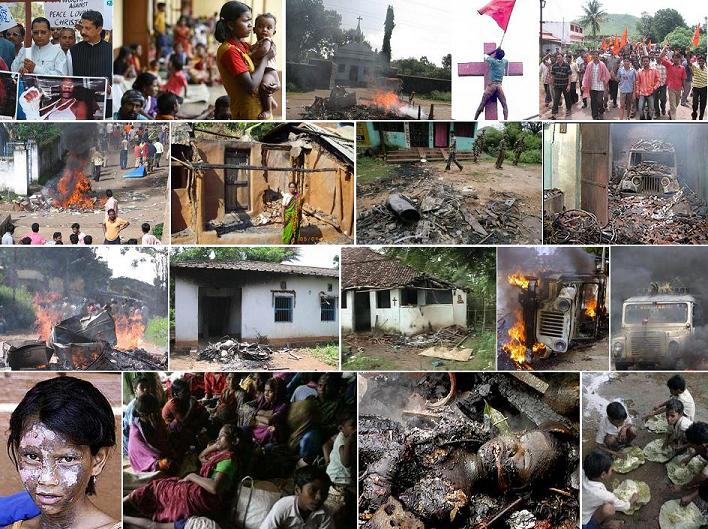 |
CHRISTIAN RALLY DEMANDS JUSTICE, SECURITY
A
press
statement
released on
November 20,
2008 to the Media
by
Dr. John Dayal |
Chamdigarh:- Thousands fear they may havd to usher in a second Christmas as refugees in Orissa forests Christians of Chandigarh and surrounding districts of Punjab and Haryana rallied in their thousands in the “City Beautiful” on Thursday demanding security and justice for their community in Orissa and Karnataka, the worst hit in the fundamentalist violence through several months of the year 2008.
“Over 50,000 Christian men, women and children of Kandhamal fear they will celebrate Christmas 2008 as refugees hiding for their lives in the forests of Kandhamal district in Orissa, in ill-kept refugee camps in the state or as internally displaced persons seeking safety and a livelihood in various cities of the country. They remain hounded by memories of Christmas 2007 which 1,000 of them spent in the forests after the first attacks,” speakers including National Integration Council member Dr. John Dayal, All India Christian Council National Secretary Dr. Sam Paul and Chandigarh-Simla Catholic diocese administrator Fr Thomas told the rally.
The Christian march and mass rally addressed a Memorandum to the President of India through the Governors of Punjab and Haryana and the Chief Administrator of the Union Territory of Chandigarh. The Memorandum cautioned that while the situation was comparatively peaceful in these the two states and the Union territory, reports had started coming in of communal gangs terrorizing Home Churches and small congregations in small towns.
The situation in Orissa, Karnataka Tamil Nadu and Chhattisgarh, however, continued to be terrible despite assurances by Central and state governments. In Orissa and other states ruled by the Bharatiya Janata party, the police forces and the subordinate criminal justice apparatus had been heavily infiltrated by the communal ideology of the Sangh Parivar. The result was that the police was a mute bystander and often an active participant in attacks on Christian houses of worship and gatherings, and assaults on priests. This state of impunity must end There also have been many cases of sexual violence. Cases were often not registered, and tragically, it was the victim Christians who ended up facing the wrath of the government. A hate campaign continues unabated in the media and on the streets, targeting Christians and their faith, questioning their patriotism and stigmatizing their religious personnel.
The Memorandum quoted figures compiled by the All India Christian Council: the states of Orissa, Chhattisgarh, Madhya Pradesh, Karnataka, Tamil Nadu and Uttaranchal have been severely affected. In Orissa, over 4,500 houses have been burnt and 300 villages purged of all Christians in the worst case of “ethnic cleansing” in Independent India. Over 50,000 are homeless, ten thousand of them in government
camps. We have the names of Sixty dead and close to Ninety men are still reported missing and may be dead in the forest. Independent probes have spoken of clandestine disposal of bodies. School children are without education, babies without infant food, and families without warm clothes in the cold hill tract.
The government must immediately crack down on hate campaigns and ensure justice. The Anti Communal Violence Bill, which was initially rejected by civil society because it was lopsided, must be immediately revised and brought into force, by an Ordinance if necessary after consulting all minority communities, the Memorandum said.
The Centre must use Constitutional provisions to ensure that State governments implement guarantees of freedom of faith and protection of the homes, places of worship, and livelihood the religious minorities. At present, criminal gangs are roaming free. Central forces that have been sent to Orissa, for instance, have not been able to rescue those in the forests for want of effective coordination with the state machinery.
There is also little justice in the relief, rehabilitation and compensation procedures. The victims of Orissa have been given a pittance. Even the victims of December 2007 violence have not been able to build their houses. Churches, burnt down by communal forces, must be rebuilt at State expense. The governments and the aggressors cannot evade their culpability and responsibility. The Church cannot continue to rebuild places of worship only to see them demolished and burnt by criminal gangs of a particular ideology, the Memorandum said.
The rally also affirmed the demand by the Catholic Bishops Conference of India, the National Council of Churches in India and the All India Christian Council that the Central Bureau of Investigation probe major cases, including that of the rape of a Catholic Nun in Kandhamal in August 2008.
Justice to the Christian community cannot be complete without accepting the just demands of the Dalit Christians for Scheduled Caste Status at par with their brethren in the Sikh, Buddhist and Hindu faiths, the Memorandum said. The sixty year old struggle for a fair deal, supported by several National Commissions, appeals to the basic tenets of Equality and Affirmative Action enshrined in the Constitution of India, the Memorandum added.
Posted on November 21, 2008 |
Obama and Mayawati: a Comparison in Contrast |
S. R. Darapuri |
It will be apt to mention in the beginning that a comparison between Obama and Mayawati is not very appropriate because there is a world of difference between their personalities and deeds. But some over enthusiastic followers of Mayawati have started comparing them and are spreading the dictum that "if Obama can do it why cannot she?" They have started projecting her as the future Prime Minister of India. As such it becomes necessary to make an attempt to make a comparison between Obama and Mayawati.
The first point of comparison between Obama and Mayawati is their social background. Obama is an African-American. His father was black and his mother was white. Mayawati's both parents are dalits. But it is pertinent to note that during his electioneering he nowhere used his black identity to influence his voters. Throughout his election campaign he spoke about his policies and plans whereas in the case of Mayawati she has never spoken about her policies and plans. On the other hand her dalit identity is the starting point of her politics for emotional exploitation of dalits.
The second point of comparison between Obama and Mayawati is their ability to mobilize fund for the party. Obama through small contributions raised a party fund to the tune of $650 millions but he deposited it in the party fund account and used it for electioneering. Mayawati also raised her property to the tune of Rs. 520 millions up to 2007 and further added Rs. 600 millions during 2007-08. But she did not deposit this amount in party fund account. Rather she deposited it in her personal and her family member's accounts. There are also allegations of selling MLA's and MP's tickets at election time at competitive rates. It is worth mentioning that CBI has already prepared a charge sheet against her for amassing personal property worth Rs. 300 millions beyond her known sources of income.
The third point of comparison between Obama and Mayawati concerns their policies and plans. As we know Obama fought the election on the plank of "Need of change for America" and has won it with this promise. He has promised to take America out of financial crises and reduce unemployment. AS regards Mayawti she has never made any promise to solve any public problem. In fact she does not have any such plan or program to solve the public problems like poverty, unemployment, lack of health infrastructure, drinking water, housing and illiteracy etc.
The fourth point of comparison between Obama and Mayawati is their pursuit of political power. Obama has been elected as the most powerful President of the oldest democracy of the world. Mayawati has also been elected for the fourth time as the Chief Minister of the most populous state (Uttar Pardesh) of India. Obama has promised to use the political power for solving the problems facing the U.S. people whereas Mayawati has been accused of using it for self aggrandizement. Dr. Ambedkar had remarked that political power should be used for social progress. But Mayawati lacks such inclination even in the case of dalits who are her prime constituency. As a result of it the dalits of U.P. continue to be behind the dalits of all other states of India except that of Bihar and Orissa. In spite of her occupying the Chief Ministership for the fourth time U.P. continues to suffer from under industrialization and over all backwardness. As such she can be held responsible for the backwardness of U.P. as well as that of U.P.dalits to a good extent. According to one study U.P. has suffered regression during the last decade. It is noticeable that Mayawati has been in power since 1995 with some breaks in between.
The next point of comparison between Obama and Mayawati can be in respect of psychological impact of their victory on their voters. In case of Obama his victory has exhilarated Blacks, Minorities and Whites also to good extent. In case of Mayawati dalits excluding intellectual section thereof and muscleman and moneyed men of higher castes are only exhilarated because the latter are especially the main beneficiaries of her position. Dalits have only the psychological satisfaction of having a Chief Minister of their own caste. They are totally deprived of all the material gains of power on account of corrupt and inefficient administration being run by Mayawati. Minorities, mainly the Muslims are highly skeptical about Mayawati because in her pursuit of political power she can make alliance with their staunch opponent and a communal party like B.J.P. as she had done thrice in the past.
From a brief comparison between Obama and Mayawati it becomes evident that it is not very appropriate because there is a world of difference between their personalities and deeds. Rather it can be said to be a comparison in contrast. Even then if admirers of Mayawati are so anxious to make a comparison they should look for qualities like a vision, an urge for change, impeccable integrity and inclination to use political power for social progresses as exemplified in Obama. They must display mental honesty and proper courage to criticize her for her personal greed to amass wealth, lack of vision and unprincipled pursuit of power. She may also be dissuaded from wasting public money in creating memorials and installing her own statues in an effort to immortalize her. People are immortalized by their noble deeds and not by their statue. Obama is to be judged in the near future but Mayawati has already been judged.
Note: Opinions expressed in this article are those of the author alone and not necessarily those of ambedkartimes.com
Posted on November 17, 2008 |
Arms for Scheduled Caste People
By Late I.D. Pawar, Distt. & Session Judge (Retd.) |
Atrocities on the weaker sections of the nation have become an integral part of the broad-based discriminatory scheme of the Hindu social order. The source of this gruesome victimization of Scheduled Castes can easily be traced to the Hindu Shastras, and there can hardly be two opinions about it.
Not a day passes when we do not experience or hear about blood-curdling and heart-rending brutalities being committed by the Hindus on the Scheduled Castes all over the country. Shameless molestation of innocent girls and women, mindless roasting alive, and gunning down of men and women, young and old, setting fire to their houses and razing them to the ground, and their social boycott, on flimsy excuses, have become the order of the day. Tamil Nadu, Bihar, Uttar Pradesh Madhya Pradesh, Rajasthan and Gujarat, to name only a few states, are notorious for perpetrating the most heinous and inhuman crimes on the defenseless people. It is an atrocious sin against humanity. Administrations of the concerned states have, wittingly and sometimes unwittingly failed woefully to stem the tide of violence. And bring the beastly criminals guilty of the offences to book. It is clear that the attitude of state governments towards the Scheduled Castes is. To say the least, lukewarm if not hostile. The only hope, even though a dim one, that still lurks lies with the Centre but the Centre must possess sufficient powers to bridle the states. Experience has shown beyond any doubt that for the safety and progress of the Scheduled Castes and other minorities two things are a must: one, parliamentary system of government based on universal and adult suffrage ; two, strong Centre. State governments should not be allowed a free hand in dealing with the affairs of the Scheduled Castes according to their own whims. They are generally swayed by narrow considerations of caste, parochialism and vested interests. The administration at the Centre Is expected to be capable of taking a fair view of the matter.
The society to which we have the misfortune to belong presents a strange phenomenon. It is like a vast expanse of a tangled jungle infested with ferocious beasts, devils and vampires. Reason and human considerations are an anathema to this social system. Atrocities on Scheduled Castes are committed not because they are poor but because of caste arrogance deep-rooted prejudices against them. Here is a society where the law of the jungle reigns supreme. How long can parsons even with a semblance of self-respect keep clinging to the apron strings of inhumanity prevailing in this jumble of people is awfully suffocating.
In view of such alarming happenings in the country the question of supply of arms to the suffering Scheduled Caste people assumes great importance. This question has been the Subject of discussion and controversy both in Parliament and in the public so far the opinion against the proposal, however, seems to have had an upper hand for reasons which cannot stand the test of impartial scrutiny. Providing arms to the Scheduled Castes who are empty-handed and defenseless against Caste aggression is the real and effective measure a putting new life into them and affording them the direly needed protection. At the same time this will act as a strong deterrent to the head-strong and confirmed aggressors. Denial of arm for self-defence would be I tantamount to denying them the right of self-preservation which is everybody's birth right.
The apprehension that the arms supplied to the Schedule Castes are eventually I likely to pass into the hands of the.' anti-social and undesirable elements and that it will also' aggravate caste tensions, stems from the fear which is more imaginary than real. This is a wrong thinking. The victims of caste arrogance will rather worship the weapons as their protectors and saviors. As stated above these weapons will serve as deterrent to the potential evil minded elements and thus help!' contain caste tensions. The criminals get emboldened when they find their victims helpless and defenseless. They will think I hundred times before embarking on their reckless adventures if they know they would be paid in the same coin.
It is further argued that giving protection to the scheduled castes is the duty of the government. This plea is nothing more than a cruel joke. It is common knowledge that the police which is expected, rather duty bound to protect and safeguard the honour and lives of these people, consists of non scheduled caste animus. Again the police make its appearance on the scene of the crime only after the ghastly drama has already been enacted and the miscreants had made good their escape at their sweet leisure. The only function of the police seems to be to remove the dead bodies of the victims of the caste ridden zealots and send them to the mortuaries for post-mortem Examination. It should also be remembered that it is not always possible to have prior information of the impending crime, not to mention the indifference of the police. How then to protect these people?
The main function of 1he concerned administration also seems to be to proclaim loudly that "the government is fully determined to maintain law and order at all costs", adding that "the situation is well under control". These ceremonial declarations are faithfully repeated every time an aggression takes place. Evidently it is, in the main, a hollow and meaningless exercise meant to hoodwink the public.
The faint suggestion of disarming the known and unknown or potential anti-Scheduled Caste elements is neither practicable nor purposeful, because a hue and cry is sure to be raised by the power hungry leaders of all hues to foil the attempt as they consider the criminal segments of society as their vote-banks. It is an open secret that a sizeable number of these leaders including many in the administration are hand-in-glove with the antisocial elements. Even if it be assumed for a moment that the licensed and some of the unlicensed arms can be withdrawn, it will be of no material consequence as illegal country-made arms of all sorts are easily available and in any number. Even smuggled arms are not difficult to obtain.
Keeping all the aspects of the problem in view, the result-oriented remedy that can with real advantage be applied to counter the terrible humiliations and brutalities to which the Scheduled Castes are being subjected. Is to. Equip them with necessary arms and also to give them training in the handling and use of these weapons, this is the way haw the demoralizing and dehumanizing lamb and-Wolf relationship between the untouchables and the Hindus can be extirpated. In the absence of such measures the one way traffic in butchery of the innocent and hapless people is bound to continue to the great shame of civilized people.
The adds are really heavy. On the one hand are deprived and disinherited people who are completely empty handed, while on the other are organized gangs of hardened and notorious criminals armed to the teeth with all kinds of deadly weapons, aided and abetted by big guns wielding influence. Ignoring or side-tracking the burning issue that is crying for solution is not only unjust and unwise but is full of potential dangers as it is bound to boomerang one day, and that day may not be far away.
Courtesy: The Discovery of Identity by Mr. C. L. Chumber
Posted on November 02, 2008 |
Khairlanji Massacre:
Charter of Demands from the Citizens |
The Khairlanji Massacre of 2006 brought out ugly facts of the caste based discrimination and violence. During the trial the caste angle was brought into the notice of the Honourable Judge. The Khairlanji massacre is the straightforward and clear case of caste atrocity. There are special provisions under the Prevention of Atrocities Act. This act is not supposed to act as a safeguard but enforces the constitutional mandate abolition of untouchability. Four members of the Bhotmange Family were brutally killed, but what happened before the killings will even put the barbarians in shame. It was the maniac mob that stripped the women naked and paraded them. Though the honourable court has ruled out the molestation of women, the simple fact that the bodies were found naked should be enough to attract the provisions of outraging the modesty of mother and her only daughter.
Priyanka, the brightest child, had a dream to live a better world and her dream was shattered by the caste minded people. The murder of the family by the mob is not just a murder, but it is plot masterminded and preplanned. The fact that the murders did not take place due to forced circumstances, but by the preplanning should be suffice enough to show that there was some underlying intention. The underlying intention became obvious when the perpetrators heaped caste abuse when the most horrific incidence that sent shock waves throughout India and the world.
What followed after the incidence is a classic case of defunct Police administration, corrupt politicians & government officials colluding together and utter silence of the media in the beginning. The justice machine moved only when the activists and civil society responded. The media not only intervened positively afterwards, but the debates and discussion on the atrocities and caste discrimination began on the national level. This is a very positive development and the highest official, the Prime Minister, acknowledged the fact of the hidden apartheid in India.
And what was done by the civil right activists, media and conscious citizens of India was undone by the Judicial inactivism. The Khairlanji Massacre case should not only have made Judiciary more active, but also proactive role in safegurading the rights of the discriminated communities in India. The Parliament have made laws to protect the discriminated communities and the Judiciary is unmaking those laws.
The common citizens of India have right not only to condemn the laws which takes away their human rights, which are the foundation of our country, but they have also right to defend the rights that are flowing from the Constitution of India. In India, the constitution is supreme and the Judiciary must act in accordance with the law of the land.
We, the undersigned members of Indian Republic, are outraged to learn that caste Hindus, through their predecessors in interest in power, played a role in perpetuating enslavement and untouchability of Scheduled Caste and Scheduled Tribes for 3000 years.
According to various reports of government of India and other research many Caste Hindus are accused of benefiting from: propagating untouchability, torturing Scheduled Caste and Scheduled Tribe to keep them enslaved, stealing their labor, raping their women, and treating them like inhuman. All of this was done for social-economic and political gain of caste Hindus.
The protective actions on part of government are insufficient to ensure justice and human treatment of SC/ST community in free India. We expect strong and sincere efforts by the government in power for establishing justice, liberty, equality, and freedom to all its citizen. We believe that all citizen of Indian Nation are equal before law and before government. India is boasting high about its economic boom and also periodically we stand as a nation for the rights of humanity and peace. Eg. Recent protest against China saying they are violating the rights of Tibetans, but what about our own people who are treated less than animal in the free country.
Scheduled Caste and Scheduled Tribe population is still struggling to overcome the vestiges of caste — discrimination in housing, employment, education, economic development opportunities, and healthcare opportunities, to name a few.
The caste pride, social-economic status of few people is valued at the cost of killing, raping, and trafficking Scheduled Caste/Tribes women, men and children. We demand that India as nation and Maharashtra State has to take up responsibility for historical crimes against humanity.
We urge that strong and immediate action must be taken with public apology for crime of caste and untouchability. In addition we as a citizen of this country demand reparation for this age old slavery and untouchability.
Demands:
- Police:
- Representation of SC/ST officer- preferably women SC/ST officer with good record must be placed at each police station that is empowered to register the case under SC/ST POA Act 1989.
- Equal representation of SC/ST on each Police officers rank.
- 1/3 of the police higher administration must represent SC/ST officers and they must not be transferred on random basis.
- Every forth subsequent state DGP must be from SC/ST community
- According to Supreme Court apex directive on police reform, each state must set up State Security Commission. The State Security Commission will be chaired by the state Deputy Chief Minister and Home Minister with a Director General of Police as its secretary. A leader of Opposition as well as a woman and another non- government member will also serve on the panel. Two third of the member of the commission must be from SC/ST communities.
Judiciary
- Representation of SC/ST judges and lawyers in public prosecution
- The cases where Caste based violence and or violence/crime against SC/ST occurs must be tabled before judges bench with adequate representation of SC/ST.
Doctors
- Qualified and independent doctors preferably women from SC/ST community
- Regular training
As form of reparation and restitution of 3000 years old untouchability against SC population, Government of Maharashtra/Government of India must apologize and a Comprehensive decent Urban resettlement must be planned of the rural SC population who are under threat or vulnerable to the attacks from caste Hindus. SC ST POA ACT- must be strengthened with comprehensive amendments to include all above points Responsible Media Establishment of Caste Monitoring Commission (unlike SC ST commission) with substantial powers to initiate, monitor, research, and coordinate welfare projects, violent/non violent atrocity cases, anti-discrimination policies in rural/urban labor & employment issues, and other issues related to violation of human rights of SC/ST. District level participatory committee of government and dedicated NGOs lead by SC/ST communities
- These NGOs must be engaged at city-village level administrative and municipal activities/projects
Establishment of 24 hours toll free help line for antidiscrimination acts with strong linkages to the caste monitoring commission. Periodic Comprehensive Need based Training program in coordination with dedicated SC/ST lead NGOs for doctors, police, judicial officers, media personnel, government executives , and for all other concerned machineries. Special budget allocation for all above activities along with transparency with NGOs/peoples representatives
- We also demand that the following Recommendations from Government of Maharashtra Report after the Khairlanji Massacre should be complied with:
i) Adequate police protection should be immediately provided to Shri Bhaiyalal Bhotmange, Shri Siddharth Gajbhiye, Shri Rajan Gajbhiye, their relatives and the other Scheduled Caste families of Khairlanji and Dusala villages.
ii) Similar police protection be provided to all the witnesses of the incident.
iii) In view of a serious neglect of duty by the district administration and police in handling the Khairlanji incidence, and consequent loss of people's trust in the State machinery, the CBI investigation should be started immediately, and a charge sheet be filled within stipulated time period.
iv) A charge-sheet be filed within the stipulated time pried. The aspect of deliberated destruction/omission of evidence should be specifically looked into by the investigating agency, and accordingly investigation should be carried out and charges should be fixed on the concerned.
v) It is not enough to merely transfer / suspend the officers guilty of neglect of duty in handling the incident. Such officers should be made co- accused in the criminal proceedings, and an enquiry should also be initiated against them under the Prevention of Atrocities Act, 1989. The officers found guilty should be denied all service benefits including pension, gratuity, etc.
vi) The medical registration and qualifications of the medical officers including Civil Surgeon who have committed serious neglect in the post-mortem of Khairlanji victims should be immediately cancelled, and Bhotmange Waiting for Justice they should be subjected to similar penal procedure as the other officers guilty of neglect of duty.
vii) Shri Pankaj Gupta, Special Inspector General of Police, Nagpur has made a premature and irresponsible public statement that the Khairlanji incident did not involve rape on female victims. It is learnt from the public that Shri Pankaj Gupta accepted a bribe from the interested elements to make such a statement. Similarly, it took 14 days for Shri Gupta to visit Khairlanji, which takes just about an hour's journey to reach from Nagpur. All these matters are extremely serious and hence a discrete confidential enquiry should be initiated against Shri Pankaj Gupta in order to investigate the above matters.
viii) A special investigation into the sequence of events including landline and mobile phone calls made, secrete meetings held in and out of the village prior to the incident especially between September, 3 and September, 29 should be conducted with a view to uncover the roots of an organized conspiracy to allow the Khairlanji massacre.
ix) The Government should make it mandatory for the concerned Superintendent of Police and Special Inspector General of Police (Range) as well as Inspector General of Police (PCR) to visit every location of atrocities within 24 hours of incident, and report directly to the Home Department on the visit. The Director General of Police should also visit the location depending on the gravity of the incident.
x) Even after handing over of investigation to CBI nothing prevents the Director General of Police from visiting Khairlanji. This will send the right signal to the police machinery across the State at all levels, and will ensure proper assistance of Police Department to CBI in further investigation. xi) The decision of handing over the Khairlanji investigation to CID and subsequently to CBI was taken at the highest levels of State Government only in the wake of pressing demands and violent demonstrations by Buddhists and Dalits to this effect. Ideally, the State Government should have proactively established a dialogue with all the important stakeholders in this matter, and initiated the necessary response suo moto. Such proactive measures need to be taken at the Government level even now.
xii) The Vigilance Committee at the State level must meet once in a quarter to constantly review the status of atrocities and should regularly take the appropriate corrective measures. Similarly, the district level Vigilance Committee must meet every month.
xiii) Khairlanji incident triggered a lot of social commotion and protests. Many a protestors have been taken into custody and are subjected to further proceedings. The provisions under which they have been booked should be examined by an independent authority, and fast track courts be established for deciding these cases.
xiv) Henceforth, if atrocities indicate the possibility of sexual assault and rape then the following care should be taken while conducting post- mortem :
a. The post-mortem must be done by a sufficiently senior, qualified and experienced doctor along with a lady doctor;
b. Careful examination of genitals of victim along with proper samples of Vaginal Swab, Rectal Swab, Pubic Hair, Nail Clippings of both hands, Blood, etc., be carried out in presence of a qualified lady witness. The samples should be sealed in presence of the lady witness. c. Photographs of the naked bodies of victims should be taken for further reference during investigations as the bodies decompose and perish rapidly.
v) A Mobile Investigation Van fully equipped with life-saving devices, medicines, and trained doctors and nurses along with senior police personnel should be dispatched to the concerned location within two hours of reporting of an atrocity.
vi) A Standing Committee at the Divisional Level consisting of medico- legal experts, retired judges, retired police officers with proven integrity and character, NGOs, etc., should be constituted to oversee all the aspects of investigation including collection of evidences and witnesses, preparation of charge-sheets, presentation of the case by public prosecutor, etc.
vii) The Government should immediately cause to undertake through a neutral agency a survey of all the villages in the State to identify / detect villages observing untouchability in any form. In order to ensure that no village henceforth indulges in discrimination against Dalits in any form, a policy decision
needs to be taken at the Government level that any village observing untouchability in any form shoud not be given any grant by the Government. The Village Panchayat body should be immediately superceded after the incident. The Member of Zilla Parishad and Panchayat Samiti from the concerned area will be suspended immediately after the preliminary investigation establishes commission of offence.
viii) In case of reporting of discrimination or atrocities in a village, the village level / local level administrative functionaries such as Talathi, Health Worker, Anganwadi Worker, Gramsevak, Police Sub Inspector, Police Patil, Beat Constable, etc., should also be suspended immediately.
The action taken on the elected representatives and officials should be widely announced and publicized to send the right signal to the State machinery. The survey should also identify villages with a very small number of Dalit households (within five) and a history of atrocities / communal tensions. The Dalit families from all such village should be rehabilitated along urban fringes with proper provision of schools, water supply, playgrounds and such other amenities as per the State Rehabilitation Law and Policy. Bhandara district can be the starting point for this exercise to be carried out under the Special Component Plan. All disputes around Dalit lands, properties, wages, jobs, loans, etc.,should be proactively tracked and monitored personally by Tehsildar /Sub-divisional Officer under supervision of Collector, and necessarypreventive measures should be taken to prevent the culmination of such disputes into atrocities. Special Dalit-Vasti-Registers should be maintained for all Dalit settlements across the State, and a system of GIS-based monitoring of such settlements should be evolved and made available at all the Deserted Hut Collectorates. The Registers should be regularly updated every six months.
iii) Dalit-Vasti-Registers should also include data on a set of objective indicators reflecting latent conditions for atrocities in a village, thus serving as an 'Early Warning System' for taking preventive / preemptive action against a possible outbreak of atrocities. The data should be collected by NGOs or such other stakeholders not part of the formal administration system. However, once the data is in place the administration should be held responsible for the necessary vigilance and preventive steps.
iv) Relevant sections of CRPC should be invoked and amended suitably if required, to fix the responsibility of reporting of atrocities / indications of possible atrocities in concerned jurisdictions on the elected representatives such as Sarpanch / Panchayat members, Municipal Councilors, etc. In case the atrocities break out then these non-officials should be held responsible for their failure in early reporting.
v) A 24-hour help-line should be started with the help of NGOs in each district to facilitate emergency response to the incidents of atrocities so as to prevent and minimize the loss of life, property and dignity of the vulnerable section of the society. A special scheme in this regard should be designed and implemented though the Social Welfare Department and Human Rights Commission with the participation of suitable agencies. Bhotmange's Hut Surrounding xxvi) A Handbook on Atrocities containing detailed guidelines on the corrective and preventive actions to be taken by the concerned authorities under the PoA, Act, 1989 be prepared and issued by the Government for ready reference of the administration machinery.
xxvii) A special Committee should be constituted to evaluate the status of implementation of PoA Act, 1989 in the State of Maharashtra, and possible areas of amendment of the Act (if any) be identified and acted upon by the Government.
xxviii) The Committee should also focus on the long-standing issue of 'Low Rate of Conviction' in the cases of atrocities. The necessary action to set up Special Courts as provided in the PoA Act should be taken immediately.
xxix) Atrocities against SC / ST are often more heinous than terrorist acts. Further, atrocities are often a deliberate and planned way of terrorizing the SC / ST populations, which constitute about 22% of the total national population, i.e., about 250 million persons. Hence atrocities should be viewed and dealt with on par with terrorism. Provisions of stringent Acts to control organized crime such as POTA, etc., may be extended to such atrocities.
xxx) The Section 4 of PoA Act, 1989 should be made cognizable.
xxxi) As per Section13 (2) of PoA Act, 1989 adequate representation of SC /ST should be ensured in the police force.
xxxii) The Nodal Officer under PoA Act, 1989 should be further empowered, and should be provided with definite execution machinery for effectively delivering his responsibilities. The Nodal Officer should also be authorized to write on a plane sheet of paper the confidential reports of the Collector, Superintendent of Police, Special Inspector General of Police (Range) and Inspector General of Police (PCR), which would ultimately be a part of their Annual Confidential Report.
xxxiii) A State-wide campaign of training should be initiated for all concerned authorities, functionaries and other stakeholders on the issue of atrocities, and the corrective-preventive measures to be taken in
coordination by all of them. This exercise should be taken up by the Social Welfare Department immediately.
xxxiv) Similarly, a State-wide awareness campaign should be initiated to sensitize the public at large about the issue of atrocities. An effective use of television, radio, print media, cable networks, e-mail / internet, etc., be made to disseminate the public messages on this issue. A clear message should be sent through media that the villages / groups / persons committing atrocities on SC / ST will be dealt with very severely.
xxxv) A special section on atrocities should be included in the school curriculum and text-books under history / civics / social service, etc, and accordingly the teachers also should be given a special training on Equity and Social Justice issues.
xxxvi) A State Action Plan for eradication of atrocities should be prepared and announced by the State Government through participation of NGOs, activists, social workers, legal-constitutional experts, government and private agencies, etc. A social movement towards achieving social justice and solidarity should be initiated through participation of NGOs and civil society organizations. Through such a movement cutting across all sections of society a common forum such as 'Samajik Samata Sangh' could be created for addressing the social evils such as untouchability, discrimination and atrocities.
Visit http://atrocitynews.wordpress.com/ Forwarded By Pradip Bansode and M S Bahal
Note: Opinions expressed in this article are those of the author alone and not necessarily those of ambedkartimes.com
Posted on September 27, 2008 |
Historical Decision on Historical Day Poona Pact Khairlanji Dalit Killers Sentenced to Death |
Dr. S. L. Virdi Advocate
September 24th, 2008 has gone to red letter day in the history of India when Maharashtra ’s Bhandara District and Sessions Court awarded death penalty to six persons and two others were sentenced to life imprisonment, who were found guilty of brutally assaulting and murdering four members of a Dalit family on September 29, 2006.
Brief history of the episode is that a Dalit, Bhaiyalal owned some land in village Khairlanji which was not liked by the upper caste killers. This was the basic reason behind the Khairlanji Carnage.
This episode not only sent shock waves across India, but also triggered one of the worst riots in the Maharashtra State. A train was set on fire and Dalit rage simmered all over India.
Following public outcry, the government handed over the investigation to the CBI. The trial began in May 2007 and lasted over a year during which 36 witnesses were examined, including four eyewitnesses and the eight convicts were held guilty of murder.
In spite of threats to his life, Bhaiyalal Bhootmange, the key witness who lost his wife, daughter and two sons, one of whom was blind, in the massacre, stood firm and fought for justice. The government has provided a job for him and a house on compassionate grounds, but he wants all the accused, including the three persons who have been acquitted, to be punished.
It is pertinent to mention here that t he war waged by Dr. Baba Sahib Ambedkar with Gandhi for Separate Electorate was also ended on 24 th September, 1932 with Poona Pact which was a historical fight for securing constitutional rights to Scheduled castes and Dalits. Through this fight, Dr. Ambedkar secured Constitutional recognition and an honorable place for the Scheduled Castes and Dalits in the ensuring government of India Act, 1935.
Note: Opinions expressed in this article are those of the author alone and not necessarily those of ambedkartimes.com
Posted on September 27, 2008 |
Genesis of Terrorism
Raghbir Singh Dhillon* |
|
Sikh ideology stands for universal brotherhood and love for the achievement of which people have to lead life in accordance with the natural laws, known as hukm in the Sikh lore, which govern the whole universe. Fear is ingrained in the humans since time immemorial because of their multifarious weaknesses on account of sheer ignorance. Psychological fear was later planted in them by the priests who misinterpreted natural happenings and related them to their bad luck. Taking advantage of these fear psychosis despots and other powers with the help of their coteries including priests used religion to keep it embedded in their minds through karam kands, whims, administrative means and armed forces so as to incapacitate them from rising against their exploitative methods. In view of the growing unrest in the masses this system was replaced in the 19 th century by controlled monarchy. When the unrest became more wide spread system of adult suffrage was introduced whereby the poor people are now allured to enjoy the ‘right’ to decide and choose which elite political group of exploiting people should rule them. In this system common man has no chance to ever become the master of his welfare. Some of the people with humble background do get elected no doubt, but their reins are in the hands of some elite group who finance their election. They pull their reins in the direction they want with the result they also, in due course, start swimming in the same pool of corruption. We have seen cycle and rickshaw users soon becoming proud owners of cars, properties and of other means after winning elections. They use such political phraseology in election manifestos which illiterate people fail to understand. Elite groups of the communal majority with minor political differences succeed in forming the government with the help of their like-minded groups or some regional parties and forget the promises made to the people who have now come to realize this reality after many election processes since independence. Formation of UPA ( United Progressive Alliance of Congress) and NDA (National Democratic Alliance of BJP etc.) and Akali-BJP combination in Punjab with communal majority pulling the shots are classic examples. Such governments have always passed laws like TADA, POTA and Armed Forces Act for Disturbed Areas to frighten the persons whenever they rise to demand their rights. Object of all these Governments has always been to keep the masses under their thumb for exploiting their labour for the benefit of only a few while the majority suffers.
Under the garb of such pseudo-democratic system minorities and poor of other sections suffer in respect of their political rights, culture, education, language, economic progress, and religious liberty because the judicial set up, economic and administrative policies of such Governments which though claim to be by the people and of the people, are actually never for the people and are for the benefit of elite groups only. Agitations by the underprivileged classes for demands which go against the interest of the elite classes are ruthlessly suppressed. To debar their success in elections and also to scuttle their agitations the ruling groups arouse communal passions too so that they should not make united front against them to save their interests which are ignored or side tracked and brushed aside by sheer majority. Thus minorities and other poor start losing confidence in the electoral process. They then feel forced to adopt violent methods to achieve their genuine rights denied by the Government.
Birth of terrorism is due to regional dissatisfaction also where a region feels that the yardstick of administration applied to it is different from the one applied to other regions as in the case of Punjab , J&K and North Eastern States . Discriminatory refusal to demarcate states on linguistic basis and unfair distribution of river waters ignoring the Riparian Laws resulted in violent agitations in Punjab and other parts. India is a federal republic as per Constitution. And when Akalis wanted to have more powers for Punjab as a federal unit and started Dharam Yudh in 1982 entire Sikh community including defence officers, bureaucrats, political and religious leaders was painted as seditious, terrorists and was degraded in the eyes of other Indians. This campaign of tarnishing their image continued during and after Operation Blue Star scars of which would ever remain fresh in their hearts. Efforts were made to dub the community as such in foreign lands too. To sow the seed of dissent in the Sikh community some selfish of them were helped by dubious means to get majority in the elections after Operation Blue Star and form Government to suppress the Sikhs through their stooges. People know it and it needs no repetition. Such methods are always used by the ruling groups to keep the poor and the minorities divided on communal lines as well to continue their economic exploitation. They also try to demoralize the religious minorities with a view to force them to merge their identifying religious thoughts with the majority community. Due to the discriminatory policies of the federal Government agitation for Telengana is going on since pre-partition days. So is the case in J&K, North Eastern States and Naxalite affected belt spread over Maharashtra , Madhya Pradesh, Jharkhand, Chhatisgarh and Bihar . A woman by the name of Charmila is on fast unto death in the armed forces custody in a Command Hospital in Assam with forced feeding for the last 5 years besides many others languishing in different jails.
World events show that the very rulers dubbing some people as terrorists were put behind bars when the people’s rule came. Russian example is before us. If we look at the happenings in the 20th century in India alone, Indian leaders like Gandhi and Nehru who in the eyes of nationalist Indians were heroes were terrorists in the eyes of the British Government. So was Shaheed Bhagat Singh in the eyes of Gandhi and the people of his thinking who branded Subhash Chander Bose also as a protagonist of terror-inspiring activities. Nehru put his freedom fighter colleague Sheikh Abdula of Jammu and Kashmir in jail because he pleaded the cause of the people of his State which could not go down his communal throat. On the other hand politicians, government servants, industrialists, businessmen and other influential persons who conceal income to save tax, do not return loans to the government and banks, siphon of people’s money through stock scams, avoid payment of sales tax, excise and custom duties , adopt dubious means for the purchase of imports resulting into Bofors, Fertilizer and Tehlka like scams, not only undermine the national security by their espionage activities but spoil the economy of the State also. They deserve to be treated as anti-national and terrorists but because of their political clout or otherwise corrupt practices they escape any action.
Deprived groups perforce become terrorists when their genuine demands are not accepted through peaceful means. State terrorism violates natural laws and human rights .
Sikh ideology is based on love and debars exploitation of any kind. " hku prwieAw nwnkw, ausu sUAr ausu gwie]" To wage struggle for the establishment of a peaceful society Guru Nanak Dev says, "jau qau pRym Kylx kw cwau isru Dir qlI glI myrI Awau]" so that it is not staved with the fear of death. It was he who charged Babur with the words, "pwp kI jMJ lY kwblhu DwieAw jorI mMgY dwnu vy lwlo]", and said,"jy skqw skqy kau mwry qw min rosu n hoeI] skqw sIhu mwry pY vgY KsmY sw pursweI]" and further condemned the government functionaries saying, " hrxw bwjW qy iskdwrW,eynw piVHAw nwau]PWDI lgI jwiq Phwiein AgY nwhI Qwau]….rwjy sIh mukdm kuqy]jwie jgwiein bYTy suqy]". Sikhs are born independent to live by the maxim "jy jIvY, piq lQI jwie] sBu hrwm jyqw ikCu Kwie]" As a result of such teachings Sikhs shattered the tyrannical Moghal rule, did not submit to interference in their religion by any Government, opposed emergency tooth and nail in 1975 and are still impatient to have their full say in the land of their Gurus for living a dignified life.
Time has come for the poor irrespective of any caste, creed or belief to stand up against their exploitation by any group as they had risen in the period of Sikh ascendancy of Banda Singh Bahadur’s time in the early 18th century which conferred on them the right to decide their own destiny. They served the masses in the real sense of Sikhism at that time.
* 981-446-5012 Email: raghbirsinghdhillon@yahoo.com
Note: Opinions expressed in this article are those of the author alone and not necessarily those of ambedkartimes.com
Posted on September 15, 2008 |
40% OF SC/ST FACULTY POSTS IN THE CENTRAL UNIVERSITIES LYING VACANTMohan Lal Phillauria (91-988-840-5888) |
|
It has been reported by Sh Rahi Gaikwad in the daily HINDU [Dated 31.08.2008] published from the Chennai that even after four decades of reservation, over 40% of SC/ST posts in the central universities are lying vacant in the 19 central universities. Out of the total number of 4887 posts sanctioned by the UGC, there are only 629 SC/ST lecturers belonging to scheduled castes/Tribes. This leaves a backlog of 471 as per the data available for the year 2007-08 sourced from the UGC under the right to information Act.
The poorest record is of the Benars Hindu University Varanasi where out of 155 SC Lecturers posts and 74 ST posts only 86 and 24 have been filled. Being a minority institution, the Muslim Aligarh University is exempt from the reservation .But there is no SC/ST lecturer in the Institution inspite of the listed requirement of 193 faculty members from the SC/ST quota. According to the union govt. rules, the % of reservation in central Universities is 22.5%for SCs and 15% for STs Extrapon of the data based on these figures shows that the SC/STs still remains poorly represented in higher education. With 629 SC/ST lecturers, their representation is only12.08%, bay below the 22.5% mark out of the 4887 posts sanctioned in the central universities. The UGC has failed to ensure the effective implementation of the reservation policy in the central universities and grantee institutions which are deemed -to- be universities states the UGC guidelines documents. Readers and Professors.
As you move up the cadre, from Lecture to the Reader and professor you will see that the number of SC/STs starts dwindling sharply. Majority of the universities have zero SC/ST Readers and Professors.16 out of the 19 central universities have no SC Professors and 17 have no ST Professors. Part of the reason could that till recently reservation was applicable only at the entry level post of lecturer. It did not apply to the promotions and for higher posts. he UGC guidelines of 2006 mandated 22.5% reservation for readers and Professors as well. But two years later, the hiatus remains intact. Not much has changed in the past few years, despite the awareness among authorities of the dismal implementation of the quota. "I AM NOT SURPRISED, "says Prof. R.K. Kale from the Jawahar Lal Nehru University New Delhi who himself has questioned in the academic journal The University News, the feckless implementation in the central Universities.”It is a very slow process" he admits, although with a note of assurance that the UGC is taking keen interest in overseeing strict implementation of the reservation policy.
Data from the State Universities and the colleges affiliated to them opens yet an other can of Worms. State Universities follows State level figures. UGC figures for 53 State Universities shows a backlog of 50%. Quite a few of them do not SC/ST lecturer. Let alone Professors and Readers. While academics admit that the posts lying vacant are a cause for concern, none of the authorities, at the centre or at individual college level has any punitive power. Although the UGC claims to have upped the ante, the absence of clear deadlines complex procedures, bureaucratic apathy and above all entrenched casteist Attitude make enough path ways for circumventing the law with impunity. At present a number of qualified SC/ST teachers , even from the remote towns are batteling with the system against the unjust contract based appointments, abrupt termination orders and unfounded rejections by the Interview panel while denial of opportunities continuous. In this scenario, the usual refrain of candidates no available or the candidates not suitable rings hollow.
Note: Opinions expressed in this article are those of the author alone and not necessarily those of ambedkartimes.com
Posted on September 03,, 2008 |
DALITS & DALIT LEADERSHIP
MOHAN LAL PHILLAURIA |
|
It is a fact that the Maharashtra state is at the top so far the awareness among the Dalits is concerned. I congratulate Mr. Rakshit Sonawane for his excellent contribution the reality show and reality check. It may be because the reasons that Mahatma Phule was born in Maharashtra who along with his wife Savitry Bai did a commendable job in the field of education and particularly for women in general. Thereafter Chhatrapati Shahuji Maharaj made provision for reservation and economically supported the deserving cases. It was an historical event that Dr. Ambedkar was also from Maharashtra . It was during his time that he only led the Satyagrahas for access to water in Mahad and an entry to the temple in Nasik . It was very unfortunate that Dr. Ambedkar died on 6th.December 1956 and thereafter there was a big gap of his followers.
It was only the Mr. Kanshi Ram who translated the ideology of Dr . Ambedkar started with his BAMCEF factor during the year1980 onward. Later on Mr. Kanshi Ram converted BAMCEF into BSP presently headed by Miss Mayawati now the Chief Minister of Uttar Pradesh. She has been accepted and recognised leader of the Dalits in the India . Though Mr. Kanshi Ram was born in Panjab but he has started his struggle path from Pune and the got success in Uttar Pradesh. In Punjab he has got good followings in the very beginning but later on the entire team of the followers dispersed during his lifetime. In Punjab one BSP is headed by Mr. Devi Dass Nahar and other BSP is headed By Avtar Singh Karimpuri . There are other factions BSPs formed by the family members of Mr. Kanshi Ram . Thus as on date there is not even a single leader in Punjab like Ram Dass Athawle in Maharashtra whereas there is lot of scope in Punjab of emergence of Dalit Leadership. There is a total division of Dalit population and Dalit leadership the result is obvious and inspite of the capacity of the rulers the dalits are the slaves of the non dalits.
Mahatma Phule has written one book 'GHULAMGIRI'. In Maharashtra this book was published by the Maharashtra Govt. It is a govt. publication. Sh. Ashwani Kumar Balachaur has translated this book into Punjabi which is yet to publish, but one chapter of the book was published in the daily SPOKESMAN [a daily Punjabi news paper and is not liked by the present govt.]The chapter pertains to the lord Parsu Ram. The very next day the representatives of the Hindus have attacked the office of the Newspaper and has registered a case against the Newspaper and the Translator. T translator is a Dalit and is an intelligent enough who understand the Ambedkar philosophy. The translator is totally isolated and the Dalit leaders are sleeping. It is a question when one book is published by the Maharashtra Government Then how it is objectionable in the state Punjab when it is translated into Punjabi. Punjab Govt. has recently decided to adopt Punjabi and to perform all the function in Punjabi. But, what is wrong in translating the one Govt. publication by some intellectual No Dalit leadership has come forward to pursue this matter Dalits are harassed on daily basis. Dalit women are raped if there is Khairlanji massacre in Maharashtra there was a Talhan episode in Punjab . There was Jhabar episode in Mansa District, where Bant Singh has lost both his arms in a fight and earlier his daughter was raped.
Maharashtra and the Punjab are the prosper states which are the native states of Dr. Ambedkar and Mr. Kanshi Ram. There fore the other states expecting more from these states. In Punjab the Dalits are more than 33%, the dalits are militants for other castes and creeds of the state. The Dalits of the state have to have followed the path shown by Dr. Ambedkar. It can only be either by the party of the Dalits exclusively or by the DALIT leaders in the other parties like BJP, COMMUNISTS OR CONGRESS. Intellectuals from the Dalits in Punjab are also sitting silently. There are number of IAS, IPS retired officers, who are passing their times and are not paying their attention to the issues as was expected by Dr. B. R. Ambedkar from these officers who have enjoyed their life by way of reservation. There is no doubt that the dalits of the Punjab as on date are leaderless. It is the moral duty of the thinkers and the responsible intellectuals of the Dalit communities to be one. If they are one they can rule over the state like UP.
Note: Opinions expressed in this article are those of the author alone and not necessarily those of ambedkartimes.com
Posted on August 30, 2008 |
SURVEY OF THE SOCIAL PROFILE
OF THE KEY DECISION MAKERS IN THE NATIONAL MEDIA |
By: Anil Chamaria (Freelance Journalist),
Jitendra Kumar (Independent Researcher) , Yogendra Yadav (Senior Fellow) , CSDS |
KEY FINDINGS
- India's 'national' media lacks social diversity, it does not reflect the country's social profile
- Hindu upper caste men dominate the media. They are about 8 % of India's population but among the key decision makers of the national media their share is as high as 71 %.
- Gender bias rules: only 17 % of the key decision makers are women. Their representation is better in the English Electronic media (32 %).
- Media's caste profile is equally unrepresentative. 'Twice born' Hindus (dwijas comprising Brahmins, Kayasthas, Rajputs, Vaishyas and Khatris) are about 16 % of India's population, but they are about 86 % among the key media decision makers in this survey. Brahmins (including Bhumihars and Tyagis) alone constitute 49% of the key media personnel.
- Dalits and adivasis are conspicuous by their absence among the decision makers. Not even one of the 315 key decision makers belonged to the Scheduled Castes or the Scheduled Tribes.
- The proportion of OBCs is abysmally low among the key decision makers in the national media: they are only 4 % compared to their population of around 43% in the country.
- Muslims are severely under-represented in the national media: they are only 3 % among the key decision makers, compared to 13.4% in the country's population.
- Christians are proportionately represented in the media (mainly in the English media): their share is about 4 per cent compared to their population share of 2.3 %
- Social groups that suffer 'double disadvantage' are also nearly absent among the key decision makers: there are no women among the few OBC decision makers and negligible backwards among the Muslims and Christians.
- These findings are based on a survey of the social background of 315 key decision makers from 37 'national' media organizations (up to 10 key decision makers from each organisation) based in Delhi. The survey was carried out by volunteers of Media Study Group between 30 May and 3 June 2006.
- The survey was designed and executed by Anil Chamaria, Feelance Journalist, and Jitendra Kumar, Independent Researcher, from Media Study Group and Yogendra Yadav, Senior Fellow, CSDS.
Survey methodology:
For this survey 40 ‘national’ media organizations located in Delhi were identified. These included all the major news papers, news magazines, radio channels, television channels and news agencies that could be said to have a national spread. Of this information could be obtained about 37 organizations. For this purpose different publications or channels of the same media house have been treated as different organisations.
For each of these organizations we sought information on the top 10 ‘key decision makers’ who matter in deciding the news and editorial policy of the organization. For each of these persons thus identified, information was collected on their social profile in terms of their gender, age, religion, caste/community, mother tongue and state of domicile. The information was available for 315 key decision makers. This was gathered by a group of volunteers of the Media Study Group. Since the information was gathered not by face-to-face interview but by speaking to colleagues and other informants, the data here may contain some errors.
SUMMARY TABLES
Gender Profile
|
Men |
Women |
Print Hindi |
86 % |
14 % |
Print English |
84 % |
16 % |
Electronic Hindi |
89 % |
11 % |
Electronic English |
68 % |
32 % |
All |
83 % |
17 % |
|
Religious profile
|
Hindu |
Muslim |
Christian |
Sikh |
Share in India’s population |
81 % |
13 % |
2 % |
2 % |
Print Hindi |
97 % |
2 % |
0 % |
0 |
Print English |
90 % |
3 % |
4 % |
0 |
Electronic Hindi |
90 % |
6 % |
1 % |
0 |
Electronic English |
85 % |
0 % |
13 % |
2 % |
All |
90 % |
3 % |
4 % |
1 % |
|
Caste-community profile
|
Brahmin |
Kayastha |
Vaishya/
Jain |
Rajput |
Khatri |
Non dwija upper caste |
OBC |
Print Hindi |
59 % |
9 % |
11 % |
8 % |
5 % |
0 % |
8 % |
Print English |
44 % |
18 % |
5 % |
1 % |
17 % |
5 % |
1 % |
Electronic Hindi |
49 % |
13 % |
8 % |
14 % |
4 % |
0% |
4 % |
Electronic English |
52 % |
13 % |
2 % |
4 % |
4 % |
4 % |
4 % |
All |
49 % |
14 % |
7 % |
7 % |
9 % |
2 % |
4 % |
|
Caste-Community profile compared to population share
Caste/community group |
Share in India’s population |
Share in key media personnel |
|
|
|
‘Twice born’ Hindus (Brahmin, Kshatriya, Vaishya, others) |
16 % |
85 % |
‘Intermediary’ Hindu castes (Jat, Reddy, Maratha, Patel, etc.) |
8 % |
3 % |
Hindu OBC |
34 % |
4 % |
Muslim |
13 % |
4 % |
Christian |
2 % |
3 % |
Sikhs |
2 % |
1 % |
SC |
16 % |
0 % |
ST |
8 % |
0 % |
|
Note: Figures for population share are based on Census of India 2001 and estimates generated by National Election Study 2004 of CSDS.
Share of Hindu upper caste men
Share in population |
8 % |
Share in key decision makers in the media |
71 % |
|
Note: Opinions expressed in this article are those of the author alone and not necessarily those of ambedkartimes.com
(Forwarded by Mr. Balbir Madhopuri) Posted on August 24, 2008 |
|


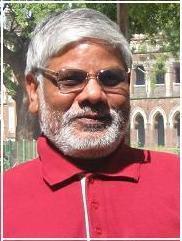
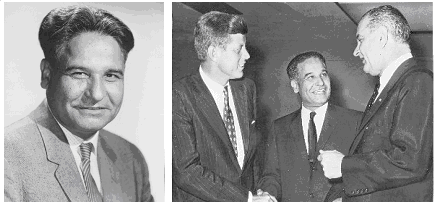
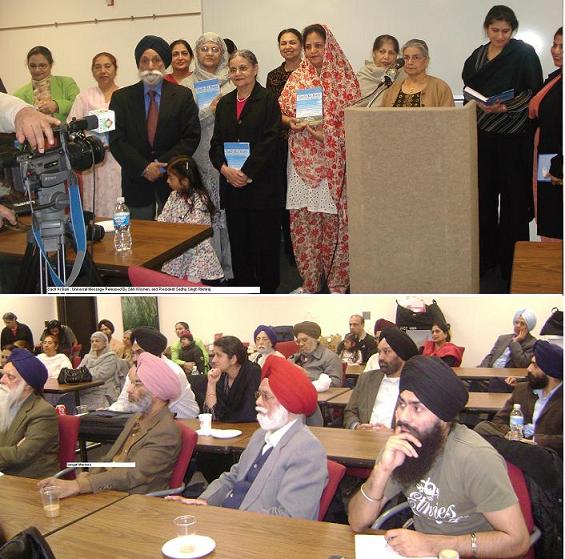

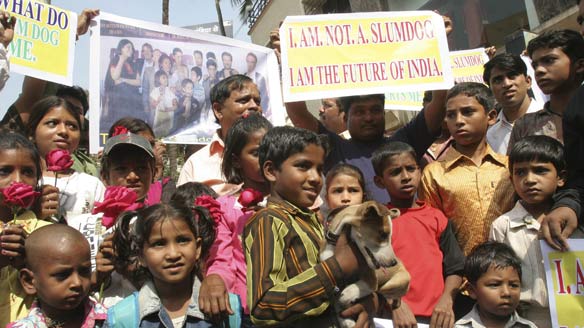
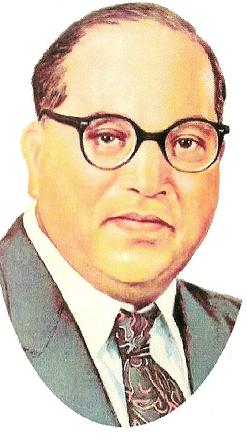

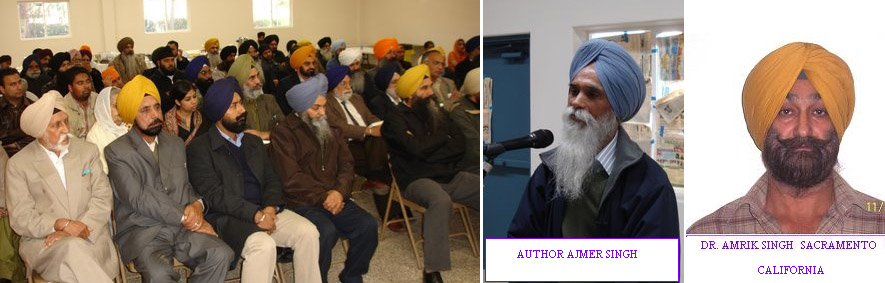
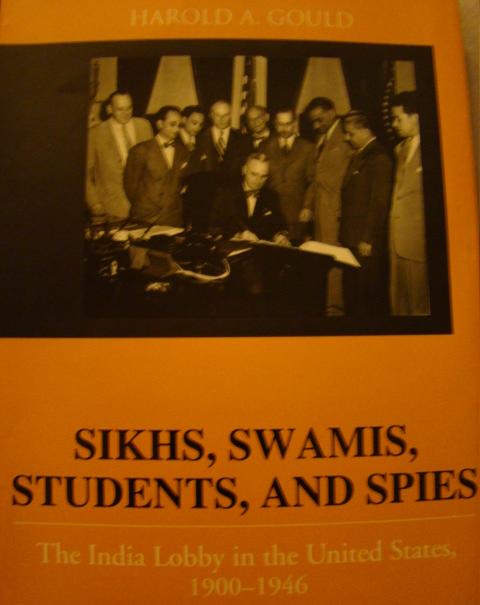

.JPG)