|
| | Home | About Us | Contact Us | Community Activities | News | Photo Gallery | Articles | Culture | Media | Literature | |
| | Dr. Ambedkar | Kanshi Ram | Babu Mangoo Ram | Ad-Dharm | The Gurus | Lord Buddha | Letter Box | Great Personalities | |
|
|
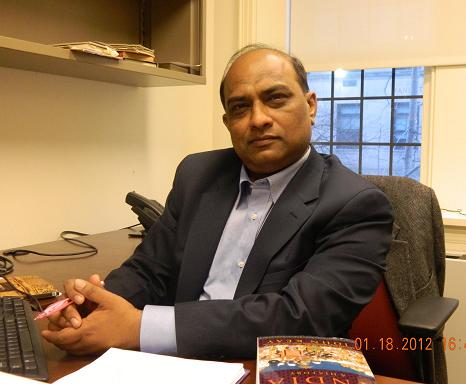
All of these articles by Dr. Vivek Kumar
|
||||
Organization and Mobilization After resigning in 1964 he worked with RPI in Maharashtra. During this period he read Babasaheb Ambedkar's 'Annihilation of Caste' and 'What Gandhi and Congress have done to the Untouchables'. In fact he formulated his idea of 'Chamcha Age' from the second book and wrote a book 'Chamcha Age'. Soon he launched Backward and Minorities Communities Employees' Federation (BAMCEF) on 6th December 1978 in New Delhi. It was non-political, non religious and non-agitational organization. He launched 'Dalit Shosit Samaj Sangharsh Samiti' D-S4 on 6th December, 1981and gave the popular slogan: Thakur, Brahmin, Baniya chhod (except) Baki sab Hai DS-4 Kanshi Ram established his own media. 'The Oppressed Indian' a monthly Magazine and 'Bahujan Times' the English newspaper were started. Both died out because of resource crunch. Bahujan Nayak (Bengali and Marathi), Bahujan Sangatak (Hindi) BahujanSandesh (Kannad, Punjabi), BahujanEkta (Gujrati), were weekly newspapers. Funding of Bahujan Movement Kanshi Ram confronted the problem of funding in the movement. He used to ask BAMCEF cadres,"Who will fund the Dalit Movement?" He did not take financial help from out side because he believed that "Sahare Ke Sath Ishara Bhi Aa Jata Hai". On 14th April, 1999 at a public meeting at the Constitutional Club ground, he revealed how he generated funds. When BSP started contesting elections Kanshi Ram's slogan 'One Vote and One Note' helped in generating funds. By this time Kanshi Ram's popularity had risen and his followers started weighing him with one rupee coins amounting approximately 12 thousand rupees. Then Kanshi Ram celebrated his 52nd birthday his followers presented him a bag of Rs. 52 thousand for attending a rally. From then onwards Kanshi Ram started charging Rs. 52 thousand per meeting as his fee. He addressed 40 meetings at the rate of Rs. 52 thousand. In between these meetings his followers wanted his time. Kanshi Ram demanded Rupees One Lakh. They agreed and since then he addressed seven rallies at the rate of one Lakh. In this manner he generated money for the movement. A Democrat to the Core A democrat to the core, Kanshi Ram believed in constitutional and democratic values. His slogans "Vote Humara Raj Tumhara Nahi Chelega – Nahi chalega"; Vote Se Lenge PM CM- Arakshan Se Lenge SP –DM' show his faith in the Indian democracy. He made Bahujans conscious about the value and number of their votes by explaining them the equation 'One man one vote and one vote one value' and that they are majority with 85% of votes with majority who can change the face of democracy. He was misunderstood for his strategy of capturing the political power. But Kanshi Ram always believed that 'Political Power' is only a means to an end and not end in itself. That is why he kept his agenda of "Social Transformation" ahead of political power. Other wise he would have never brought down different government in UP, which has challenged the political hegemony of the so-called upper castes in the Hindi heartland. This has brought the democracy closer to marginalized sections of the society Secularism Kanhsi Ram's Way Kanshi Ram's secular credentials in the political mobilizations came to fore with the fact that he never posed himself as the protector of the Muslims.He professed the idea that 'no one can save Muslims till they develop a strong and independent leadership of their own'. With this aim he groomed number of leaders from this community. Kanshi Ram was fully aware of the presence of social stratification and caste discrimination in Indian Islam. Therefore he made a point to mobilize the lowest strata of the Muslims like- The Ghosis, Gaddis, Chikwas, Kasais, Nais, Lalbegs etc to name just a few. Above all not even a single communal riot took place in Uttar Pradesh during three BSP led governments of which Mannyavar was committed to Buddhism. That is why he started the organization the Association of Buddhist Council.But left it because he was if the opinion that religion should not be mixed with politics. But he was convinced that, "if we want to remove Manuvadi system and establish humanitarian society then we (Dalits) have to embrace Buddhism". He opined on 30th March 2002 that " we want to fulfill second mission of Babasaheb Ambedkar by spreading Buddhism in India and for that on 50th anniversary of Babsaheb's conversion in 2006 I will convert to Buddhism with two crores of Chamars of Uttar Pradesh" (Bahujan Sangathak 30 March 2002). But before that he fell ill. His dream is still unfulfuilled. Kanshi Ram the Individual &The real heir of Babasaheb Ambedkar A simple man Kansi Ram developed a direct cord with the masses. He was not imposed from above and rose from a humble background went on to become a national leader accepted by majority of Dalits. The unique feature of Kanshi Ram's personality is his personal integrity and sacrifice. He took certain pledges like- he will not marry, have no property, and not attend any birth, death and marriage ceremonies. He left his parental house and did not even attend his father's funeral. Kanshi Ram left his mother who passed away at the age of 90. Without lust of power for himself Knashi Ram remained a missionary leader. We should not compare Mannayavar with Babsaheb because he himself argued that he is only giving "practical shape to Baba Sahebs theoretical formulation". That is why people on their own have given the following slogans: .Baba Tera Mission Adhura; Kanshi Ram Karenga Pura (The author teaches Sociology at JNU, New Delhi) |
Let us accept the fact that Babasaheb Ambedkar has been victim of a process of reductionism. Mainstream media, academia and intelligentsia have played a dominant role in this process of reductionism. As a result he has been viewed and reviewed only as ‘a Dalit Leader’. Some progressive intellectuals have at the most called him ‘Chief Architect of the Indian Constitution’. In turn his contributions in the spheres of understanding individual, caste, Hindu Social order, Problems of Hindu Women and Indian minorities etc. from an alternative perspective has been will fully blacked out. Above all his ideas about nation and nation building have also not caught the imagination of the mainstream academia and intelligentsia. Thanks to the Dalit movement led by the Dalit themselves; Babasaheb Ambedkar has got such visibility which no other leader of modern India has. On the basis of association of masses to a particular leader, number of statues erected by the individuals on their own, and types of celebrations on the occasion of his birth and conversion ceremonies and then commemoration on his Mahaprinibban day Ambedkar can be termed as the omnipresent and organic leader of modern India. The poem below is self-explanatory how colossal is the personality of Babasaheb has become. The poem is narrated at the grassroots in the Hindi heartland Baba the Great Words to Dumb,
His colossal personality has forced the mainstream academia and intelligentsia to nominally include Ambedkar in the subject matter of social sciences. Yet his Ideas of Nation and Nation building have not been looked into. Therefore this paper is a humble attempt to understand the notion of nation and his contributions to the process of nation building. Ambedkar’s Conception of Nation Ambedkar was of the opinion that India was not a nation but nation in the making. He made this fact very clear in 1930s during the tangle with Mohandas Karam Chand Gandhi on the issue of separate electorates for Dalits. According to Ambedkar, “First of all there is no nation of Indians in real sense of the word. The nation does not exist, it is to be created, and I think it will be admitted that the suppression of a distinct and a separate community is not the method of creating a nation” (Ambedkar 1991: 412). Again while speaking on the 26th November 1949 when the Constituent Assembly was going to pass the Constitution of independent India he argued, “[in the past] politically-minded Indian resented the expression “the people of India.” They preferred the expression “the Indian nation.” I am of opinion that in believing that we are a nation, we are cherishing a great delusion” (Ambedkar 1994:216).He wondered, “How can people divided into several thousands of castes be a nation?” (Ambedkar1994:1216-1217). One can argue on what basis we can say this. According to him, “... The castes are anti-national.In the first place because they bring about separation in social life. They are anti-national also because they generate jealousy and antipathy between caste and caste (Ambedkar 1994 1216-17). Therefore he suggested that “we must overcome all these difficulties if we wish to become a nation in reality. For fraternity can be a fact only when there is a nation” (Ambedkar 1994: 1216-7). The logical question then would be what is a nation according to Ambedkar? Before coming to that let us look how nation has been defined by others. The idea of Nation is very ancient. It means, ‘a people, a folk, held together by some or all of such more or less immutable characteristics as common descent, territory, history, language, religion, way of life or other attributes that members of a group have from birth onward’(Patterson 1975:181). Ambedkar on his part argued that race, language and country do not suffice to create a nation. Then, according to him what more is needed to constitute a nation? Answering this Ambedkar quoted Earnest Renan to define what a nation is? He wrote, according to Renan “A nation is a living soul, a spiritual principle. Two things, which in truth are but one, constitute the soul, this spiritual principle. One is in the past, the other in the present. One is the common possession of a rich heritage of memories; the other is the actual consent, the desire to live together, the will to preserve worthily the undivided inheritance which has been handed down…The nation, like the individual, is the outcome of a long past of efforts, and sacrifices, and devotion… A heroic past, great men, glory, ----- these form the social capital, upon which a national idea may be founded. To have common glories in the past, a common will in the present: to have done great things together, to will to do the like again, - such are the essential conditions for the making of a people (Ambedkar 1990:35). Further Renan argues that, “an inheritance of glory and regrets to be shared, in the future a like ideal to be realized; to have suffered, and rejoiced, and hoped together; all these things are worth more than custom houses in common, and frontiers in accordance with strategically ideas; all these can be understood in spite of diversities of race and language... for indeed, suffering in common is a greater bond of union than joy. As regards national memories, mournings are worth more than triumphs; or they impose duties, they demand common effort” (Ambedkar 1990:35). Further Ambedkar also explained the meaning and function of nationality. According to him, “Nationality is a social feeling. It is feelings of a corporate sentiment of oneness which makes those who are charged with it feel that they are kith and kin. This national feeling is a double edged feeling. It is at once a feeling of fellowship for one’s own kith and kin and an anti-feeling for those who are not one’s own kit kin. It is a feeling of “Consciousness of kind” which on the one hand binds together those who have it, so strongly that it over-rides all differences arising out of economic conflict or social gradation and, on the other, severs them from those who are not of their kind. It is a longing not to belong to any other group. This is the essence of what is called a nationality and national feeling” (Ambedkar 1990:31). If we analyze the Indian nation in the light of the above elements of nation, it becomes amply clear that Indian nation did not exist as there was no sharing of the past and the will to share the existential and experiential realties on the one hand between Dalits and the so-called upper caste Hindus and on the other hand and between Muslims and Hindus. With regard to relationship between Dalits and Hindus Ambedkar explained, “There is an utter lack among the Hindus of what the sociologists call “consciousness of kind”. There is no Hindu consciousness of kind. In every Hindu the consciousness that exists is the consciousness of his caste. That is the reason why the Hindus cannot be said to form a society or a nation… The Caste System prevents common activity and by preventing common activity it has prevented Hindus from becoming a society with a unified life and a consciousness of its own being” (Ambedkar 1979: 50-51). Secondly, in the light of historical evidence of relationship between Hindus and Muslims are concerned Ambedkar wondered, “Are there any common historical antecedents which Hindus and Muslims can be said to share together as matter of pride or as matters of sorrow…so far they have been just two armed battalions warring against each other. There was no common cycle of participation for a common achievement. Their past is a past of mutual destruction- a past of mutual animosity, both in political as well as in religious fields” (Ambedkar 1990: 35). Ambedkar was clear that while Hindus revere Prthiviraj Chauhan, Rana Pratap, Shivaji in history the Muslims revere likes of Mohammed Bin Qasim, Aurenzeb etc. In religious field argued he, “…the Hindus draw their inspiration from the Ramayan, the Mahabharat, and Geeta. The Muslamans…derive their inspiration from Quran and Hadis” (Ambedkar 1990”36). Besides lack of sharing between differing social and religious groups women were also subjugated in Indian society. They were also excluded from social political and economic institutions. In this manner by taking these few examples we can argue that Ambedkar first highlighted the fact why at all Indian nation did not exist. There may be many other facts on the basis of which Ambedkar has proved that ‘Indian Nation’ did not exist> But I think these three elements will be suffice to prove that that ‘Indian Nation’ did not exist in reality. Ambedkar and Process of nation building Having said that ‘Indian Nation’ did not exist let us now see Babasaheb Ambedkar’s scheme of nation building. At the out set, the realization of the fact that India was not a nation was the first step to realize the goal of nation building. Secondly, he argued that forgetting the past can be another step forward in building the nation. He again quoted Renan, for emphasizing the importance of forgetfulness as a factor in the creation of a nation (Ambedkar 1990:36). Giving concrete example of forgetfulness in the process of nation building Renan sighted the case of union of Northern and Southern France, which was result of use of force for nearly hundred years. But today very few remember it. Therefore Renen had concluded that, “the essence of the nation is, that all its individuals should have things in common; and also that all of them should hold many things in oblivion” (Ambedkar 19090:37). The third aspect of Ambedkar’s scheme of nation building was that all the subjugated collectivities should be granted their legitimate rights so that they should be free from subjugation. In his own words, “Philosophically it may be possible to consider a nation as a unit but sociologically it cannot but be regarded as consisting of many classes and the freedom of the nation if it is to be a reality must vouchsafe that the freedom of the different classes comprised in it, particularly those who are treated as servile classes” (Ambedkar 1991: 201-202). Fourthly, Ambedkar’s scheme of nation building included the process of dismantling the privileges of the governing elite and breaking their monopoly over the ‘political power in the country’. Ambedkar had cautioned the Constituent Assembly about the dangers of monopolizing of power by tiny group of people. He had opined that, “political power in this country has too long been the monopoly of a few. This monopoly has not merely deprived them of their chance of betterment; it has sapped them of what may be called the significance of life.” (Ambedkar 1994: 1218). Moreover, he also questioned the attitude of the governing elite in terms of giving up their privileges for the process of nation building. He quoted the attitude of the governing elite of the France and Japan. How these governing elites gave up their privileges in the interest of nation. Against the sacrificing attitude of the governing elites of France and Japan Ambedkar highlighted the status quoits attitude of Indian elite who was not ready to give up their privileges even for the nation rather they were trying to preserve their interests by showing their pseudo concerns for nation (Ambedkar 1991:224-5). Under these circumstances Ambedkar as per his scheme of nation building wanted three different collectivities that were excluded or denied their legitimate rights to be included directly in the institutions of governance and thereby into mainstream of society. In other wards the said collectivities should be granted their legitimate rights which were due to them. Though it is a fact that Ambedkar had raised host of other issues which were significant in the process of nation building I am restricting myself with only these three collectivities. The three collectivities that come to my mind, and which form part of Ambedkar’s core ideas of nation and nation building include: Dalits or ex-untouchables Muslims Dalits and the question of their Self-representation. It is a fact that Ambedkar did not raised the problems related to aforesaid categories at one go. Rather he took their problem as and when country faced a crisis. But it is certain that Ambedkar started his carrier by highlighting the problems and issues of the Dalits. To begin with he wanted self representation of the Dalits in the government, cabinet, bureaucracy etc. Defining its importance, Ambedkar opined in his written statement given to the Southborough Committee on franchise in 1919 that, “ As the government is the most important field for the exercise of individual capacities, it is in the interest of the people that no person as such should be denied the opportunity of actively participating in the process of government. That is to say popular government is not only government for the people but by the people. To express the same in a different way, representation of opinions by itself is not sufficient to constitute popular government. To cover its true meaning it requires personal representation as well. It is because the former is often found without the latter that the Franchise Committee has to see in devising the franchise and constituencies for a popular government in India, it provides for both, i.e., representation of opinions and representation of persons” (Ambedkar 1979:247). Inclusion of Dalits and Backwards in the Civil Services Similarly, Ambedkar advocated reserved nominations for the Dalits in the civil services of the country along with Mohammedans and non-Brahmins. Why he did so? In a written document presented to the Simon Commission also known as Indian Statutory Commission, he has explained why at all it is needed. To begin with, Ambedkar is again concerned with the over- dominance of the Brahmins and allied castes in the public services (Ambedkar 1982: 394). He argues that when the Dalits, Mohammedans and non-Brahmins ask for their representation, the Brahmins and the allied castes argue that the appointment should take through competition. Ambedkar has questioned the very basis of such process of appointment through competition as fair and argued, that,“ Those circumstances presuppose that the educational system of the state is sufficiently democratic and is such that facilities for education are sufficiently widespread and sufficiently used to permit all classes from which good public servants are likely to be forthcoming to compete. Otherwise even with the system of open competition large classes are sure to be left out in the cold. This basic condition is conspicuous by its absence in India, so that to invite Backward Classes to rely upon the results of competitive examination as a means of entry into the public services is to practice delusion upon them” (Ambedkar 1982: 395). Therefore, Ambedkar went on to support the representation of Dalits and non-Brahmins and Muslims on two ground, i.e., administrative and moral. Discussing administrative basis for reservation, he argued that, “Those who lay exclusive stress upon efficiency as the basis for recruitment to them administration appears to be nothing more than the process of applying law as enacted by the legislative” (ibid). But according to him, “Administration in modern times involves far more than the scrutiny of status for the sake of knowing the regulations of the state. Often under the pressure of time or from convenience a government department is now-a day entrusted with wide power of rule making” (ibid). Further, he argued that, “It must be accepted as beyond dispute that such wide powers of rule-making affecting the welfare of large classes of people cannot be safely left into the hands of the administrators drawn from particular class which as a matter of fact is opposed to the rest of the population in its motives and interests, (which) does not sympathize with the living forces operating in them, is not charged with their wants, pains, cravings and desires and is inimical to their aspirations, simply because it comes out best by the test of education” (ibid) . Ambedkar highlighted the moral evils arising out of the exclusion of a person from the public service by quoting Gopal Krishna Gokhale, who had raised the same issue of exclusion from public services for Indians. Emphasizing the exclusion of Indians from public services, Gokhale had opined that, “A kind of dwarfing or stunting of the Indians is going on under the present system. We must live all days of our life in an atmosphere of inferiority and tallest of us must bend in order that the exigencies of the exiting system may be satisfied. The upward impulse…is denied to us. The full height to which our manhood is capable of rising can never be reached by us under the present system. The moral elevation which every self-governing people feel cannot be felt by us. Our administrative and military talent must gradually disappear, owing to sheer disuse, till at last our lot, as hewers of wood and drawers of water in our own country is stereotyped” (quoted in Ambedkar 1982: 397). Drawing an analogy between the Brahmins and allied castes with the foreign agency, i.e., the British, Ambedkar argued that, “Is it not open to the backward classes to allege against Brahmins and allied castes all that was alleged by the late Mr. Gokhale on behalf of Indian people against the foreign agency? Is it no open to the Depressed Classes, the non-Brahmins and the Mohammedans to say that by their exclusion from the Public Service a kind of dwarfing or stunting of their communities is going on? Can they not complain that as a result of their exclusion they are obliged to live all the days of their lives in an atmosphere of inferiority, and the tallest of them has to bend in order that the exigencies of the existing system may be satisfied? Can they not assert that upward impulses which every school-boy of a Brahmanical community feels that he may one day be a Sinha, a Sastri, a Ranade, a Pranjpe, and which may draw forth from him the best efforts of which he is capable is denied to them? Can they not indignantly assert that the full height to which their manhood is capable of rising can never be reached by them under the present system? Can they not lament that the moral elevation which every self-governing people feel cannot be felt by them and that their administrative talents must disappear owing to sheer disgust till at last their lot as hewers of wood and drawers of water in their own country is stereotyped? The answer to these queries cannot but be in the affirmative. If to exclude the advanced communities from entering into public service of the country was a moral wrong, the exclusion of the backward communities from the same field must be a moral wrong and if it is a moral wrong it must be righted” (Ambedkar 1982: 395-6). For inclusion of Dalits and other marginal sections in the public services Ambedkar also highlighted that the demand for Indianisation of public services did not rest on consideration of efficient administration; rather, it was condemned as it was found to be wanting in those qualities which make for human administration. It is therefore, he pointed, that those who clamored for Indianisation of public services are themselves opposed to inclusion of the Depressed and Backward Classes (Ambedkar 1982: 395-6). That is why he proposed that, “A certain number of vacancies in Superior Services, Class I and Class II, and also in the Subordinate Services should every year be filled by system of nomination with pass examination … Such nomination shall be reserved to the Depressed Classes, the Mohammedans and the Non-Brahmins in order of preference herein indicated until their numbers in the services reach a certain proportion” (Ambedkar 1982:398). This was possibly first time any one had made a demand for reservation for Dalits in the public services, though Ambedkar had already made a demand for political representation as early as 1919. It is a fact that the Indian National Congress did nothing worth mentioning for the reservation of the Dalits during this period and even after the formation of Government in 1937. The major development of the period is attributed to Ambedkar serving as member for the Viceroys’ Executive Council. It was he who issued an office order in 1943 to reserve 8.33 per cent places in the Central Government Services for the Dalits. In fact this order, which reserved the posts for the Dalits, specifically had replaced an earlier general order for general preference for the Dalits in their recruitment in the Services (Ambedkar 1990:475). Necessity of Self Representation Why at all self representation was necessary. According to Ambedkar, this was necessary because the aims, beliefs, aspirations, and knowledge of the caste Hindus and the Dalits differ. That means, they do not have like-mindedness. In his own words, “Between two Hindus, caste-like mindedness is more powerful than the like-mindedness due their both being Hindus” (ibid: 249). Therefore, he emphasized that there would be conflict of interest among the Hindus and the Dalits and, hence, caste Hindus could never represent the interest and opinion of Dalits if the latter did not get self-representation. Ambedkar wanted self representation of the Dalits because he was also convinced that only the Dalits could voice these interests. In his own words, “-as can be easily seen they can be represented by the untouchables alone. They are distinctively their own interests and none can truly voice them…Untouchability constitutes a definite set of interests which the untouchables alone can speak for (ibid: 256)”. Secondly, the personal representation for the Dalits is also important because, “A Government for the people, but not by the people, is sure to educate some into masters and others into subjects…To be specific, it is not enough to be electors only. It is necessary to be law- makers; otherwise who can be law-makers will be masters of those who can only be electors” (ibid: 251). That is why; Ambedkar not only demanded separate electorate but also reservation in the cabinet as well. According to him, “Just as it is necessary that the Depressed Classes should have the power to influence governmental action by seats in the Legislature so also it is desirable that the Depressed Classes should have the opportunity to frame the general policy of the Government. This they can do only if they can find a seat in the cabinet. The Depressed Classes therefore claim that in common with other minorities, their rights to be represented in the Cabinet should be recognized. With this purpose in view the Depressed Classes propose: that in the Instrument of Instructions an obligation shall be placed upon the Governor and the Governor-general to endeavor to secure the representation of the Depressed Classes in the Cabinet”(Ambedkar 1991: 52). Gandhi’s Opposition of Dalits’ Self Representation Gandhi opposed the representation of the Dalits by special constituencies. He emphasized that the special representation to the Untouchables (Dalits), “Will create a division in the Hinduism which I (Gandhi) cannot possibly look forward to with any satisfaction whatsoever” (Ambedkar 1991: 69). In fact he was ready to accept the conversion of the Dalits to any other but was not ready to grant representation based exclusively on their votes though the same existed for the other minorities. He opined, “I do not mind Untouchables, if they so desire, being converted to Islam or Christianity. I should tolerate that, but I cannot possibly tolerate what is in store for Hinduism if there are two divisions set forth in the villages. Those who speak of the political right of Untouchables do not know their India, do not know how Indian Society is today constructed, and therefore I want to say with all the emphasis that I can command that if I was the only person to resist this thing I would resist with my life” (quoted in Ambedkar 1991: 69). To avoid the exclusion of the Dalits from the process of nation building, Ambedkar asked for the inclusion of Dalits through their representation in the different institutions of governance and education. Therefore the real function of the representation or reservation according to Ambedkar was one of the functions of “Nation Building”. Dalits and their Rights as a Citizen Ambedkar along with the self- representation of the Dalits wanted to establish the rights of the Dalits. That is why he used to wonder why at all some people ask what the interests of Dalits are or do the Dalits also have interests? Defining the interests of the Dalits, Ambedkar opined that, “The untouchables are usually regarded as objects of pity but they are ignored in any political scheme on the score that they have no interest to protect. And yet their interests are the greatest. Not that they have large property to protect from confiscation. But they have their very persona confiscated. The socio- religious disabilities have dehumanized the untouchables and their interests at stake are therefore the interests of humanity. The interests of property are nothing before such primary interests… The untouchable is not even a citizen. Citizenship is a bundle of rights such as (1) personal liberty, (2) personal security, (3) right to hold private property, (4) equality before law, (5) liberty of conscience, (6) freedom of opinion and speech, (7) right to assembly, (8) right of representation in a country’s Government and (9) right to hold office under the State … These are the interests of the untouchables” (Ambedkar 1979: 255-6). Ambedkar and His Political Parties It is not that Ambedkar only demanded the self representation for the Dalits and emphasized their rights as free citizens of India rather he also established number of political parties and organizations, one after the other, for capturing the political power and also organizing people. As far as his political parties he started with Independent labor party, which he established in 1936. Then he established Scheduled Caste Federation in 1942. And last but not the least Ambedkar laid the foundation of Republican Party of India, which was subsequently formed in 1957. With his effort he tried to carve out a broad based Dalit political community which possessed the power of number of votes. Not only that he also mooted the idea that political power can be used for the amelioration of Dalits. Inclusion of Muslims in the Constituent Assembly Along with the representation of Dalits and Backward castes in the structures of State Ambedkar was strong votary of inclusion of Muslims in the Constituent Assembly. His position came to fore when he vehemently pleaded their inclusion in spite Muslim league has announced their desire for a separate state. Ambedkar emphasized non-violent method for the inclusion of the Muslims in the Constituent Assembly. While speaking in the Constituent Assembly, which met for the first time to move a resolution for making the Indian Constitution, he along with other members of the Constituent assembly was of the opinion that it would not proper for the Assembly to proceed to deal with the resolution of framing the constitution of free India while Muslim League was absent. In fact he pointed out a particular Para of the resolution which could prevent Muslim League from entering in the Constituent Assembly (Ambedkar 1994: 9-10). He was aware of the diversity and division in the population of India but he was of the opinion that every group should be included in the process of taking some decision about the nation. He aired the same in the constituent assembly that “…Our difficulty is not about the ultimate future. Our difficulty is how to make the heterogeneous mass that we have to-day take a decision in common and march on the way which leads us to unity. Our difficulty is not with regard to the ultimate, our difficulty is with regard to beginning…therefore, I should have thought that in order to make us willing friends, in order to induce every party, every section in this country to take on to road it would be an act of greatest statesmanship for the majority party even to make a concession to the prejudices of people who are not prepared to march together and it is for that, that I propose to make this appeal. …Let us even make a concession to the prejudices of our opponents, bring them in, so that they may willingly join us on marching upon that road, which as I said, if we walk long enough, must necessarily lead us to unity…I want all of us to realize that whether we are right or wrong, whether the position that we take is in consonance with our legal rights…This is too big a question to be treated as a matter of legal rights…We should leave aside all legal considerations and make some attempt, where those who are not prepared to come, will come. Let us make it possible for them to come” (Ambedkar 1994). Therefore he made an appeal that, “ …that another attempt may be made to bring about a solution of the dispute between the Congress and the Muslim League. This subject is so vital, so important that I bam sure it could never be decided on the mere basis of dignity of one party or the dignity of another party” (Ambedkar 1994 ). Ambedkar was of the opinion that the dignity of a nation is above the political parties and individuals. He argued, “When deciding the destinies of nations, dignities of people, dignities of leaders and dignities of parties ought to for nothing. The destiny of the country ought to count for everything” (Ambedkar 1994: 12). Ambedkar was very agitated on the Congress and Muslim League impasse. He was very clear that the problem should be solved as soon as possible. For which he played down the violence. He spoke with anguish, “…I do not know what plans the Congress party…has in its mind? ... It seems to there are only three ways by which the future will be decided. Either one party will surrender to another. The other way would be negotiated peace and the third way would be open war…certain members of the Constituent Assembly…are prepared to go to war. I must confess that I am appalled at the idea that anybody in this country should think of solving the political problems of this country by the method of war. I do not know how many people in this country support that idea. … (if) people…do, is because most of them…believe that the war …would be a war on the British…But…if war comes in this country …it will not be a war on the British. It will be a war on the Muslims. It will be a war on the Muslims or…probably worse, It will a war on a combination of the British and the Muslims” (Ambedkar 1994:13). In this conflict between Congress and Muslim league to bring down the temper of the house down Ambedkar quoted from Burke who had rejected the idea of violence applied by the British in conquering the colonies, “…the use of force is but temporary. It may subdue for a moment, but it does not remove the necessity of subduing again; and a nation is not governed which is perpetually to be conquered…next objection is its uncertainty. Terror is not always the effect of force and an armament is not a victory. If you do not succeed, you are without resource for, conciliation remains; but, force failing no further hope of reconciliation is left. Power and authority are sometimes brought by kindness; but they can never be begged as alms by an impoverished and defeated violence” (Ambedkar 1994 :13 -14). Therefore Ambedkar concluded, “If there is any body who has in his mind the project of solving the Hindu-Muslim problem by force, which is another name of solving it by war, in order that the Muslims may be subjugated and made to surrender to the Constitution that might be prepared without their consent, this country would be involved in perpetually conquering them. The conquest would not be once and for ever” (Ambedkar 1994: 14). Despite the division and animosity of different groups Ambedkar was convinced about the unity and development of nation. He looked very confident when he spoke, “ …I have got not the slightest doubt in my mind as to the future evolution and the ultimate shape of the social, political and economic structure of this country. I know to-day we are divided politically, socially and economically. We are group of warring camps and I may go even to the extent of confessing that I am probably on of the leaders of such a camp. But, Sir, with all this I am quite convinced that given time and circumstances nothing in the world will prevent this country from becoming one. With all our castes and creed I have not the slightest hesitation that we shall in some form be a united people. I have no hesitation in saying that notwithstanding the agitation of the Muslim League for the partition of India some day enough light would dawn upon the Muslims themselves and they too will begin to think that a United India is better even for them” (Ambedkar 1994: 9). Such was commitment of Ambedkar when it came to the process of nation building. Rights of Hindu Women Apart from securing the rights for the Dalits, Other backward castes and Muslims in the processes of nation building Ambedkar, as the first Law Minster of the independent India, introduced a Bill to safeguard the rights of Hindu women. The bill was envisaged to secure a dignified and equal status for the Hindu women with number of clauses. There were rights of inheritance and maintenance. There were laws against dowry. Instead of Polygamy Monogamy was made legal. The Hindu marriage became a contract instead of sacrament. The consent of wife was to be made compulsory in the event of adoption. By all these rights Ambedkar had envisioned to empower Hindu women and hence a strong nation. The Hindu Code bill introduced in the Parliament gives the insight, what and how Ambedkar had thought about empowering Hindu women. He had mooted that, “In the order of succession to a deceased Hindu, the bill seeks to make four changes. One change is that widow, the daughter, widow of a pre-deceased son, all re given the same rank as the son in the matter of inheritance. In addition to that, the daughter also is given share in her father’s property (Ambedkar 1995:6). Ambedkar in his proposed Hindu code Bill attempted to, “Consolidate the different categories of Srtidhan into one single category of property and laid down the uniform rule of succession” (Ambedkar 1995:7). Ambedkar was opposed to dowry and conscious of the treatment meted out to girls because of dowry. While moving the Bill in the Parliament he opined, “All the members of the House know…how girls who bring enormous lot of property…by way of dowry or Stridhan or gift are treated…with utter contempt, tyranny and oppression” (Ambedkar 1995: 8). Therefore Ambedkar mooted that, “property which is given as dowry…shall be treated as a trust property, the use of which will censure to woman and…neither her husband not the relations of her husband will have any interest in that property” (ibid). Provision of separate maintenance for the woman who lives away form her husband was also made by Ambedkar. The bill recognized that there are circumstances where the wife has lived from the husband, and she can claim separate maintenance from the husband. Following are conditions in which a wife can claim maintenance; 1.Suffering from a loathsome disease, 2. If he keeps a concubine, 3. If he is guilty of cruelty, 4. If ha abandoned her for two years, 5. If he has converted to another religion (Ambedkar 1995 8-9). As far as the Hindu Marriage is concerned he introduced the idea of civil marriage. He opined that the code will dispenser with case and sub-caste in the event of Civil-Marriage. He argued, “Marriage under this Bill is valid irrespective of the caste or sub-caste of the parties entering to marriage” (Ambedkar1995:9). Further Ambedkar abolished polygamy, which was permissible under the existing Hindu Law. He argued, under the new law it is monogamy which is prescribed” (ibid: 10). Ambedkar also introduced the provision to dismantle the sacramental status of the Hindu marriage in which it cannot be dissolved. He made it a contract by introducing the provision of divorce. Ambedkar introduced seven grounds of divorce 1. Desertion, 2. Conversion to another religion, 3.Keeping concubine or becoming a concubine, 4.incurably unsound mind, 5. Virulent and incurable form of leprosy, 6. Venereal diseases in communicable form, 7. Cruelty (ibid: 10). Addressing the question of adoption, “under the code” he made the consent of the women necessary for the husband (ibid). In this manner Ambedkar envisaged to empower the Hindu women. It is pertinent to note here that Indian parliament did not pass different clauses pf Hindu Code Bill tabled my Ambedkar and he had to resigned form Nehru cabinet as the first Law Minster of independent India. This is testimony to the fact how much Ambedkar was committed to the cause of Indian women. It is heartening to note that subsequently most of the clauses proposed by Ambedkar in the Hindu Code were passed one by one by the Indian Parliament. Future of the Indian Nation It is no that Ambedkar was worried only about the contemporary issues of nation and nation building, but he was having a future vision of the Indian Nation. He was aware of the pitfalls in the future path of the Nation. He had carved out certain principles for the future state and society in India which included: Self Introspection by the Indians Adherence to Constitutional means Denunciation of Hero worship Establishment of Social and Economic democracy along with Political Democracy Dismantling the monopoly of elites in the realm of political power
Self Introspection by the Indians While speaking on the last day when Constitution of India was to be finally passed he told the Constituent Assembly about disturbing historical facts of Indian society. In a way he was worried about the future of Indian society and was pointing out to Indians to have self introspection. He argued “… my mind is so full of future of our country... On 26th January 1950, India will be an independent country (Cheers). What would happen to her independence? Will she maintain her independence or will she lose it again?... It is not that India was never an independent country. The point is that she once lost the independence she had. Will she lose it second time? It is this thought which makes me most anxious for the future. What perturbs me greatly is the fact that not only IndiaSind by Mahomamed-bin-Kasim, the military commanders of King Dhar accepted bribes from the agents of Mohommed-Bin-Kasim and refused to fight on the side of their King. It was Jaichand who invited to Mahommed Ghori to invade India and fight against Prithvi Raj and promised him the help of himself and the Solamki kings. When Shivaji was fighting for the liberation of Hindus, the other Maratha nobleman and Rajput Kings were fighting the battle on the side of Mogul Emperors. When the British were trying to destroy the Sikh Rulers, Gulab Singh, their principal commander sat silent and did not help to save the Sikh kingdom. In 1857, when a large part of India had declared a war of independence against the British, the Sikhs stood and watched the event as silent spectator” (Ambedkar 1994: 1213-14). It is very difficult to imagine that any other leader of his time had such canny eye on the nature and character of people of India and had given a clarion call to Indian masses for self introspection. has once before lost her independence, but she lost it by the infidelity and treachery of some of our own people. In the invasion of In the same vein Ambedkar asked “Will history repeat itself? … that in addition to old enemies in the form of castes and creeds we are going to have many political parties with diverse and opposing political creeds. Will Indians place the country above their creed or will they place creed above country? I do not know. But this much is certain that if the parties place creed above country, our independence will be put in jeopardy a second time and probably be lost for ever. This we must all resolutely guard against. We must be determined to defend our independence with the last drop of our blood…What would happen to her democratic Constitution? Will she be able to maintain it or will she lose it again…It is not that India did not know what Democracy is. There was a time when India was studded with republics, and even where there were monarchies, they were either elected or limited. They were not absolute. It is not that India did not know parliaments or parliamentary Procedure. A study of the Buddhist Bhiku Sanghas discloses that not only there were Parliaments-for the Sanghas were nothing Parliaments- but the Sanghas knew and observed all the rules of Parliamentary Procedures known to modern times…This democratic system India lost. Will she lose it second time? I do not know, but it is quite possible in country like India-where democracy from its long disuse must be regarded as some thing quite new-there is danger of democracy giving place to dictatorship. It is quite possible for this new born democracy to retain its form but give place to dictatorship becoming actually is much grater” (Ambedkar 1994: 1215). Adherence to Constitutional Means Further Ambedkar vision for maintaining democracy included adherence to constitutional means. He argued, “If we wish do maintain democracy not merely in form, but also in fact, what must we do? The first thing…we must do is to hold fast to constitutional methods of achieving our social and economic objectives. It means we must abandon the bloody methods of revolution. It means that we must abandon the method of civil disobedience, non-cooperation and satyagrah. When there was no way left for constitutional methods for achieving economic and social objectives, there was a great deal of justification for unconstitutional methods. But where constitutional methods are open, there can be no justification for these unconstitutional methods. These methods are nothing but anarchy and the sooner they are abandoned, the better for us” (Ambedkar 1994: 1215). Denunciation of Hero worship Similarly Ambedkar was strictly against Hero worship as far as the future of nation was concerned. He saw danger to democracy if people develop habit of hero worship. That is why he emphasized, that “we must …observe the caution which John Stuart Mill has given to all who are interested in the maintenance of democracy, namely, not “to lay their liberties at the feet of even a great man, or to trust him with powers which enable him to subvert their institutions” (Ambedkar 1994: 1215). Further Ambedkar argued that there is nothing wrong in being grateful to great men who have rendered life-long services to the country. But there are limits to gratefulness. As has been well said by the Irish Patriot Daniel O’Connel, ‘no man can be grateful at the cost of his honor, no woman can be grateful at the cost of her chastity and no nation can be grateful at the cost of its liberty’. This caution is far more necessary in the case of India than in the case of any other country, for in India, Bhakti or what may be called the path of devotion or hero-worship, plays a part in its politics unequalled in magnitude by the part it plays in the politics of any other country in the world. Bhakti in religion may be a road to the salvation of the soul. But in politics, Bhakti or hero-worship is a sure road to degradation and to eventual dictatorship” (Ambedkar 1215). Establishment of Social and Economic democracy along with Political In the event of establishing the democracy Ambedkar opined that we should stretch our political democracy to social and economic as well. He argued that “we must… not…be content with mere political democracy. We must make sure our political democracy a social democracy as well” (Ambedkar 1994: 1216). Ambedkar went on to define social democracy as well. In his own words, “What does social democracy mean? It means a way of life which recognizes liberty, equality and fraternity as the principles of life. These principles of liberty, equality and fraternity are not to be treated as separate items of trinity” (Ambedkar 1994: 1216 ). Another significant contribution of Ambedkar in the process of establishment of social democracy is his explanation of nature of three cardinal principles of democracy i.e. liberty, quality, and fraternity. He opined, “They form a union of trinity in the sense that to divorce one from the other is to defeat the very purpose of democracy. Liberty cannot be divorced from equality, equality cannot be divorced liberty. Nor can liberty and equality be divorced from fraternity. Without equality liberty would produce the supremacy of the few over many. Equality without liberty would kill individual initiative. Without fraternity, liberty and equality could not become a natural course of things…We must begin by acknowledging the fact that there is complete absence of two things in Indian society. One of these is equality. On the social plane, we have in India a society based on the principle of graded inequality which means elevation of some and degradation of others. On the economic plane, we have s society in which there are some who have immense wealth as against many who live in abject poverty” (Ambedkar 1994 : 1216). Finally he exalted, “On the 26th of January 1950, we are going to enter into a life of contradictions. In politics we will have equality and in social economic life we will have inequality. In Politics we will be recognizing the principle of one man one vote and one vote one value. In our social and economic life, we shall, by reason of our social and economic structure, continue to live this life of contradiction? How long shell we continue to live this life of contradictions? If we continue to deny it for long, we will do so only by putting our political democracy in peril. We must remove this contradiction at the earliest possible moment or else those who suffer from inequality will blow up the structure of political democracy which…”The second thing we are wanting in is recognition of the principle of fraternity. What does fraternity mean? Fraternity means a sense of common brotherhood of Indians-If Indians being one people. It is the principle which gives unity and solidarity to social life. It is difficult thing to achieve” (Ambedkar 1994: 1216-17) Dismantling the monopoly of elites in the realm of political power Dismantling the monopoly of the upper strata was also one of the main instrument of building the nation for Ambedkar. He opined, “ there can be no gainsaying that political power in this country has too long been the monopoly of a few. This monopoly has not merely deprived them of their chance of betterment; it has sapped them of what may be called the significance of life. These down-trodden classes are tired of being governed. They are impatient to govern themselves. This urge of self-realization in the down-trodden classes must not be allowed into a class struggle or class war. It would lead to a division of the House. That would a day of disaster. For, as has been by Abraham Lincoln, a house divided against itself cannot stand very long. Therefore the sooner the room is made for the realization of their aspiration, the better for the few, better for the country, the better for the maintenance for its structure. This can only be done by the establishment of equality and fraternity in all sphere of life. People are fast changing…They are getting tired of government by the people. They are prepared to have Government for the people…If we wish to preserve the constitution in which we have sought to enshrine in principle of Government of the people, for the people and by the people, let us resolve not to be tardy in the recognition of the evils that lie across our path and which induce people to prefer Government for the people to Government by the people, nor to be weak in our initiative to remove them” (Ambedkar 1994:. 1218). This is necessary because the upper strata in Indian Society unlike the other society are not willing to give up there power. Ambedkar sighted example from French and Japanese society, where upper strata had given their privileges when their country was passing through the crisis. He argued that in France the a good part of Nobles and Clergy sat with commons and voted by head giving up their valuable privileges (Ambedkar 1991: 225 ). Similarly, in Japan the Japanese society is divided into Damiyos, Samurai, Hemin an Eta standing one above the other in an order of graded inequality. But when the Japanese society was transformed between 1855 to 1870 from feudalism to modern the Damiyos , “ Charged with the sprit of nationalism and anxious not to stand in the way of national unity came forward to surrender their privileges and to merge themselves in the common mass of people ” (Ambedkar 1991: 225). But Ambedkar was very critical of Indian governing Class who were misusing the slogan of nationalism to maintain their privileges. Conclusion It is well known fact that the so-called upper castes led by Indian National Congress and Mohandas Karamchand Gandhi were first opposed the separate electorate for the Dalits and their representation in the cabinet. Secondly the so-called upper castes were also against the representation of Dalits, Backward Castes and Muslims in the bureaucracy. Thirdly Congress led by so-called Upper Castes were also opposed to the inclusion of Muslims in the Constituent Assembly. The so-called upper castes were opposed to the representation of Dalits, Backward Castes and Muslims in the structures of powers and in the processes of nation building because of their vested interest of monopolizing power. But they used a very emotional basis for their opposition by arguing that it divides the nation on the basis of caste and religion. Ambedkar tried to expose the mischief of the ruling elite in India by showing them their face that India is not a nation. Not only has the paper also showed that how he fought relentless battle for getting their wrights established. We can also conclude that Ambedkar was aware of how to build a nation and preserve the democracy. He made people and elites of the nation aware of the dangers ahead of the country. Then he also suggested how people can preserve their freedom. He gave a five fold path (akin to panchsheel) to do the same which included Self Introspection by the Indians, Adherence to Constitutional means, denunciation of Hero worship, Establishment of Social and Economic democracy along with Political Democracy and last but not the least dismantling the monopoly of elites in the realm of political power. References: Ambedkar, B., R., On Constitutional Reforms: Evidence before the Southborough Committee. In Dr. Babasaheb Ambedkar Writings and Speeches Volume 1. Education Department, Government of Maharashtra Mumbai, 1979. --------------------, 1989, The Indian Ghetto-The Centre of Untouchability, in Dr. Babasaheb Ambedkar Writings and Speeches Vol. 5, Education Department, Government of Mharashtra, Mumbai. ------------ A Nation Calling for home: In Dr. Babasaheb Ambedkar Writings and Speeches, Volume 8. Education Department, Government of Maharashtra, Mumbai, 1990. --------- What Congress and Gandhi have done to the Untouchables? In Dr. Babasaheb Ambedkar Writings and Speeches Volume 9, Education Department, Government of Maharashtra, Mumbai, Mumbai. -------- Dr. Babasaheb Ambedkar Writings and Speeches Volume 2, Education Department, Government of Maharashtra, Mumbai, 1982. ---------, Dr. Babasaheb Ambedkar Writings and Speeches Volume 13, Education Department, Government of Maharashtra, Mumbai, 1994. ---------, Dr. Babasaheb Ambedkar Writings and Speeches Volume 14 (Part One), Education Department, Government of Maharashtra, Mumbai, 1995. Patternson, W, 1987, On the Subnations of Western Europe in N. Glager (eds.), Ethnicity theory and Experience, Harward University Press, Cambridge. Vivek Kumar (Assistant Professor) This article was forwarded by Mr. M. S. Bahal |
|
| | Home | About Us | Contact Us | Community Activities | News | Photo Gallery | Articles | Culture | Media | Literature | |
| | Dr. Ambedkar | Kanshi Ram | Babu Mangoo Ram | Ad-Dharm | The Gurus | Lord Buddha | Letter Box | Great Personalities | |